
A brick fence typically adds more resale value than wood or vinyl because appraisers and buyers treat it as a permanent structural improvement rather than a perishable feature. Expect a return in the range of 50 to 70 percent of installation cost at resale, plus indirect gains from lower insurance risk, reduced buyer objections, and stronger curb appeal photos. The exact number depends on your neighborhood’s brick density and how well the fence matches the house.
That’s the short version. The rest of this comes from watching how appraisers, insurers, and actual home buyers respond to brick boundary walls, not just what the fence looks like in a listing photo.
Why Appraisers Treat Brick Differently Than Other Fence Materials
Most fencing gets classified as a “site improvement” with a short useful life. Wood fences depreciate on a 15 to 20 year schedule in most appraisal software. Brick doesn’t follow that curve.
Appraisers working comparable sales in brick-heavy neighborhoods will sometimes note a brick fence as part of the overall masonry package of a property, especially if it matches the home’s foundation, chimney, or exterior. That matters because it ties the fence to the structure’s permanence rating rather than treating it as landscaping. A vinyl or wood fence almost never gets that treatment.
Expert note: In my experience walking properties with appraisers, the fence rarely gets its own line item unless it’s brick or stone. Everything else gets folded into a general “yard improvements” bucket worth a few hundred dollars regardless of what you actually spent.
The Real Cost-to-Value Math Nobody Publishes
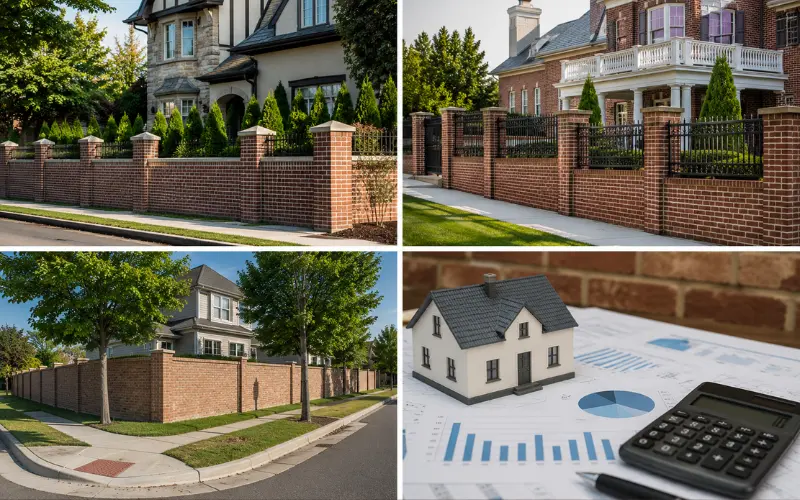
Most articles quote a flat cost per linear foot and stop there. What actually determines your return is the ratio between fence cost and home price.
- On a home under $300,000, a full brick perimeter fence can eat 3 to 5 percent of the home’s value, which caps how much of that cost you’ll recover.
- On a home over $600,000 in a brick-forward neighborhood, the same fence often reads as expected rather than exceptional, which paradoxically protects value more than it grows it. Buyers don’t pay extra, but they also won’t negotiate the price down for a “missing” fence.
- Corner lots and homes on busy streets see the highest return because privacy and noise reduction are the features buyers are actively shopping for, not just admiring.
If your goal is resale value specifically, a partial brick fence, columns with infill panels, or a brick-and-wrought-iron combination usually outperforms a full brick wall on cost recovered per dollar spent. Full brick walls make sense when privacy or security is the priority over ROI.
What Buyers Actually Notice During Showings
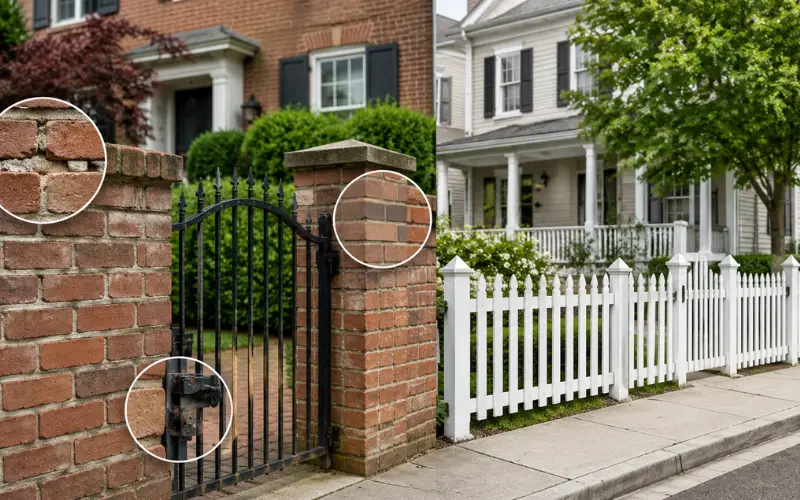
Listing agents rarely mention this, but buyers respond to specific details, not the general presence of brick.
- Mortar joint condition. Chipped or missing mortar reads as deferred maintenance even on a 40-year-old wall that’s structurally fine.
- Height consistency with neighboring properties. A brick fence that’s noticeably taller than the street average can trigger questions about what the seller is hiding, fair or not.
- Color match to the house. A fence in a different brick tone than the home’s foundation or trim looks like an afterthought, even when it’s better built than the house itself.
- Gate hardware. Buyers touch gates during a walkthrough more often than any other fence component. Rusted or sticking hardware undercuts the value of an otherwise solid wall.
If you’re weighing brick against a lower-cost option for the front of the property specifically, it’s worth comparing sightlines and street presence with something like a white picket fence before committing, since the two send very different signals to buyers walking or driving by.
Insurance and Liability: The Angle Most Guides Skip
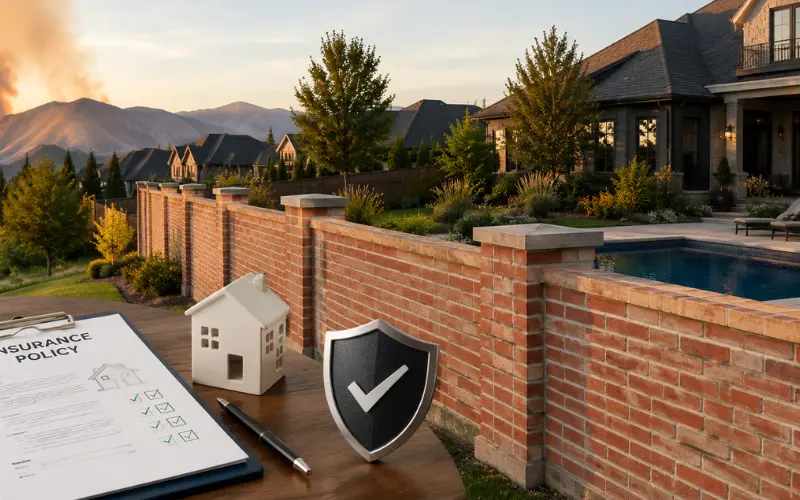
A brick fence changes your risk profile in ways that show up on paper, not just in appraisals.
Insurers in wildfire-prone regions sometimes factor perimeter combustibility into premium calculations. A non-combustible brick fence near the structure can be a minor point in your favor during underwriting, particularly if it replaces a wood fence that previously ran close to the house.
On the liability side, a solid brick wall around a pool or steep grade change can reduce the “attractive nuisance” exposure that insurers flag with open or low fencing. This won’t show up as a fence line item on your policy, but it can factor into how an underwriter views the overall property risk.
Where Brick Fences Lose Value Instead of Adding It
Not every brick fence helps. A few situations actively work against resale value:
- Fences that block sightlines at intersections or driveways. Some municipalities have height restrictions near corners specifically because of this, and a fence built without checking those rules can become a costly removal or rebuild before closing.
- Fences that don’t match the era of the house. A heavy Victorian-style brick wall in front of a 1990s ranch home reads as mismatched rather than upscale.
- HOA violations. In managed communities, an unapproved brick fence can stall a sale entirely until it’s brought into compliance, regardless of how well it’s built.
Before finalizing a design, it’s worth looking at how the fence line interacts with your entry, since a mismatched approach to the front gate and driveway edge is one of the more common reasons buyers hesitate during a walkthrough.
Brick Fence Value Snapshot
| Factor | Effect on Value |
|---|---|
| Matches home’s existing brick or foundation | Increases perceived permanence and buyer confidence |
| Full perimeter on a lower-priced home | Can exceed cost-to-value ratio for the neighborhood |
| Partial brick with metal or wood infill | Often the best return per dollar spent |
| Poor mortar condition | Reads as deferred maintenance, even if structurally sound |
| Height mismatch with street | Raises buyer questions regardless of build quality |
A Practical Way to Decide If It’s Worth the Investment
Walk your street and count how many homes already have brick fences or walls. If it’s the local norm, building one brings you in line with buyer expectations rather than exceeding them, and the value protection argument is stronger than the value growth argument. If you’re the only brick fence on the block, you’re setting a new ceiling for the street, which can help your specific sale but won’t necessarily lift comparable homes around you the way builders sometimes claim.
For homeowners weighing the investment against other exterior work, it also helps to look at how the fence will read next to other masonry on the property. If you already have a brick fireplace or exterior brick accents, matching the fence to that tone does more for perceived value than the fence alone would.
Frequently Asked Questions
Is a brick fence cheaper than wood?
No, brick costs more upfront, typically two to four times a comparable wood fence per linear foot. Wood is cheaper to install but requires repainting, staining, or replacement within 15 to 20 years, which narrows the long-term cost gap.
How long will a brick fence last?
A properly built brick fence with solid footings can last 50 to 100 years with only occasional mortar repair. Poor drainage or shallow footings are the most common reasons a brick fence fails early.
What is a brick fence called?
Depending on height and design, it may be referred to as a brick wall, boundary wall, garden wall, or masonry fence. “Brick fence” and “brick wall” are used interchangeably in most residential contexts.
What does a brick fence cost?
Expect roughly $25 to $75 per linear foot installed, depending on brick type, wall height, region, and whether it includes decorative columns or capping. Site preparation and footings often account for a third of the total cost.
Do I need a permit to build a brick fence?
Most municipalities require a permit for any fence over a certain height, and brick’s weight often triggers additional foundation review even for lower walls. Check with your local building department before ordering materials.
Does a brick fence increase property value more than a metal fence?
Generally yes, because brick is viewed as a permanent structure rather than a replaceable feature. Metal fencing, particularly wrought iron, can come close in upscale neighborhoods where it’s the local standard.
Can a brick fence hurt resale value?
It can, if it’s oversized for the lot, violates local height codes, or clashes with the home’s architectural style. A fence that looks defensive rather than decorative can also make a property feel less welcoming to buyers.
What’s a lower-cost alternative that still adds curb appeal?
Brick columns paired with wood, metal, or vinyl infill panels capture much of the visual weight of a full brick fence at a fraction of the material cost, and they’re often easier to get approved in HOA communities.

