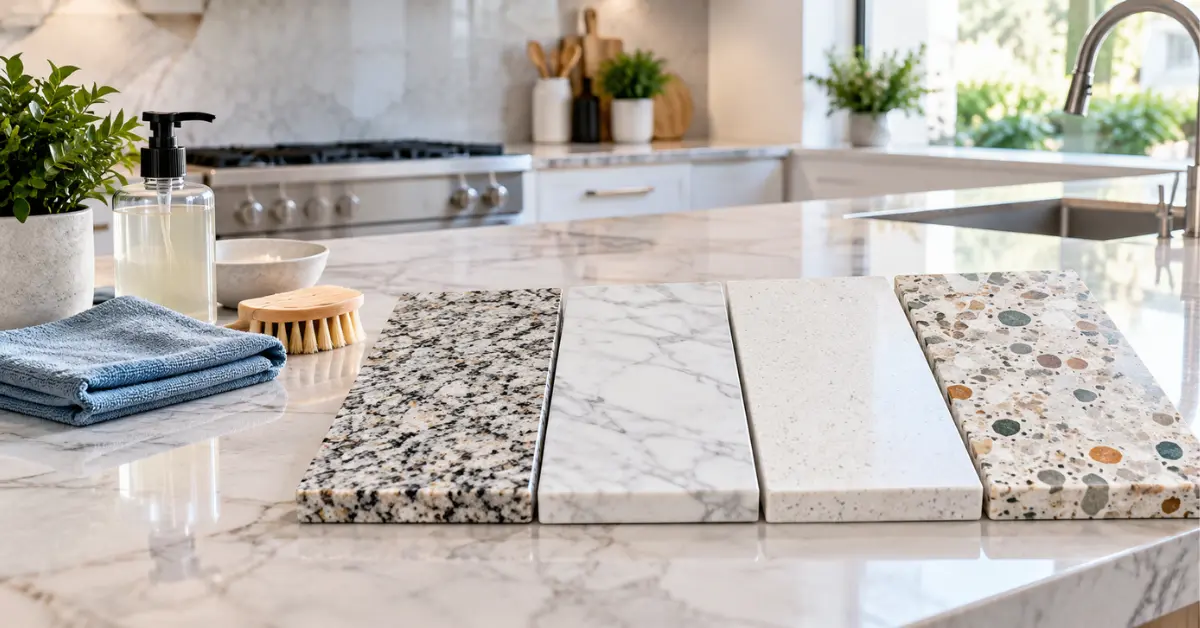
To clean and maintain kitchen benchtops safely across granite, marble, engineered stone, and terrazzo, wipe daily using warm water, a non-abrasive microfibre cloth, and a mild pH-neutral detergent or dishwashing liquid. Avoid harsh acids like vinegar, citrus, or bleach on porous natural stones to prevent surface etching and seal breakdown. For long-term protection, re-seal natural stone surfaces every 12 to 24 months and clean liquid spills immediately.
Having restored hundreds of Australian kitchens over the last 15 years, I can tell you that most benchtop damage comes from using the wrong cleaning products rather than actual cooking accidents. A single splash of lemon juice or a wipe down with acidic bathroom cleaner can dull a polished marble island bench in seconds. Whether you live in a modern coastal build with terrazzo or an inner-city apartment with classic granite, applying material-specific care keeps your stone surfaces looking fresh for decades.
Benchtop Care at a Glance: Material Comparison
Different materials require specific chemical pH balances and care routines. The table below outlines safety guidelines for common Australian kitchen benchtops.
| Benchtop Material | Acid Resistance | Ideal Daily Cleaner | Sealer Frequency | Primary Risk Factor |
| Granite | Moderate | Warm water + pH-neutral soap | 12–24 Months | Oil absorption & ring stains |
| Marble | Extremely Low | Microfibre + specialised stone spray | 6–12 Months | Acid etching (lemon, vinegar, wine) |
| Engineered Stone | High | Mild dish liquid or non-abrasive cream | Never required | Thermal shock & harsh chemicals |
| Terrazzo | Low to Moderate | pH-neutral floor/stone cleaner | 12–18 Months | Binder degradation & lime dulling |
Daily Cleaning vs Heavy Stain Removal
For daily maintenance, stick to warm water, a drop of pH-neutral liquid dish soap, and a soft microfibre cloth. Wipe down working zones right after preparing food to stop cooking oils and natural dyes from soaking into the surface.
When dealing with tough, dried-on grime, avoid abrasive scouring pads or steel wool. Instead, apply a non-abrasive cream cleaner or make a soft paste of baking soda and water. Lay the paste over the stain, cover it with plastic wrap, and let it draw out the pigment for a few hours before wiping it clean with a soft cloth. For a complete walkthrough of daily routines, see our detailed guide on cleaning kitchen benchtops.
Granite Benchtop Care: High Durability, Deep Sealing
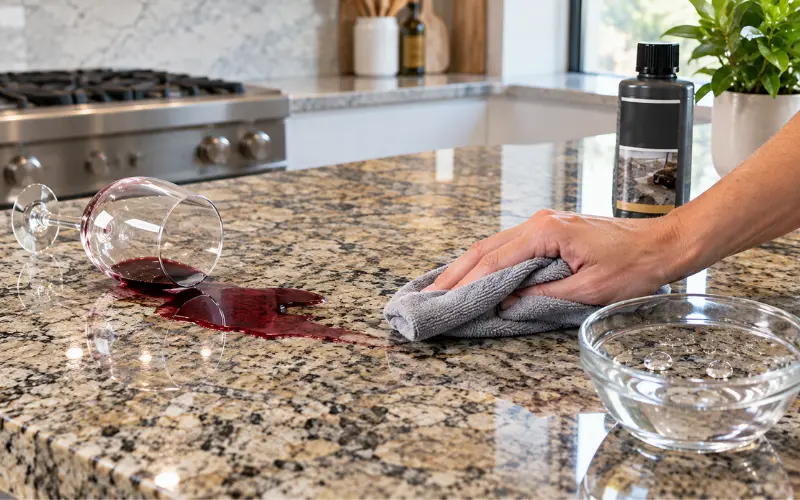
Granite handles heat and scratches well, but its natural pore structure draws in organic liquids if left unsealed. Red wine, olive oil, and coffee can quickly soak into untreated granite.
To preserve polished granite, clean spills right away and avoid store-bought citrus-based sprays. Check your seal twice a year by dropping a few drops of water onto the surface. If the water stays beaded after 15 minutes, your seal is intact. If it darkens the stone, apply a penetrating sealer. For specific step-by-step restoration techniques, follow our guide on how to clean granite bench tops.
Marble Benchtop Care: Preventing Acid Etching and Dull Spots
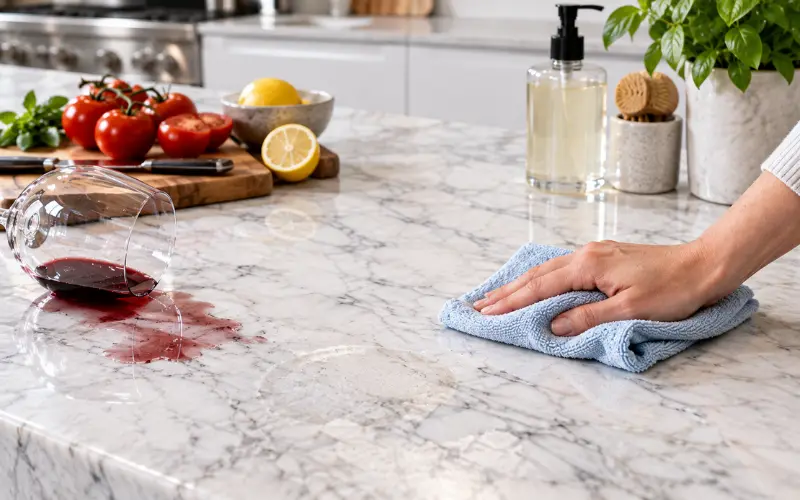
Marble is composed mainly of calcium carbonate, making it exceptionally vulnerable to chemical etching. Any contact with acidic items like tomatoes, vinegar, citrus, or wine reacts instantly with the stone, leaving a dull watermark even on freshly sealed surfaces.
When cleaning marble, never scrub dulled areas with abrasive pads, as this makes the etching more obvious. Use dedicated stone cleaners or warm water paired with ultra-soft microfibre towels. Always place timber boards, trivets, and drink coasters under preparation zones. For additional techniques on maintaining soft natural stone, explore our article on cleaning marble benchtops.
Engineered & Reconstituted Stone Maintenance
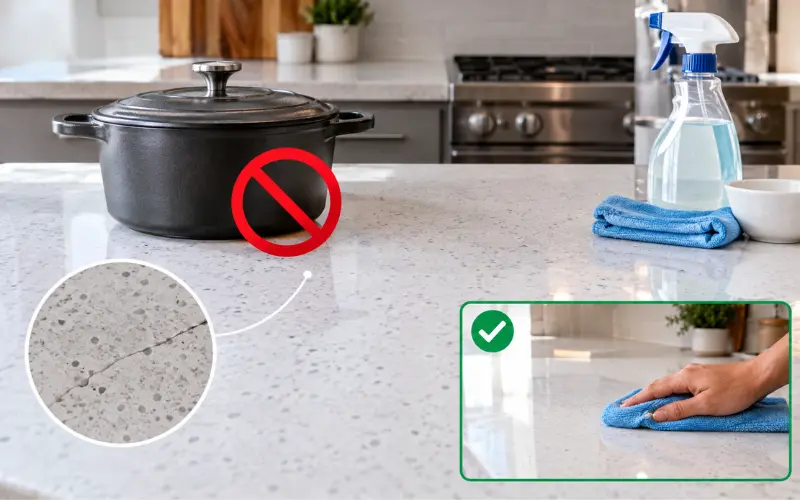
Engineered stone surfaces use quartz aggregate bound with polymer resins. While non-porous and resistant to deep staining, these resins remain sensitive to high heat and harsh solvents.
Never place hot pots, oven trays, or air fryers directly onto engineered stone. Sudden temperature jumps can cause thermal shock cracks or scorch the resin binders underneath. Clean these surfaces using mild detergents, avoiding paint strippers, bleach, or high-pH industrial degreasers. For a full breakdown of quartz stone care, check our instructions on how to clean stone bench tops.
Terrazzo Benchtops: Protecting Marble Chips & Cement Binders
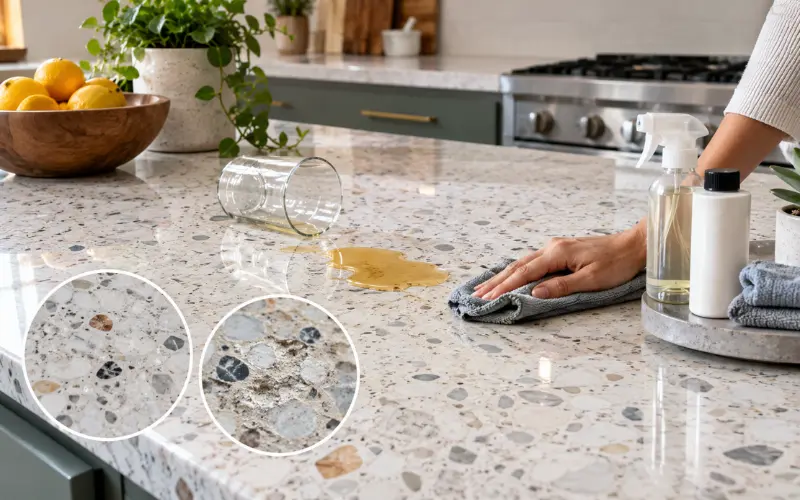
Terrazzo combines recycled marble chips set within either a cementitious base or a resin composite binder. Because the surface contains exposed marble chips, it requires the same careful protection against acidic spills as natural stone slabs.
Acidic spills dissolve the lime content in cement bases and erode exposed marble chips, leaving rough patches. Wipe up spills immediately and use a neutral, alcohol-free cleaner to prevent dull film build-up. Re-apply a breath-penetrating sealer every 12 to 18 months to protect the binder. For detailed design and upkeep tips, review our deep dive into terrazzo kitchen benchtop selection and care.
FAQ’s on Clean and Maintain Kitchen Benchtops
Can I use vinegar or bleach to sanitise stone benchtops?
No. Vinegar is acidic and etches natural stones like marble, limestone, and terrazzo. Bleach breaks down protective stone sealers and can discolour the resin binders in engineered stone.
How often should I seal natural stone benchtops in Australia?
Most natural stone benchtops need re-sealing every 12 to 24 months. High-use marble areas may need sealing every 6 to 12 months, depending on wear and the type of sealer used.
Why is my dark granite benchtop showing cloudy water rings?
Cloudy rings usually mean hard water mineral build-up or a wearing protective sealer. Clean the area with a pH-neutral stone cleaner and buff dry with a microfibre towel. If the mark remains, re-seal the surface.
Can I put hot pans directly on stone benchtops?
No. While granite handles moderate heat, thermal shock can crack natural slabs. Engineered stone resins can burn or discolour at high temperatures. Always use wooden trivets or heat pads.
How do I remove stubborn oil stains from a porous benchtop?
Apply a poultice made of baking soda and water for water-based stains, or baking soda mixed with acetone for oil stains. Spread the paste over the stain, cover with plastic wrap for 24 hours, let it dry, and wipe it away.
What is the best way to clean matte or honed benchtop finishes?
Honed finishes show oils and fingerprints more easily than polished surfaces. Clean them with warm water and a mild pH-neutral dish soap, drying thoroughly with a microfibre cloth to prevent streaks.