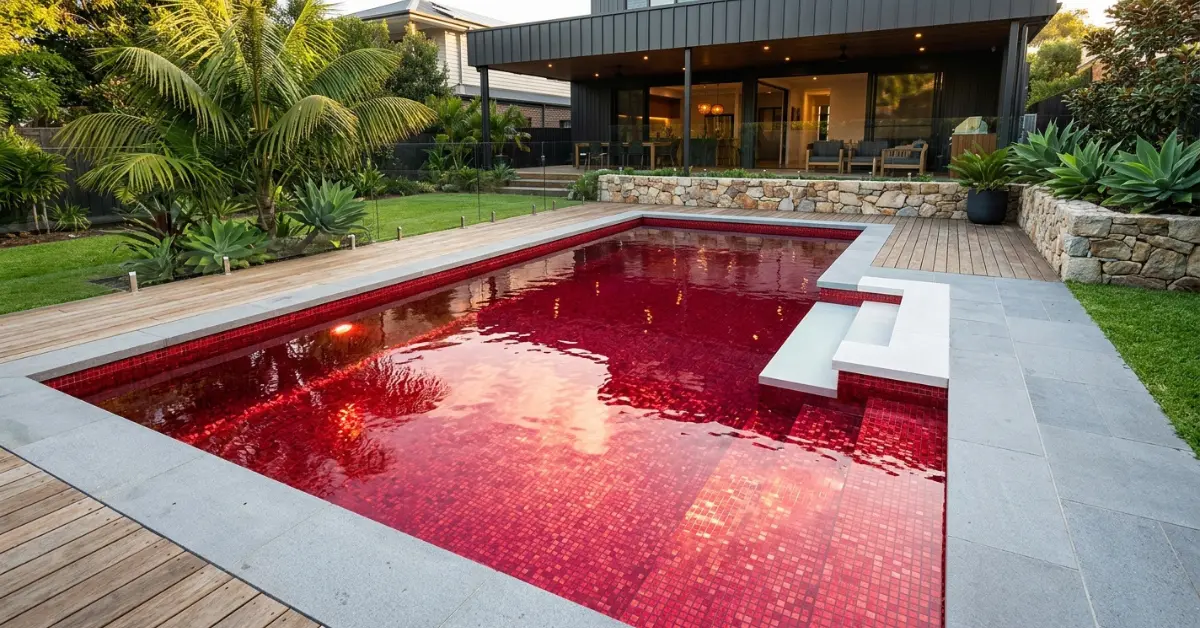
A red pool is generally a bad idea for a standard residential backyard due to severe resale penalties, complex maintenance visibility, and high heat absorption under harsh sun conditions. However, when executed correctly using high-end ruby or crimson glass mosaic tiles paired with thoughtful architectural design, a red pool can become a striking resort-style feature piece.
Why Red Swimming Pools Are Gaining Attention
Most homeowners default to classic cerulean or cobalt, but bold exterior choices are surging across contemporary landscape architecture. A red pool creates an immediate contrast against green lawns, stone paving, and natural foliage. Inspired by world-famous boutique hotels like The Library in Koh Samui, Thailand, the concept relies on visual shock and dramatic evening lighting reflections.
Despite the visual appeal, choosing red changes how pool water appears during different times of the day. Water itself is transparent, so the interior finish dictates the final colour output. When sunlight hits a red mosaic or plaster finish, the water takes on a rich crimson, coral, or deep wine shade. In lower light, however, improper shade selection can leave the pool looking muddy or dark.
Expert Insight: “When clients ask about unconventional pool finishes, I always emphasize that red tiles reflect light differently than blue or green. Under direct sunlight, a crimson glass tile creates a dazzling jewel tone. But if your yard receives heavy shade, that same finish can look muted and dull. Always test tile samples under water in full sun before committing.” — Liam Vance
The Practical Downsides of a Red Backyard Pool
While striking in architectural magazines, bringing a red pool into a residential backyard comes with distinct practical challenges that every homeowner must weigh carefully.
1. Resale Value and Buyer Hesitation
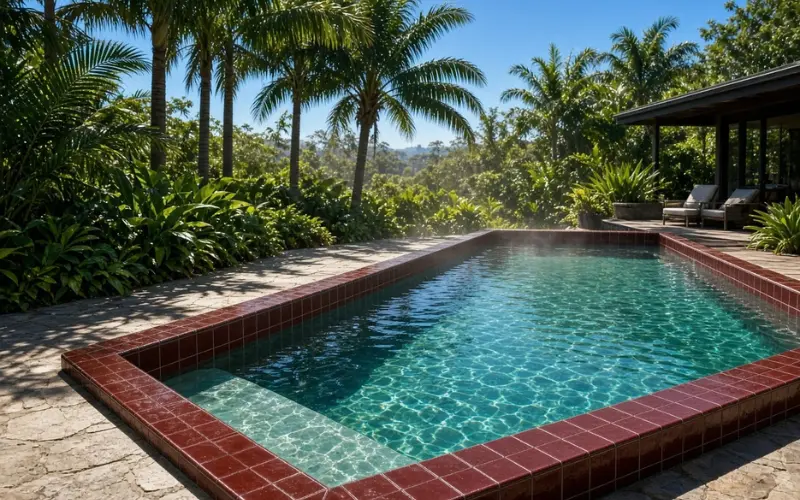
Property buyers often struggle to look past hyper-specific design choices. While a classic blue pool or a natural pebble-crete finish appeals to a broad demographic, vibrant red finishes can feel polarizing. Buyers who do not share your exact aesthetic vision will factor the cost of re-tiling or re-plastering into their offer, which can directly reduce your property’s market value.
2. Maintenance and Algae Identification
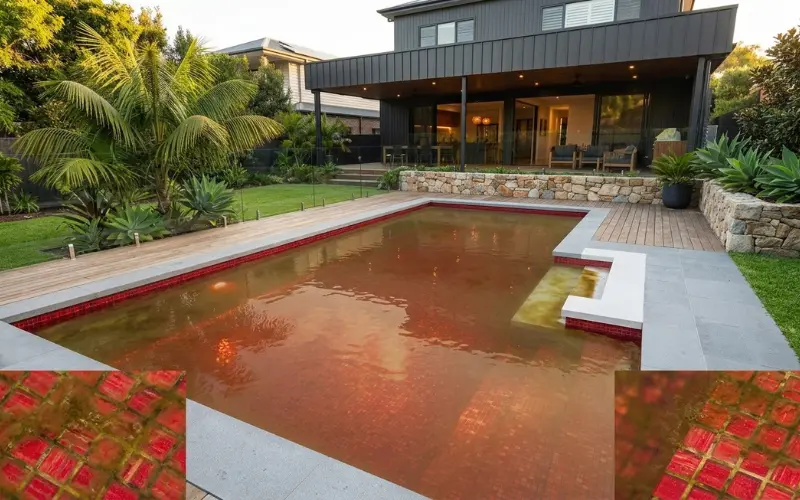
Pool water balance requires continuous monitoring, particularly across hot summer months. On a traditional light blue surface, early signs of yellow or green mustard algae are immediately visible. On a red tiled or plastered surface, early organic growth blends into the background, making chemical imbalances harder to spot visually until the water clarity completely turns.
3. Surface Heat Absorption
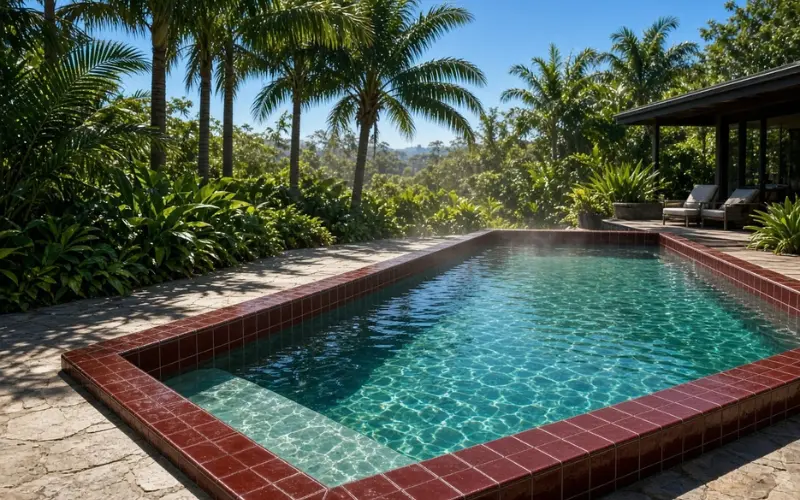
Darker tile shades absorb and retain thermal energy from direct solar radiation. In warmer climates like Queensland, Western Australia, or New South Wales, a dark red surface can increase ambient water temperatures by several degrees. While beneficial during cooler shoulder seasons, it can make the water uncomfortably warm during mid-summer heatwaves.
Red Pool Finishes: Key Material Considerations
The specific material you choose directly impacts durability, appearance, and long-term upkeep across Australian homes:
- Glass Mosaic Tiles: Exceptional durability lasting over 20 years with a premium, reflective jewel-tone aesthetic. They require regular grout line cleaning to prevent calcium buildup.
- Pigmented Plaster / Render: Offers a matte, earthy coral or terracotta finish with a lifespan of 7 to 12 years. Plaster is prone to patchy fading if pool chemistry is not strictly balanced.
- Vinyl Pool Liner: Provides a smooth, uniform finish lasting 5 to 10 years, though dark red liners are vulnerable to UV degradation and chlorine bleaching.
How to Work Red Into Your Pool Design Without the Risks
If you love the warmth and energy of red but want to protect your property’s resale value and avoid chemical headaches, you do not have to commit to a fully crimson pool interior.
Use Red Accent Waterlines and Features
Instead of tiling the entire shell in red, install a high-gloss red tile waterline combined with a neutral off-white or charcoal interior plaster. This delivers a pop of colour along the edge while maintaining crisp, clear blue water inside the basin. Pair this with a sleek modern pool design or an integrated diy plunge pool to keep the overall look balanced.
Complementary Landscape Architecture
The surrounding materials dictate whether a red element looks intentional or out of place. Frame your pool area with warm natural timber, crisp concrete coping, or dark paving stones. Integrating surrounding structural elements like a balcony privacy screen or a well-planned covered outdoor living space helps ground the bold color palette into your home’s total architecture.
Strategic Underwater Lighting
Evening aesthetics depend heavily on lighting placement. Multi-colour LED pool lights allow you to shift the water tone from warm red for evening entertaining back to clean blue or violet during daily use, delivering dramatic visual variety without permanently altering the pool structure.
Pop Culture & Internet Search Context: Clearing Up Common Confusion
When researching red pools online, search results often mix real landscape design with viral pop culture trends, fiction, and gaming references:
- Red Pool Marvel & Deadpool: Many pop culture fans search “red pool” looking for custom Deadpool-themed swimming pools, custom graphics, or themed merchandise.
- Red Pool SCP (SCP-354): In internet lore and creative writing communities, “The Red Pool” refers to SCP-354, a fictional biological anomaly containing a crimson liquid.
- Red Pool Game: In digital gaming, red pools usually refer to health-replenishing blood pools or environmental hazards found in fantasy action RPGs.
Frequently Asked Questions
What does a red pool mean in a backyard?
In residential design, a red pool typically indicates a custom architectural statement built using red glass mosaic tiles or specialized interior plaster. In water quality terms, reddish or rust-coloured pool water can indicate elevated levels of oxidized iron in the water supply or extreme chemical imbalances that require chemical sequestering agents.
Is red a good color for a swimming pool interior?
Red is a bold, high-maintenance choice. While visually stunning in modern resort settings, it absorbs more heat, makes early algae detection difficult, and can alienate future home buyers compared to neutral blue or white finishes.
Why would pool water turn red naturally?
Pool water turns red or brownish-red due to high concentrations of dissolved iron reacting with chlorine, or from severe blooms of red algae (dinoflagellates). Testing metal content and adjusting chlorine levels with a metal sequestrant usually resolves water discolouration.
How much does it cost to tile a pool in red glass mosaics?
Fully tiling a standard 8m x 4m pool in premium red glass mosaics typically ranges between $25,000 and $45,000 AUD depending on surface prep, tile quality, and epoxy grout selection.
Do red pool tiles fade over time under the sun?
High-quality glass mosaic tiles do not fade because the colour is baked into the glass. However, red vinyl liners and red-pigmented plaster finishes will fade and discolour over time due to intense UV exposure and regular exposure to pool chemicals.
What is the alternative if I want a warm water look without red tiles?
A sandy beach or light gold interior finish creates a natural, emerald-teal water tone under sunlight. This delivers a tropical, warm resort vibe without the maintenance and resale drawbacks of an intense red finish.