
A home decor box is a curated set of accent pieces, such as vases, trays, candles, and small sculptural objects, sold together so a room can be styled in one purchase instead of a dozen separate ones. You’ll find them sold three ways: as one-time curated collections, as recurring subscriptions, or as a la carte builds where you pick each item yourself. The right choice depends on whether you want a finished look fast or full control over what lands in your space.
Curated, Subscription, or A La Carte: Pick the Right Format First
Most shoppers land on the wrong format simply because they didn’t know a choice existed. Retailers rarely spell out the tradeoffs, so here’s what each one actually gets you.
Curated seasonal boxes are built by a designer around a theme, farmhouse, cottage, coastal, and shipped as-is. You get a finished, cohesive look with zero decision fatigue. The tradeoff: you can’t swap out the one piece that doesn’t match your existing furniture.
Subscription boxes arrive monthly or quarterly, often centered on one category like candles or artisan goods. They work best if you want your decor to evolve gradually rather than all at once, and they’re a low-commitment way to test new materials or scents before buying full-size pieces.
A la carte boxes let you choose each item individually from a retailer’s catalog, then bundle them into one shipment. This is the format that suits people who already know their palette and just want fewer boxes on the porch.
| Format | Best For | Typical Starting Price |
|---|---|---|
| Curated seasonal box | Fast, finished styling | $90-$150 |
| Subscription box | Gradual, evolving decor | $24-$70/month |
| A la carte box | Full control over pieces | Varies by item |
What Actually Belongs in a Well-Built Box
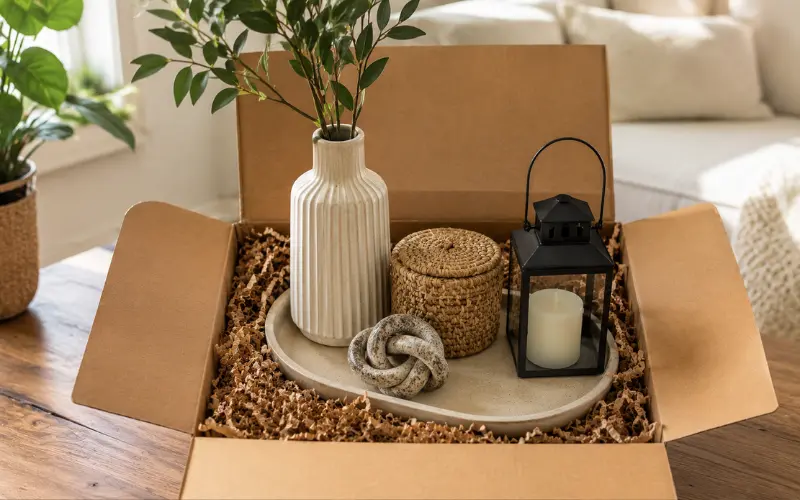
Competitor lists tend to name categories and stop there. What they skip is how these pieces Home Decor Box work together once they’re out of the box and on your shelf.
A box that photographs well but styles poorly usually has one flaw: everything is the same height. Before you buy or build one, check that it includes at least one tall anchor piece (a vase or candlestick), one low horizontal piece (a tray or dish), and one textural piece (woven, stone, or ceramic) to break up the shine of glass and metal.
- Anchor piece: tall vase, sculpture, or lamp base
- Grounding piece: a tray that corrals smaller items so a shelf doesn’t look cluttered
- Texture piece: something matte or woven to offset glossy ceramics
- Scent or light element: a candle or small lantern, since decor that only looks good and does nothing tends to get moved to a closet within a year
If you’re shopping a curated box and can’t see the full contents before buying, look for a “what’s inside” photo rather than just a styled hero shot. Home Decor Box that only show the finished vignette are often hiding filler items like generic coasters or seasonal paper goods that add box count but not real styling value.
Where a Decor Box Actually Solves a Problem
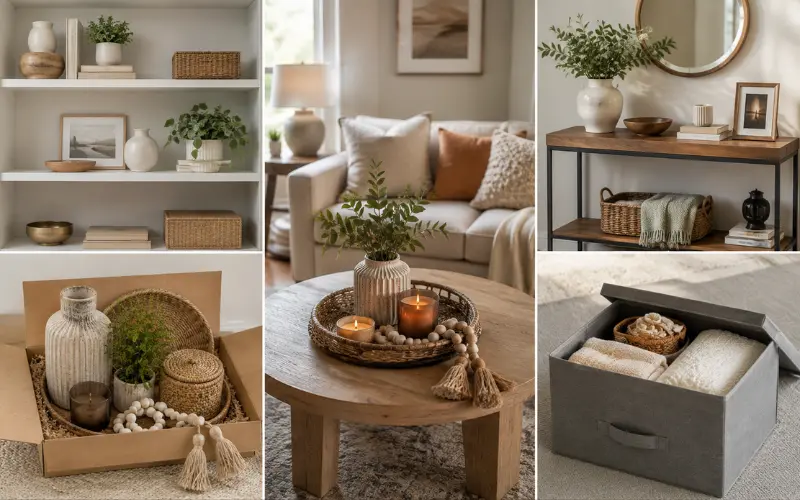
Most buying guides frame these Home Decor Box purely as gifts or subscription novelties. In practice, they solve three specific, recurring problems for homeowners.
Moving into a new place with bare shelves. A single curated box gives you a finished console table or bookshelf vignette without weeks of piecing it together from five different stores.
Refreshing a room for a season without a full redo. Swapping a summer box for a fall one changes the mood of an entryway or coffee table in ten minutes, which is far faster than repainting or replacing furniture.
Testing a new style before committing. If you’re curious about coastal or cottagecore but haven’t bought furniture in that direction yet, a $50-$100 box is a much lower-risk way to see if the look actually suits your space than buying a sofa in it.
Where a decor box is the wrong tool: filling large empty walls (that’s a job for framed prints or gallery layouts, not tabletop objects), or solving a storage problem. Decorative boxes and storage boxes get lumped together in search results, but a box meant to organize drawer clutter is a different product than one meant to sit out and be seen.
How to Style What You Get
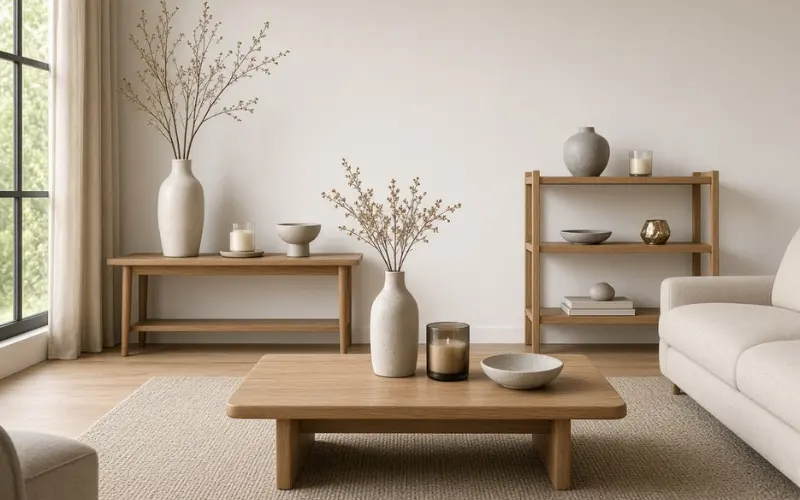
Once the box arrives, resist the urge to place everything at once on a single shelf. Split the contents across two or three surfaces, a console, a coffee table, and one shelf, so no single spot looks overloaded and the rest of the room still breathes.
Group items in odd numbers. Three objects of varying height photograph and read better in person than two or four, because the eye has a natural resting point in the middle. If your box included four pieces, hold one back for a different room rather than forcing all four into one vignette.
Rotate seasonally instead of storing pieces in a closet between uses. A candle and small dish from a winter box can move to a bathroom counter in spring, so nothing you paid for sits unused for nine months.
Budget and Value: What You’re Actually Paying For
Curated boxes in the $90-$150 range are pricing in the design labor, not just the objects. If you priced out the same five or six pieces individually at a home goods store, you’d often land close to or below that number, but you’d also spend two or three hours sourcing and second-guessing whether they match.
Subscription boxes under $30 a month are usually single-category (one candle, one small object) rather than a full vignette. Treat them as a slow-build collection, not a one-time room refresh.
If budget is the main constraint, a la carte building from a retailer’s open catalog, rather than a pre-set box, is usually the cheapest path, since you’re not paying a curation premium on pieces you’d have picked anyway.
FAQ’S on home decor box
What’s the difference between a decor box and a subscription box?
A decor box can be a one-time purchase or part of a subscription. The subscription label just means the shipments repeat on a schedule, usually monthly or seasonally.
Are home decor boxes worth it compared to buying pieces separately?
They’re worth it when you value a cohesive, pre-styled look and want to save the time spent sourcing and matching individual pieces. They’re less worth it if you already have a strong sense of your own style and specific gaps to fill.
How many items are typically in a home decor box?
Most curated seasonal boxes include four to seven pieces, ranging from a large anchor item like a vase down to smaller accents like coasters or a small planter.
Can I return items from a home decor box I don’t like?
Return policies vary widely by retailer, and many curated boxes are final sale since they’re sold as a set. Check the individual return policy before buying if this matters to you.
Do home decor boxes work for small apartments?
Yes, smaller curated boxes often suit apartments better than large individual furniture pieces, since you can style a console table or single shelf without committing to anything structural.
What’s the best home decor box for a first-time buyer?
Start with a smaller, lower-cost curated box in a style you already lean toward, rather than a subscription, so you can see how the pieces work in your space before committing to recurring shipments.
How do I know if a home decor box will match my existing furniture?
Look for boxes described by material and finish, not just theme name. A “farmhouse” box heavy in raw wood tones won’t blend with a room full of black metal and glass, regardless of the style label.
Is it cheaper to build my own box than buy a curated one?
Often yes, if you already know what you want. Curated boxes save time and decision-making, not necessarily money.
Looking to fill other spaces in your home? Browse wall decor ideas for above your console table, check mirror styling tips for pairing with your new vignette, or explore wall storage solutions if what you actually need is organization rather than display pieces. For budget shoppers, our guides to home decor outlets and home decor clearance finds cover where to buy individual pieces instead of a pre-set box.

