
Filtering Home Decor Nashville Shops comes down to three checks: verify the return window before you buy, compare in-store pricing against the store’s own website, and confirm whether a piece is locally sourced or drop-shipped from a national warehouse. Skip any of these steps and you risk paying boutique prices for a mass-produced item, or worse, getting stuck with a non-returnable piece that does not fit your space.
Nashville has no shortage of home decor stores. Between big-box chains like At Home, antique malls like GasLamp, and boutique shops scattered from Belle Meade to East Nashville, the sheer volume of options can work against you. Most guides just hand you a list of names. What actually helps is knowing how to evaluate any shop on that list before you spend money there.
Why a Store’s Reputation Does Not Guarantee a Good Purchase
A shop can have great reviews and still be the wrong fit for a specific item. Reviews usually reflect the overall shopping experience, not the durability of a $300 accent table or whether a rug’s dye will hold up under a west-facing window.
I have walked into highly rated Nashville shops and found beautiful floor displays sitting next to inventory that had been sitting in a back room for months, slightly faded or dinged from handling. Ratings measure service. They do not measure the specific piece you are about to carry to your car.
Instead of relying on star counts, ask the sales associate directly how long that item has been on the floor and whether it came from the same batch as the display model. Most Nashville boutique owners will tell you straight, since repeat customers matter more to them than a single sale.
Checking Return and Exchange Policies Before You Commit

This is the step most buyers skip, and it is the one that causes the most regret.
Large chains like At Home publish clear windows, generally 60 days for a standard return and longer for loyalty members, with proof of purchase required. Independent boutiques and antique malls operate very differently. Many antique vendors sell as-is, with no returns at all, because the pieces are one of a kind and technically owned by an individual dealer renting mall space rather than the store itself.
Before buying anything over $100, ask these three questions:
- Is this final sale, or do I have a window to return it?
- Do I need the original packaging or receipt?
- Does the return policy change for clearance or “as-is” tagged items?
If a shop cannot answer clearly on the spot, treat that as a signal to slow down, especially for furniture pieces you cannot easily test in your own space.
Comparing In-Store Pricing to Online Listings
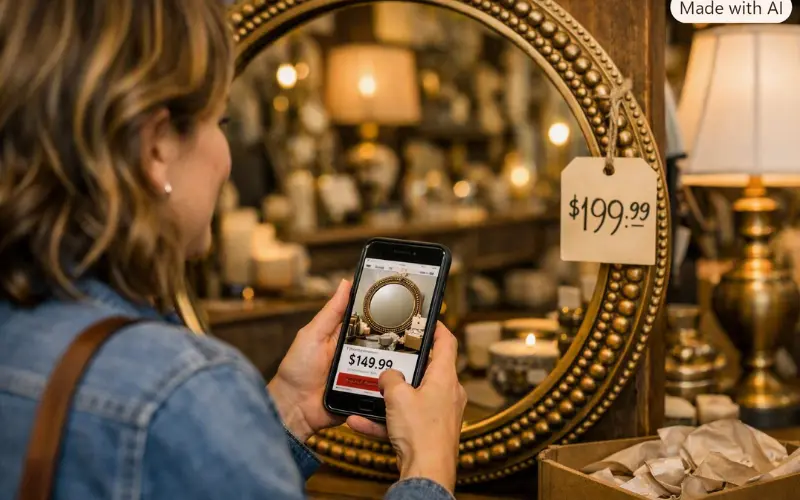
Several Nashville decor retailers run their physical showroom pricing separately from their website pricing, and the gap can run anywhere from 10 to 30 percent depending on the season.
I check the store’s own site on my phone before checking out, every time. Sometimes the in-store price is actually lower because of a floor-model discount. Other times, especially around holiday markdown periods, the online price beats the tag by a wide margin and the associate can honor it if you ask.
This applies heavily to chains carrying wall decor, mirrors, and lighting, categories where seasonal promotions rotate fast. It applies less to true antique and vintage dealers, since those pieces are typically one-off and not listed anywhere else.
Telling Locally Sourced Pieces From Warehouse Drop-Ship Items
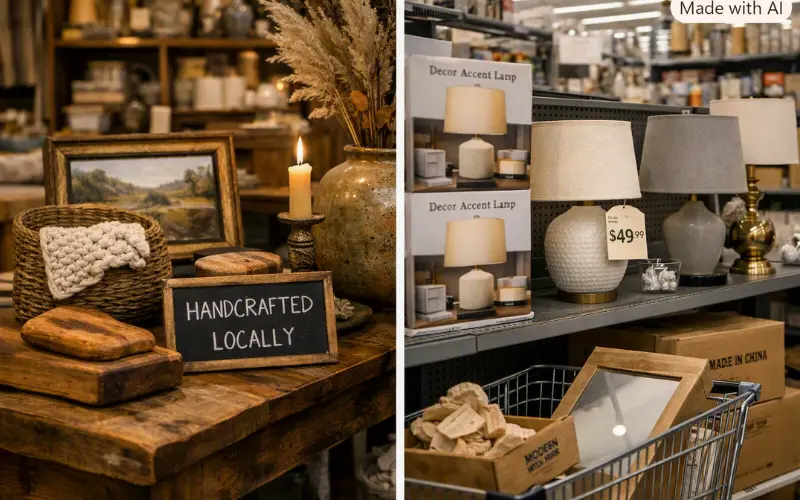
Nashville’s decor scene blends two very different supply chains, and knowing which one you are buying from changes what you should expect to pay.
Locally sourced pieces, things made by Tennessee artisans or sourced through estate sales and regional antique routes, carry a premium because they are genuinely scarce. You are paying for the story and the craftsmanship as much as the object itself. If you want a piece with that kind of handcrafted character, it is worth asking the shop directly whether an item was made regionally or shipped in from a national distributor.
Warehouse drop-ship items, common in big-box stores, come from the same manufacturing runs sold nationwide. There is nothing wrong with these pieces, but paying boutique-level prices for something you could find at a national chain for less is where buyers get burned. A quick reverse image search on your phone, right in the aisle, tells you in seconds whether an item is unique or mass produced.
| What to Check | Boutique / Antique Shops | Big-Box Chains |
|---|---|---|
| Return window | Often none, or short and item-specific | Usually 60-90 days with receipt |
| Pricing consistency | Fixed per dealer, rarely matches online | Often matches or beats website |
| Sourcing | Local artisans, estate finds, imports | National warehouse inventory |
| Best for | One-of-a-kind statement pieces | Everyday furnishing and volume buys |
Reading the Room Before You Read the Price Tag
One thing competitor guides rarely mention: measure your space and photograph it before you shop, not after you fall for a piece. Nashville’s older homes in neighborhoods like East Nashville and Germantown often have non-standard door widths and lower ceiling heights than newer construction in Franklin or Brentwood. A statement mirror that looks proportional on a showroom wall can dominate a room with 8-foot ceilings.
A quick expert note: I have seen more returns caused by scale mismatches than by any quality issue. Bring exact measurements, including doorway width if you are buying anything larger than a side table, and you will avoid most of the regret purchases that flood local resale groups within weeks of a big shopping trip.
If you are drawn to a specific look rather than a specific store, it often helps to shop by style first. Shoppers chasing a coastal look, for instance, will find a very different set of Nashville vendors useful than someone hunting for mirror statement pieces or layered wall decor.
Budget Shopping Without Sacrificing Quality
Not every Nashville decor need calls for a boutique budget. Outlet and clearance sections at chains like At Home rotate constantly, and timing your visit around end-of-season resets can cut prices significantly on rugs, lighting, and seasonal accents.
If you are furnishing an entire room on a tight budget, comparing a true home decor outlet against a home decor warehouse model is worth doing before you commit to either. Warehouse-style retailers typically carry deeper stock at lower per-item markup, while outlet stores specialize in discontinued or overstock lines from name brands.
Secondhand and thrift routes also deserve a look, especially for anyone comfortable restoring or reupholstering. Nashville’s resale scene has grown fast enough that browsing an online thrift option before driving across town can save a wasted trip.
Frequently Asked Questions on Home Decor Nashville
What are some good Home Decor Nashville?
Nashville covers a wide range, from antique malls like GasLamp Antiques to boutique gift and decor shops like COLOR and Epergne, plus national chains like At Home for volume furnishing. The right pick depends on whether you want one-of-a-kind pieces or budget-friendly basics.
What is the most popular Home Decor Nashville style right now?
Warm, textured neutrals with organic materials, think linen, rattan, and unlacquered brass, are dominating Nashville showrooms this year, though the city’s antique scene keeps traditional Southern and vintage styles just as popular.
Where do most celebrities shop for Home Decor Nashville?
Higher-end boutiques in Belle Meade and Green Hills, along with design-forward showrooms, tend to attract Nashville’s music industry and celebrity residents, though most keep their specific vendors private.
What is something you can only get in Home Decor Nashville shops?
Regionally sourced antiques and estate-sale finds are the biggest differentiator. Malls like GasLamp rotate fresh salvaged and vintage inventory that will not show up in national chain stores.
Is home decor cheaper at At Home or at local Home Decor Nashville boutiques?
At Home and similar chains are almost always cheaper per item, since they buy in national volume. Boutiques charge more, but you are paying for scarcity and craftsmanship rather than a comparable mass-produced piece.
How do I know if a Nashville decor shop’s return policy is fair?
Ask before you buy, not after. Fair policies clearly state the return window, whether a receipt is required, and whether clearance or as-is items are excluded, without hedging when you ask directly.
Should I buy furniture in-store or order online from a Nashville retailer?
In-store lets you check scale and finish in person, which matters most for furniture. Online can save money during sales windows, but always confirm the return policy covers shipped furniture before ordering sight unseen.
Do Home Decor Nashville stores negotiate on price?
Antique malls and independent dealers negotiate more often than chains, especially on higher-ticket furniture near closing time or during slower shopping seasons. Chain stores rarely budge outside of published sales.

