
Organic modern wall decor blends the clean lines of contemporary design with the warmth of natural materials. It is calm, textured, and never feels cold or overdone. If you want walls that feel curated instead of cluttered, this style gives you a clear formula to follow.
This guide covers everything the typical roundup skips: exact sizing math, real budget ranges, material safety notes, and the mistakes that make a room feel off. By the end, you will know exactly what to buy, where to hang it, and how to make it last.
What Is Organic Modern Wall Decor, Exactly?
Organic modern wall decor combines two design languages that usually pull in opposite directions. Modern design brings structure: clean edges, negative space, and a neutral base. Organic design brings texture: wood grain, woven fiber, hand-formed clay, and irregular shapes drawn from nature.
Put together, this pairing feels intentional but relaxed. A room styled this way looks put together without looking staged. It works because the contrast between structure and texture keeps the eye interested without creating visual noise.
You will recognize this style by a few consistent traits:
- Curved or flowing forms instead of sharp geometry
- A restrained, earthy color palette
- Natural or natural-look materials such as wood, rattan, linen canvas, and stone
- Asymmetrical layouts that still feel balanced
- Plenty of breathing room around each piece
The Color Palette That Defines This Style
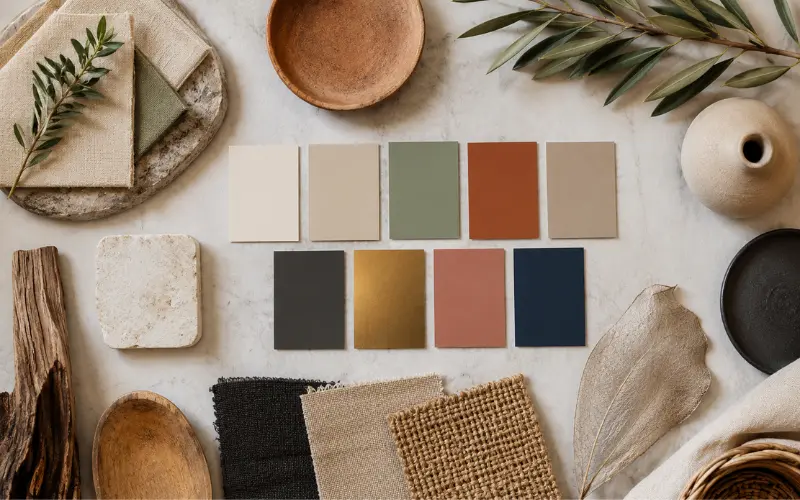
Color is what separates organic modern wall decor from a generic gallery wall. The palette stays close to what you would find outdoors.
Base tones:
- Warm cream, oat, and bone white
- Soft sage and eucalyptus green
- Terracotta and clay
- Sandy taupe and greige
Accent tones, used sparingly:
- Charcoal or soft black for contrast
- Muted gold or brass
- Dusty rose or rust
- Deep navy as a single grounding note
A useful rule: pick one dominant earth tone, one supporting neutral, and one accent color at most. Anything busier starts to compete with the texture already doing the work.
Materials to Look For (and What to Avoid)
Because this style leans on natural materials, the material itself matters as much as the design.
Good choices:
- Solid wood or bamboo panels
- Woven rattan, jute, or seagrass
- Linen or cotton canvas
- Pressed metal with a matte or brushed finish
- Handmade paper or plaster relief art
What to watch for:
- Cheap canvas prints made with PVC-based material can off-gas over time, so look for cotton or poly-cotton blend canvas instead
- Particleboard or MDF frames swell and warp in humid rooms like bathrooms
- Glossy plastic finishes clash with the matte, textural look the style depends on
Choosing better materials is not just an aesthetic decision. It also means your wall art holds its color and shape for years instead of fading or warping within a season.
How to Choose Organic Modern Wall Decor for Each Room
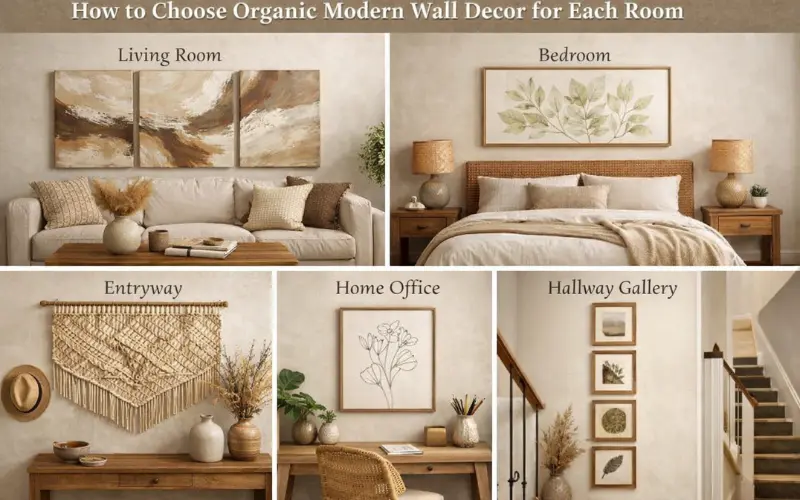
Living Room
The living room usually gets the largest and boldest piece in the house. A single oversized abstract or a botanical triptych above the sofa works well here. Aim for artwork that spans roughly 60 to 75 percent of the sofa’s width so it reads as intentional rather than accidental.
Bedroom
Bedrooms call for calmer choices. Soft botanical prints, woven wall hangings, or a single large piece above the headboard support rest instead of stimulation. Keep contrast low and avoid busy patterns near the bed.
Entryway
Your entryway sets the tone for the whole house. A medium-sized textured piece, such as a wood relief panel or a woven wall hanging, makes a strong first impression without overwhelming a smaller space.
Home Office
Choose pieces with clean lines and moderate detail. Overly busy pieces can be distracting during focused work, while pieces that are too plain miss the point of the style entirely. Botanical line art strikes a good middle ground.
Hallways and Stairwells
Narrow spaces are the ideal home for a vertical gallery arrangement. Group three to five smaller pieces in a single column, spaced two to three inches apart, to draw the eye upward through the space.
Sizing and Placement: The Numbers Nobody Gives You
Most guides tell you to “choose the right size” without telling you what that means in inches. Here is the math.
| Wall Feature | Recommended Art Width | Hanging Height |
|---|---|---|
| Above a sofa or console | 50-75% of furniture width | Bottom edge 6-8 inches above furniture |
| Above a bed | 50-66% of headboard width | Bottom edge 8-10 inches above headboard |
| Empty wall, no furniture | Depends on wall size | Center of art at 57-60 inches from floor |
| Dining table | 50-60% of table length | Bottom edge 6-8 inches above table |
For gallery walls, treat the whole grouping as one shape. Leave 2 to 3 inches between frames of similar size, and measure the entire arrangement using the same furniture-width rules above.
Budgeting for Organic Modern Wall Decor
Cost is the piece most articles leave out entirely. Here is a realistic breakdown by tier.
- Budget tier ($20-80): Printable digital art from independent Etsy sellers, paired with a frame from a home goods store. This is the fastest way to get the look without a large upfront cost.
- Mid-range tier ($80-300): Curated canvas prints, woven wall hangings, or pressed metal art from dedicated decor retailers. Expect better material quality and color accuracy at this level.
- Investment tier ($300 and up): Original paintings, large-scale woven textiles, or commissioned pieces. These become long-term statement pieces and often hold or increase in value.
A practical approach: start with one investment or mid-range anchor piece in your most-used room, then fill in remaining walls with budget-tier pieces as your taste develops. You do not need to furnish every wall at once.
Common Mistakes to Avoid
- Hanging art too high. This is the single most common styling error. Eye level, not ceiling height, should guide placement.
- Matching everything too closely. This style works because of contrast, not uniformity. Mix at least two textures in every room.
- Ignoring scale. A small print on a large wall disappears. When unsure, size up.
- Overloading the palette. Sticking to earth tones with one accent color keeps the room from feeling chaotic.
- Choosing decor before furniture. Wall art should respond to the room’s existing pieces, not the other way around.
Caring for Organic Modern Wall Decor
Natural materials need slightly different care than glossy, mass-produced prints.
- Dust wood, woven, and canvas pieces with a soft, dry cloth every few weeks
- Keep art away from direct sunlight, which fades earth tones faster than bright colors
- Avoid hanging natural fiber pieces in bathrooms or kitchens with heavy humidity or grease exposure
- Rotate seasonal accents, like a small dried botanical piece, without disturbing your anchor artwork
With basic care, quality natural wall art easily lasts a decade or longer.
Frequently Asked Questions
What is organic modern wall decor?
It is a design style that pairs the clean lines of modern design with natural materials and forms, such as wood, woven fiber, and botanical imagery, to create a calm, textured look.
What colors work best for organic modern wall decor?
Earth tones work best, including terracotta, sage green, cream, and taupe, with one muted accent color such as charcoal or brass.
How big should my wall art be?
As a general rule, art above furniture should span 50 to 75 percent of that furniture’s width. On an empty wall, center the piece at 57 to 60 inches from the floor.
Is organic modern wall decor expensive?
Not necessarily. Printable art and simple frames start around 20 to 80 dollars, while curated canvas prints and woven pieces typically run 80 to 300 dollars.
Can I mix organic modern wall decor with other styles?
Yes. It pairs especially well with Scandinavian, mid-century modern, minimalist, and bohemian interiors because they share a focus on natural materials and simplicity.
How do I keep natural wall art from fading?
Keep pieces out of direct sunlight and avoid high-humidity rooms. Dust regularly with a soft, dry cloth instead of liquid cleaners.
What is the biggest mistake people make with this style?
Hanging art too high on the wall. Center pieces at eye level rather than closer to the ceiling.
Do I need to buy everything at once?
No. Start with one anchor piece in your main living space, then add smaller pieces over time as your style develops.
Final Thoughts
Organic modern wall decor gives you a clear, repeatable formula: earth tones, natural materials, and forms borrowed from nature, all placed with intention. Use the sizing chart to get proportions right, choose materials that will actually last, and resist the urge to fill every wall at once. Done well, this style turns ordinary walls into the most inviting part of the room.

