
Your backyard has more potential than you think. With the right outdoor living design, that patch of grass or concrete slab can become the most-used room in your house. It just takes a little planning.
Most guides show you pretty photos and stop there. This one goes further. Below, you’ll find the practical details other articles skip: how to choose materials that survive real weather, how to budget your project in stages, and how to design a space that works for your climate, not just a photoshoot in California.
What Is Outdoor Living Design?
Outdoor living design is the practice of planning and furnishing outdoor spaces so they function like an extension of your home. Think of it as applying interior design principles, layout, comfort, and flow, to your patio, deck, porch, or backyard.
A well-planned setup isn’t just about buying furniture and setting it outside. It considers how you’ll use the space, what the weather does to it, and how each zone connects to the next. Done right, it adds real value to your home and gives you a place to unwind, entertain, and cook without stepping past the back door.
Start With a Plan, Not a Shopping Cart
Before you buy a single cushion, answer three questions:
- What will you actually do out there? Eat, lounge, cook, garden, or all of the above?
- When will you use it? Morning coffee needs shade from the east. Evening entertaining needs good lighting.
- Who will be with you? Kids need durable, low-maintenance surfaces. Frequent guests need extra seating and storage.
Skipping this step is the most common mistake in outdoor living design. People buy a beautiful sofa set, then realize it faces the wrong direction or gets soaked every time it rains.
Core Elements of a Great Outdoor Living Space
1. Define Your Zones
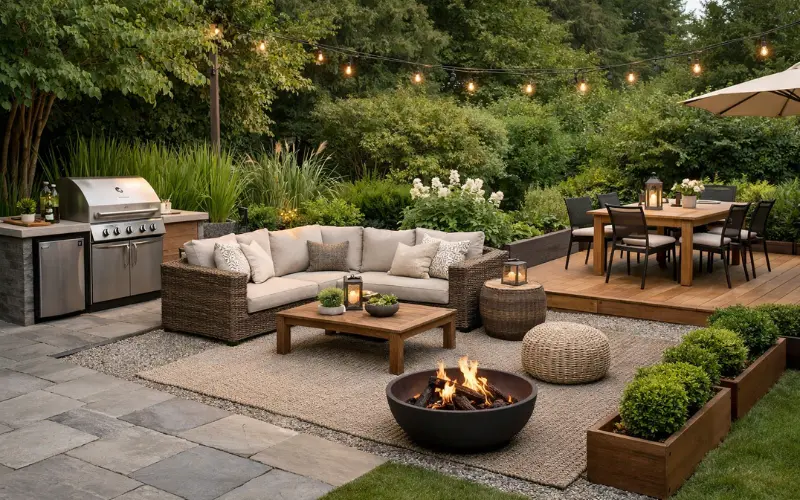
Even a small yard benefits from zoning. A cooking zone, a lounging zone, and a dining zone, each with its own furniture and flooring, makes the space feel intentional rather than scattered. You don’t need walls. A rug, a planter row, or a change in paving material is enough to signal a new “room.”
2. Choose Furniture for Comfort and Durability
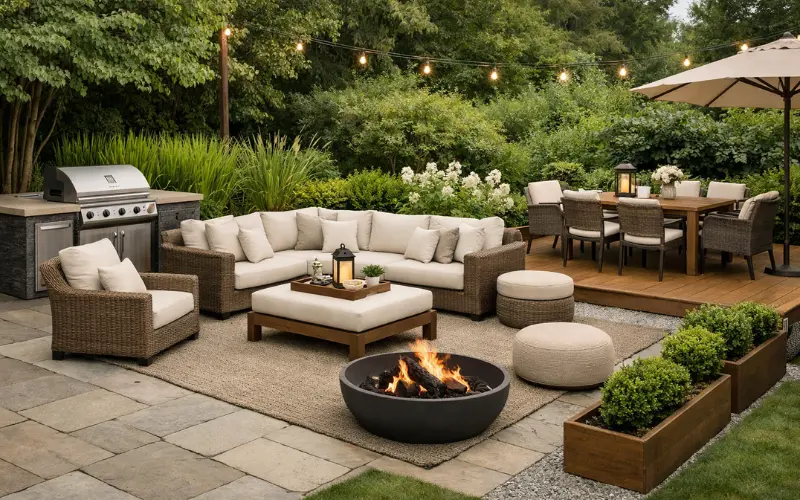
Seating is the heart of any outdoor living design. Mix pieces with backs and cushions for comfort, plus a few multifunctional items like ottomans that double as extra seating or side tables. Keep cushion colors consistent across mismatched furniture styles so the whole area feels pulled together.
3. Add Shade and Shelter
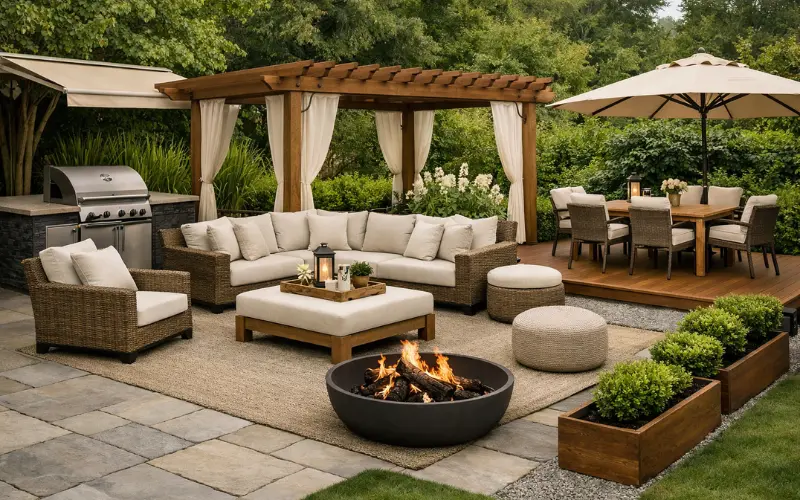
A pergola, retractable awning, or large market umbrella turns a sun-scorched patio into a space you’ll use all day. Shade also protects furniture fabric from fading, which extends the life of your investment.
4. Layer Your Lighting
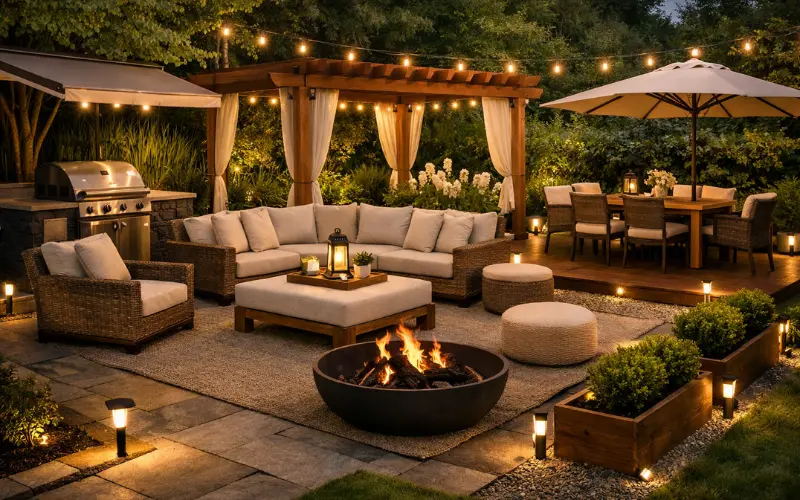
Good lighting is what separates a daytime patio from a space you’ll use after sunset. Combine three layers:
- Ambient light from string lights or lanterns for overall glow
- Task light near the grill or dining table for cooking and eating
- Accent light along pathways or garden beds for safety and mood
5. Bring in a Fire or Water Feature
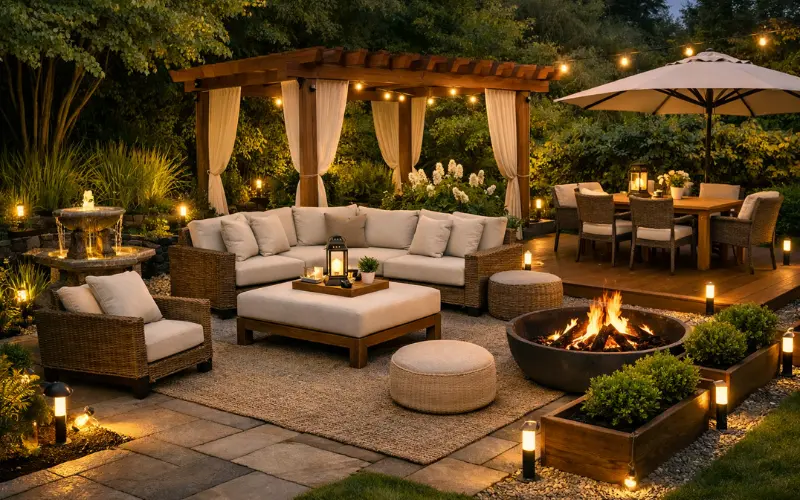
A fire pit extends your outdoor living season into cooler months and gives people a reason to gather. Water features, whether a small fountain or a full pond, add a calming sound that masks street noise. Neither needs to be elaborate to make an impact.
6. Don’t Forget the Kitchen or Bar
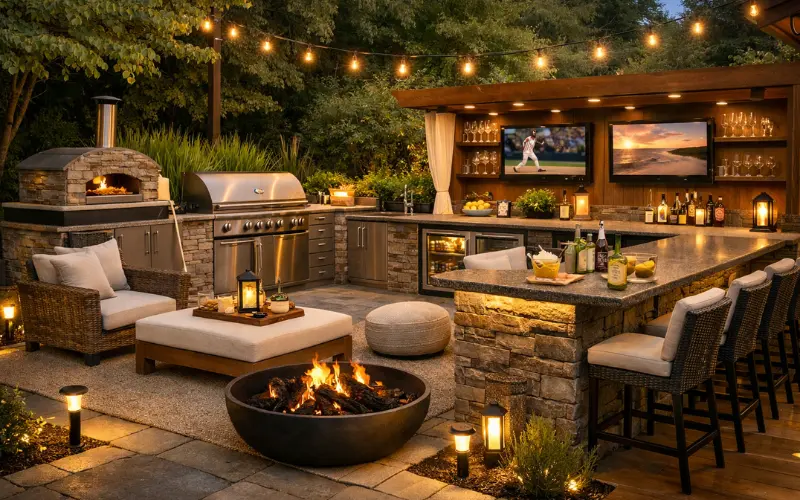
Even a small grill station with a counter and mini fridge changes how often you cook outside. If your budget allows, a full outdoor kitchen with stainless steel appliances is the ultimate upgrade, but a simple cart-style grill setup works just as well for most homes.
The Gap Most Guides Miss: Weatherproofing Your Design
Here’s what almost every backyard guide leaves out: what happens to all that beautiful furniture when the weather turns bad. If you live somewhere with real rain, humidity, or snow, this section matters more than any style tip.
For rainy or humid climates:
- Choose aluminum or resin wicker over natural wicker, which absorbs moisture and breaks down
- Use fully synthetic outdoor rugs, not indoor-outdoor blends, which trap mold underneath
- Store cushions in a weatherproof storage bin or bench so you’re not hauling them inside daily
- Pick quick-dry foam cushions rated for outdoor use
For snowy or freezing climates:
- Cover furniture with fitted, breathable outdoor covers before the first freeze
- Store cushions, rugs, and lanterns indoors or in a shed for winter
- Choose powder-coated metal frames, which resist rust better than untreated steel
- Clean and dry your outdoor kitchen appliances before the cold season
For hot, sun-heavy climates:
- Use fade-resistant, solution-dyed acrylic fabric instead of cotton or standard polyester
- Add a shade sail or pergola over anything with fabric to slow UV damage
- Choose light-colored stone or composite decking, which stays cooler underfoot than dark materials
Matching your outdoor living design to your actual climate, not just a catalog photo, is what makes a space last for years instead of one season.
Budgeting Your Outdoor Living Design in Stages
You don’t need to build everything at once. A smart plan can grow over a few seasons:
- Stage one (low cost): Furniture, an outdoor rug, string lights, and potted plants
- Stage two (mid cost): A fire pit, a shade umbrella, and a small grill station
- Stage three (higher cost): A pergola, an outdoor kitchen, or a paved patio extension
Starting small lets you test how you actually use the space before committing to a permanent structure.
Small-Space Outdoor Living Design Ideas
A balcony or tiny patio can still deliver a strong result with the right approach:
- Stick to a neutral color palette with one bold accent piece, like a striped pouf or bright pillow
- Choose multifunctional furniture, such as a stool that also works as a side table
- Use vertical space with wall-mounted planters or hanging lanterns
- A single comfortable chair with a footrest is enough to create a usable retreat
Low-Maintenance Landscaping to Frame the Space
Plants soften hard surfaces and tie the whole space together. For an easier-care yard:
- Choose native or drought-tolerant plants suited to your region
- Group plants by watering needs so you’re not overwatering some to keep others alive
- Use raised planters or large pots for flexibility if you rent or plan to redesign later
- Let existing trees and shrubs shape your layout instead of removing them
Trends Shaping Outdoor Living Design in 2026
- Multi-generational spaces that work for kids’ play, adult lounging, and quiet reading all at once
- Sustainable materials like recycled composite decking and solar-powered lighting
- Indoor-outdoor flow, with matching flooring or sightlines that blur the line between the living room and the patio
- Compact outdoor kitchens designed for smaller footprints without sacrificing function
Frequently Asked Questions
What is the difference between outdoor living design and landscaping?
Landscaping focuses on plants, lawns, and grading. This term focuses on the functional spaces within that landscape, such as seating areas, kitchens, and lighting, so the yard works like a livable room.
How much does an outdoor living design project typically cost?
Costs vary widely. A basic furniture and lighting refresh can run a few hundred dollars, while a full outdoor kitchen and pergola build can reach tens of thousands. Staging the project helps spread out the cost.
What furniture material lasts longest outdoors?
Powder-coated aluminum and resin wicker tend to outlast natural wood or untreated metal, especially in humid or rainy climates.
Do I need a permit for a pergola or outdoor kitchen?
Often, yes, especially for permanent structures with plumbing or gas lines. Check your local building codes before starting construction.
How do I make a small patio feel bigger?
Use a neutral color palette, vertical planters, multifunctional furniture, and a well-sized rug to visually expand a tight space.
What is the best flooring for an outdoor living space?
Composite decking, natural stone, and porcelain pavers are popular because they resist moisture, fading, and heavy foot traffic better than untreated wood.
Can I do this without a big budget?
Yes. Start with furniture, an outdoor rug, and string lights. Add bigger features like a fire pit or kitchen later as your budget allows.
How do I protect outdoor furniture from rain and snow?
Use fitted weatherproof covers, store cushions indoors during off-seasons, and choose materials like aluminum or resin that resist moisture damage.
What lighting works best for outdoor entertaining?
A mix of ambient string lights, task lighting near cooking areas, and accent lighting along pathways creates both function and mood.
How do I choose plants for my outdoor living space?
Pick native or drought-tolerant species suited to your climate, and group them by water needs to simplify maintenance.
Final Thoughts
A great outdoor living design isn’t about copying a magazine spread. It’s about understanding how you’ll use the space, choosing materials that hold up in your climate, and building it out in stages that fit your budget. Start with the basics, seating, shade, and lighting, then layer in the extras as you go. The result is a backyard that earns its keep every single season.

