
Bathroom design has changed faster in Australia over the past three years than in the previous decade. Homeowners no longer want a cold, tiled box with a shower in the corner. They want a room that feels calm, functional, and built to handle our climate. This guide covers everything the other articles leave out: real budget numbers, humidity-proofing advice for different Australian climate zones, and a practical framework for choosing a style that will still look good in ten years, not just on Pinterest this week.
Whether you’re planning a full renovation or a quick refresh, this guide to modern bathrooms Australia wide will help you make decisions with confidence.
What Defines Modern Bathrooms in Australia Right Now
Modern bathrooms Australia wide share a few common threads: natural materials, softer shapes, and a genuine link to the outdoors. Instead of stark white tiles and glossy chrome, designers are reaching for warm timber, brushed brass, and earthy greens that echo the Australian bush.
Three things separate a truly modern bathroom from a dated one:
- Texture over pattern. Fluted glass, ribbed tiles, and microcement finishes add depth without shouting for attention.
- Curves instead of hard angles. Round mirrors, oval basins, and arched shower screens soften the room and reduce the risk of bumps in tight spaces.
- Materials that suit the climate. Humidity-resistant sealants, mould-proof grout, and moisture-rated timber matter more here than in cooler markets overseas.
Colours and Materials Shaping Modern Bathrooms Australia Wide
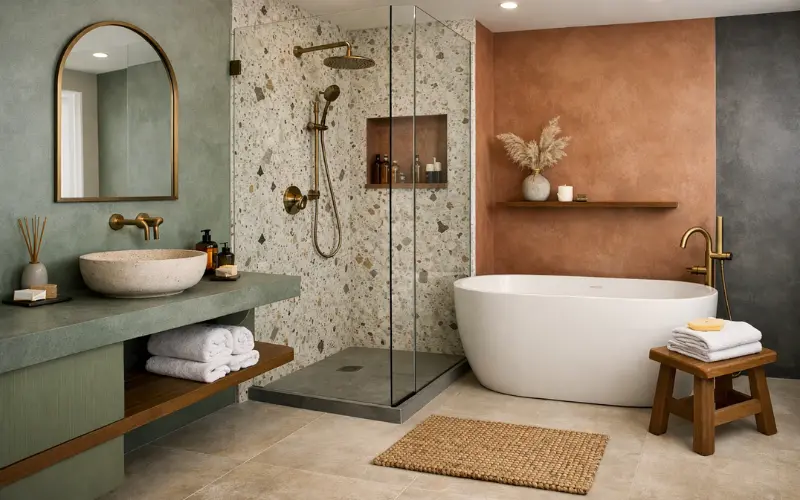
Clinical white is losing ground. The palette driving modern bathrooms Australia renovators are choosing now includes sage green, warm terracotta, sand, and soft charcoal. These tones pair naturally with brushed brass or bronze tapware, giving the room a grounded, sunbaked feel rather than a sterile one.
Terrazzo is also having a genuine moment. Unlike plain porcelain, terrazzo hides dust, hair, and water spots far better, which makes it a smart pick for busy family bathrooms. Microcement is the other material worth watching. It creates a seamless, joint-free surface across walls and floors, which cuts down on grout lines that trap grime over time.
For a family bathroom that needs to look good and stay practical, large-format tiles (600x600mm or bigger) remain the safest choice. Fewer grout lines mean less cleaning and a cleaner visual line, especially in smaller rooms.
Layout Trends Worth Considering
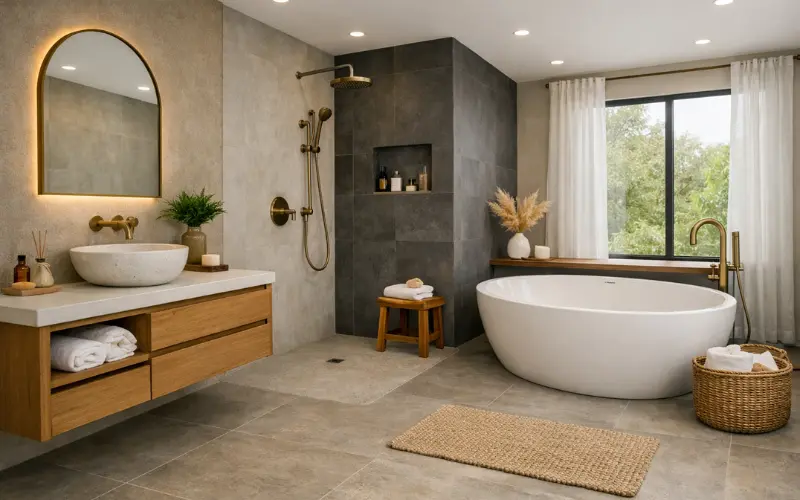
The layout matters more than the finishes, because it decides how the room actually functions day to day. Several layout ideas are consistently showing up in modern bathrooms Australia wide:
- Wet rooms. The shower and the rest of the room share one continuous, graded, tiled floor with no glass door or step. This makes even a small bathroom feel open, but it demands excellent waterproofing. Cutting corners here is the single most common cause of leaks and callbacks.
- Floating vanities. A wall-hung vanity lifts the cabinetry off the floor, which visually widens the room and makes mopping far easier. Deep drawers work better than cupboards for everyday storage, since you can see everything at a glance instead of digging to the back.
- Curved, freestanding baths. Rather than tucking the tub into a corner, many renovations now place a round or oval freestanding bath as a genuine focal point, often positioned near a window.
Tapware and Fixture Choices
Matte black tapware still leads the pack in Australia, largely because it hides water spots better than chrome and suits almost any tile palette. That said, mixed metals are gaining popularity: pairing black tapware with a brass mirror frame or brushed bronze cabinet handles adds warmth without overwhelming the room.
Smart fixtures are becoming more common too. Digital shower controls let you set an exact water temperature before you even step in, which is a genuine safety benefit for households with young children or elderly residents. LED mirrors with built-in demisters solve the age-old problem of a foggy mirror after a hot shower, and they double as flattering, shadow-free lighting for grooming.
Climate Considerations Most Guides Skip
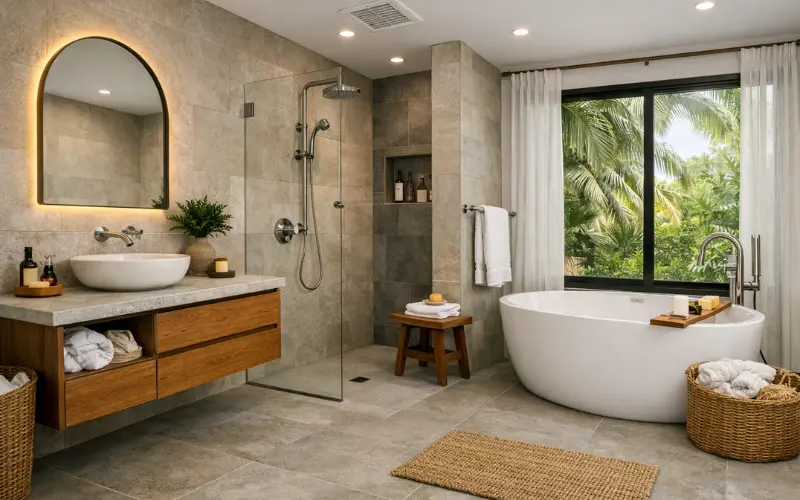
This is where a lot of design advice falls short: Australia is not one climate. What works in a dry Adelaide bathroom will fail faster in humid Cairns or coastal Queensland.
- Tropical and subtropical zones (Queensland, northern NSW): Prioritise mould-resistant grout, sealed timber, and strong exhaust ventilation. Humidity above 65% accelerates moisture damage in porous materials, so stone-look porcelain often outperforms natural stone here.
- Coastal areas: Salt air corrodes cheaper metal finishes quickly. Marine-grade or 316-stainless tapware and fittings last considerably longer near the coast.
- Dry inland climates: Timber vanities and joinery need less moisture protection, but strong UV exposure through windows can fade darker tile colours over time.
Matching your material choices to your actual climate zone, not just the trend photos, is one of the most overlooked steps in planning modern bathrooms Australia renovators regret skipping.
Water Efficiency and Sustainability
Sustainability has shifted from a nice-to-have to a genuine priority in modern bathrooms Australia wide. Two changes make the biggest practical difference:
- WELS-rated fixtures. Choose 5-star WELS-rated taps and showerheads. They reduce water use significantly without sacrificing pressure or feel.
- Recycled and reclaimed materials. Tiles made from recycled glass and vanities built from reclaimed timber are now widely available and no longer carry the premium price tag they once did.
These choices also tend to lower ongoing water and energy bills, which makes them a practical investment rather than just an ethical one.
What a Renovation Actually Costs
Real numbers help more than vague trend lists. Based on current Australian market rates, here is a realistic breakdown:
| Renovation Level | Typical Cost (AUD) | What’s Included |
|---|---|---|
| Refresh | $8,000–$18,000 | New vanity, toilet, and tapware. Existing plumbing stays in place. Tile resurfacing instead of full removal. |
| Standard | $18,000–$32,000 | Full strip-out, floor-to-ceiling tiling, new bath, updated waterproofing, minor plumbing changes. |
| Premium | $32,000–$55,000+ | Wall or window changes, natural stone or microcement, underfloor heating, custom joinery, smart fixtures. |
Costs vary depending on your location, the size of the room, and how much of the existing plumbing you keep in place. Keeping the toilet and shower in their current positions is the single easiest way to control your budget, since moving plumbing lines is consistently the most expensive line item.
Small Bathroom Strategies That Actually Work
Most Australian homes have at least one compact bathroom or ensuite. A few genuinely effective tricks make these spaces feel bigger:
- Use large-format tiles to reduce visual clutter from grout lines.
- Go wall-hung wherever possible, including the toilet and vanity, to expose more floor area.
- Build a recessed shower niche instead of adding shelves that stick out into the space.
- Layer your lighting: combine ceiling downlights with under-vanity strip lighting to avoid dark corners.
- Choose a round or arched mirror to soften the boxiness of a small room.
Common Mistakes to Avoid
- Skipping professional waterproofing to save money on a wet room layout. This almost always costs more to fix later than it would have cost to do properly the first time.
- Choosing trend-driven colours without considering resale value if you plan to sell within five years.
- Ignoring ventilation. A bathroom without proper extraction will develop mould regardless of how good the tiles look.
- Mixing more than two metal finishes, which can make a small space feel busy rather than considered.
Frequently Asked Questions
What is the most popular style for modern bathrooms Australia wide right now?
Warm, earthy palettes paired with natural textures like timber and terrazzo are leading the trend, replacing the all-white, clinical look that dominated the previous decade.
How much does a bathroom renovation cost in Australia in 2026?
A standard renovation typically starts around $18,000 to $20,000 for a mid-range finish. Premium renovations with stone, custom joinery, and layout changes can exceed $50,000.
How long does a typical bathroom renovation take?
Most standard renovations take three to four weeks, allowing time for demolition, plumbing, waterproofing, tiling, and final fit-off.
Do I need a bathtub in a modern bathroom design?
If resale value matters, keeping at least one bathtub in the home is worth considering, since many families specifically look for one. If it’s your forever home and space is tight, a larger walk-in shower is often the better use of the room.
What tiles work best in humid Australian climates?
Rectified porcelain and stone-look tiles perform well in humid regions because they resist moisture better than natural stone and require less ongoing sealing.
Is a wet room layout a good idea for a family bathroom?
Wet rooms work well for families as long as the waterproofing is done by a licensed, experienced installer. Cutting corners on waterproofing is the most common cause of long-term problems.
Are floating vanities worth the extra cost?
Yes, particularly in small bathrooms. The visual floor space they expose makes a real difference to how large the room feels, and they simplify cleaning considerably.
Final Thoughts
Creating modern bathrooms Australia homeowners will love is about more than following the latest trends. The best designs balance style, practicality, and long-term durability while taking your local climate and budget into account. By choosing quality materials, planning a functional layout, and investing in proper waterproofing and ventilation, you can build a bathroom that looks great, performs well, and adds lasting value to your home for years to come.

