
If you can see your neighbor’s coffee mug from your balcony, they can probably see yours too. That’s the reality of apartment living and tightly packed housing developments. A good balcony privacy screen fixes this problem in an afternoon, without a contractor or a lawsuit over a shared wall.
Most guides on this topic show you pretty pictures and stop there. This one goes further. Below, you’ll find real comparisons of materials, honest cost ranges, a step by step installation walkthrough, and the lease and building rules that other articles rarely mention. By the end, you’ll know exactly which balcony privacy screen fits your space, your budget, and your landlord’s rulebook.
What Is a Balcony Privacy Screen?
A balcony privacy screen is any barrier you add to a balcony railing, wall, or glass panel to block sightlines from neighbors, passersby, or nearby buildings. It can be a fabric panel, a woven bamboo roll, a frosted film, or even a wall of tall plants.
Unlike a fence or a permanent wall, this kind of screen is usually removable or semi-permanent. That flexibility matters because most apartment dwellers don’t own their balconies outright and need solutions that respect the property they’re renting.
Why Balconies Need Privacy Solutions
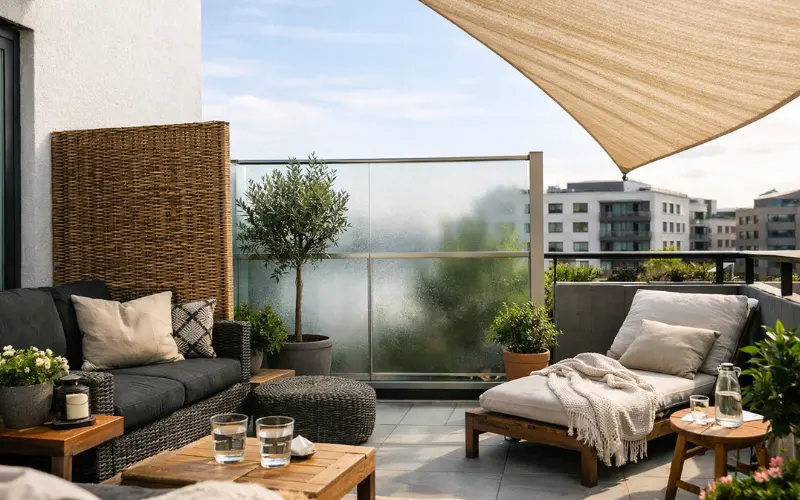
Privacy isn’t just about hiding from view. There are three separate problems a screen can solve, and most articles only talk about the first one.
- Visual privacy. Stopping direct eye contact with neighbors or street level foot traffic.
- Wind and weather protection. A solid or semi-solid panel cuts down gusts, which matters if your balcony faces an open street or a high floor.
- UV and heat control. Mesh and shade cloth block harsh afternoon sun, which protects furniture fabric and keeps the space usable in summer.
Understanding which of these three you’re actually solving for changes which product makes sense. A see-through mesh handles wind and sun but does little for visual privacy. A solid panel blocks sightlines completely but can turn your balcony into a wind tunnel if it isn’t rated for outdoor gusts.
Types of Balcony Privacy Screen Materials
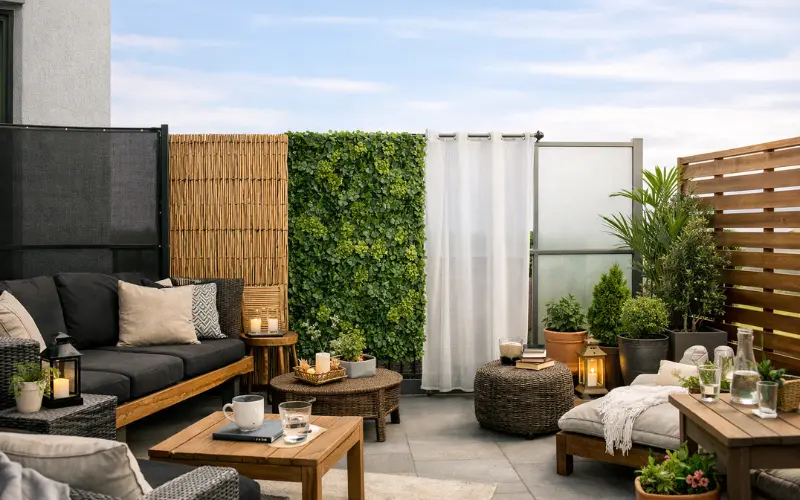
Not every screen material behaves the same way outdoors. Here’s how the main options actually compare, based on durability, cost, and how much light they let through.
| Material | Privacy Level | Wind Resistance | Typical Cost | Best For |
|---|---|---|---|---|
| HDPE mesh screen | High | Excellent (breathable) | $20 to $45 | Windy, high floor balconies |
| Bamboo or reed rolls | Medium to high | Good | $25 to $60 | Boho or natural styles |
| Faux living wall panels | High | Good | $30 to $70 | Renters who want greenery without upkeep |
| Sheer tension rod curtains | Low to medium | Fair | $25 to $80 | Balconies with side walls |
| Frosted window film | High (for glass) | Excellent | $15 to $40 | Glass balustrades |
| Tall potted plants | Medium | Fair, depends on pot weight | $40 to $150+ | Balconies with weight allowance |
| Wooden trellis or fence panel | High | Good | $50 to $150 | Larger balconies, terraces |
A quick note most buying guides skip: solid vinyl or tarp panels look private, but they act like a sail in wind. On upper floors, a woven or perforated fabric is almost always the safer choice, since it lets air pass through instead of pulling against the railing.
How to Choose the Right Balcony Privacy Screen
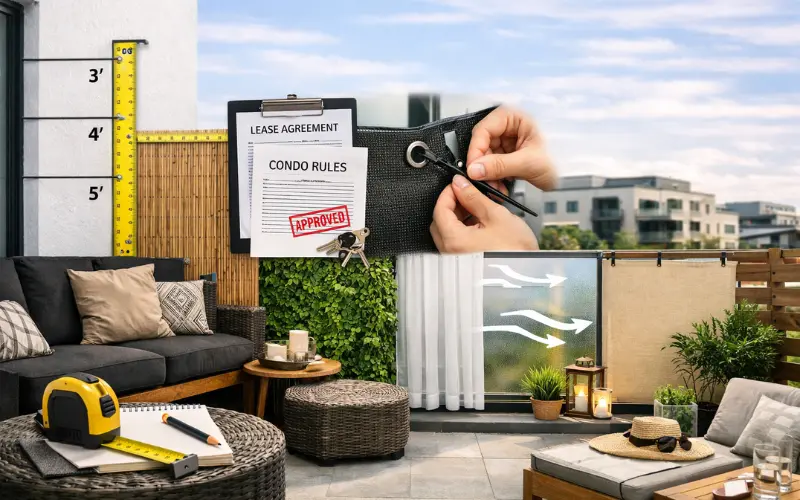
Picking the right one isn’t just about looks. Walk through these questions first.
- 1. Measure before you shop. Measure the full length of your railing or glass panel, plus the height from the floor to the top rail. Most screens are sold by the linear foot or meter, and buying the wrong length means returns or gaps.
- 2. Check your lease or HOA rules. This is the step almost every competitor article leaves out. Many leases and condo associations restrict what can be attached to a balcony, especially anything drilled into railings, anything visible from the street in a uniform color, or anything taller than the railing itself. A quick email to your property manager before you buy saves you from removing a screen the week after installing it.
- 3. Match the attachment method to your railing. Zip ties and grommets work on metal or wood railings. Tension rods work only between two solid walls. Adhesive hooks work on glass but rarely hold up in strong wind.
- 4. Think about airflow, not just coverage. A fully solid balcony privacy screen blocks the most light and sightlines, but it also blocks airflow. If your balcony gets direct sun for more than four hours a day, a semi-sheer or perforated material keeps the space from turning into a greenhouse.
How to Install a Balcony Privacy Screen
Installation varies by product, but the general process is the same for most panel and mesh styles.
- Clean the railing or glass surface so ties or adhesive grip properly.
- Unroll the screen and hold it against the railing to confirm the fit before attaching anything.
- Secure the top corners first with zip ties, grommets, or clips, spaced no more than 12 inches apart.
- Work down the sides, pulling the material taut as you go to prevent sagging or flapping.
- Trim excess material with scissors if the screen is longer than your railing.
- Step back and check for gaps at the corners, which are the most common spot for sightlines to sneak through.
For frosted film on glass, the process is different: spray the glass with a soapy water solution, apply the film, then use a squeegee to push out air bubbles from the center outward.
Maintenance and Lifespan
Nobody talks about this part, but it matters if you want your investment to last more than one season.
- Fabric and mesh screens typically last two to four years outdoors before UV exposure causes fading or brittleness. Rinse with a hose every few weeks to prevent dirt buildup.
- Bamboo and reed screens last three to five years but should be treated with an outdoor sealant if you live somewhere with heavy rain, since untreated bamboo can rot at the base.
- Faux foliage panels need almost no maintenance beyond an occasional rinse, making them the lowest effort option.
- Frosted film can last five or more years but may peel at the edges in extreme heat, so check the corners each spring.
Bringing a fabric balcony privacy screen indoors during winter storms adds years to its usable life, especially in regions with heavy snow or ice.
Budget Breakdown: What to Expect
Here’s a realistic cost range depending on how much of your balcony you’re covering.
- Small balcony (one side, under 6 feet): $20 to $50
- Medium balcony (full railing wraparound): $50 to $120
- Large balcony or terrace with multiple screens: $120 to $300
- Custom or premium fabric panels: $150 and up
If your goal is full coverage on a budget, HDPE mesh rolls offer the best privacy per dollar, since a single roll often covers an entire railing length for under $40.
Renter-Friendly Options That Leave No Damage
If you’re renting, drilling holes or using strong adhesive is rarely worth the risk to your deposit. These damage-free approaches work well:
- Tension rods with sheer curtains between two walls, no tools required.
- Zip-tied mesh or bamboo panels, which remove cleanly and leave no marks on standard railings.
- Command-style outdoor hooks rated for exterior use, ideal for lightweight fabric panels.
- Freestanding planters with tall grasses or shrubs, which need no attachment at all.
Each of these can be removed in minutes when you move out, which matters more than most articles acknowledge.
Common Mistakes to Avoid
- Buying a solid panel for a windy high-rise balcony. It will strain the railing and may not survive the first storm.
- Skipping the lease check. Some buildings require screens to match an approved color or style.
- Ignoring weight limits for potted plants. Many balconies have a maximum load rating that heavy ceramic pots can exceed.
- Choosing a panel shorter than the railing. Gaps at the top defeat the purpose entirely.
- Forgetting fire codes. Some cities restrict fully enclosing a balcony, since it can block emergency access.
Frequently Asked Questions
Is a balcony privacy screen legal in apartments?
In most cases, yes, as long as it’s removable and doesn’t alter the structure. Always confirm with your landlord or HOA first, since rules vary by building and city.
What is the most durable material for outdoor use?
HDPE mesh and treated bamboo hold up the longest against sun, rain, and wind, typically lasting three to five years with basic care.
Can I install one without drilling?
Yes. Zip ties, tension rods, and outdoor-rated adhesive hooks all provide secure, damage-free attachment options.
How high should a balcony privacy screen be?
It should reach at least the height of your railing, and ideally a few inches above it, to eliminate sightlines from neighboring floors or buildings.
Will a screen block too much light?
Solid panels reduce more light than mesh or sheer fabric. If natural light matters to you, choose a semi-transparent material rated at 70 to 90 percent shade.
Do privacy screens help with noise as well as visual privacy?
Slightly, but not significantly. Fabric and mesh screens are not dense enough to block sound meaningfully; for noise reduction, look at acoustic panels instead.
How often should I replace a fabric screen?
Most outdoor fabric screens need replacing every two to four years due to UV fading, though quality varies by brand and climate exposure.
Can plants alone provide enough privacy?
Tall, dense plants like bamboo, bay laurel, or ornamental grasses can offer strong coverage, but they take time to grow in and need consistent watering and weight consideration for the balcony floor.
Final Thoughts
A balcony privacy screen is one of the fastest, most affordable upgrades you can make to a small outdoor space. The key is matching the material to your actual problem, whether that’s nosy neighbors, harsh wind, or blazing afternoon sun, and checking your building’s rules before you buy anything permanent looking. Get those two details right, and your balcony goes from exposed to genuinely private in a single weekend.

