
The Best Type of Blinds for Living Room comes down to three things working together: how much natural light your room actually gets, how much privacy the street or neighbours demand, and how the fabric or slat colour sits against your existing furniture. For most Australian living rooms, a double roller blind (sheer plus blockout) or a timber venetian gives the best balance of light control, insulation and everyday practicality, though the right pick still depends on your window’s orientation and your household’s habits.
Best Type of Blinds for Living Room is one of those renovation jobs that looks simple until you’re standing in a shop staring at forty fabric swatches. I’ve made the wrong call myself, once fitting cheap vertical blinds in a north-facing lounge room that turned into a sauna every afternoon. That mistake is exactly why the advice below goes past “here are six types of blinds” and into the details that actually change your decision.
Why Your Window’s Orientation Matters More Than the Blind Style
Most buying guides jump straight into fabric types without mentioning the one factor that decides everything else in an Australian home: which way your Best Type of Blinds for Living Room windows face.
- North-facing living rooms catch the most sun for most of the day, so you’ll want blockout or high-opacity fabrics, or a blind with a strong sunscreen weave, to stop glare on the TV and fading on your sofa.
- East-facing rooms get a sharp morning hit of light. A light-filtering roller or sheer roman blind softens this without leaving the room dark all afternoon.
- South-facing rooms in Australia get the least direct sun, so you can lean into decorative fabrics, patterns or timber venetians without worrying much about UV fade.
- West-facing rooms cop the harsh late-afternoon sun, which is brutal on timber floors and leather furniture. A sunscreen roller blind with a low openness percentage (around 1-3%) protects your furnishings while still letting you see outside.
Get this step right first, and the rest of your decision becomes far easier.
Roller Blinds: The Practical All-Rounder
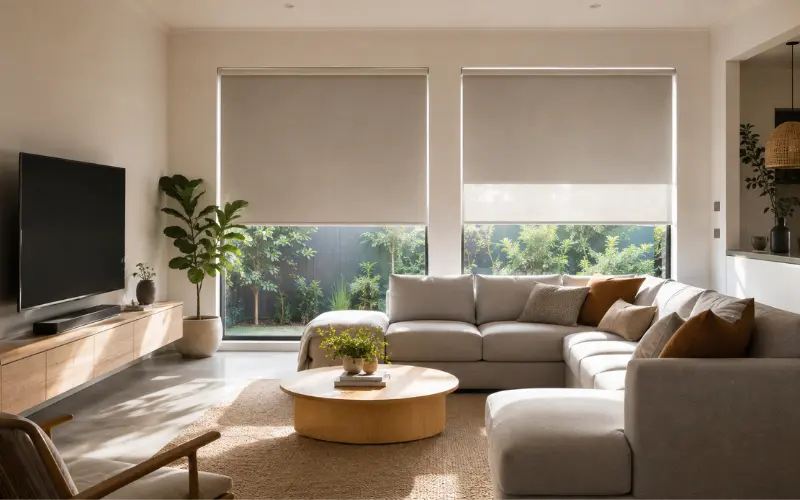
Roller blinds remain the most popular choice for Australian living rooms, and for good reason. A single fabric panel rolls neatly around a headrail, so there’s no bulky stack of slats or folds eating into your window space, which matters in smaller apartments and units.
The real trick with roller blinds isn’t the fabric pattern, it’s the colour match. Choose a shade close to your wall colour and the blind visually disappears when closed, rather than becoming a feature that fights with your furniture and art. If you want more flexibility, a double roller (sheer layer plus blockout layer on the same bracket) lets you filter light during the day and black the room out completely for movie nights, which is genuinely one of the best upgrades for a living room used for both.
Best for: open-plan living areas, rental-friendly no-drill options, and households wanting one blind to do two jobs.
Timber and Faux-Wood Venetians: The Classic Choice
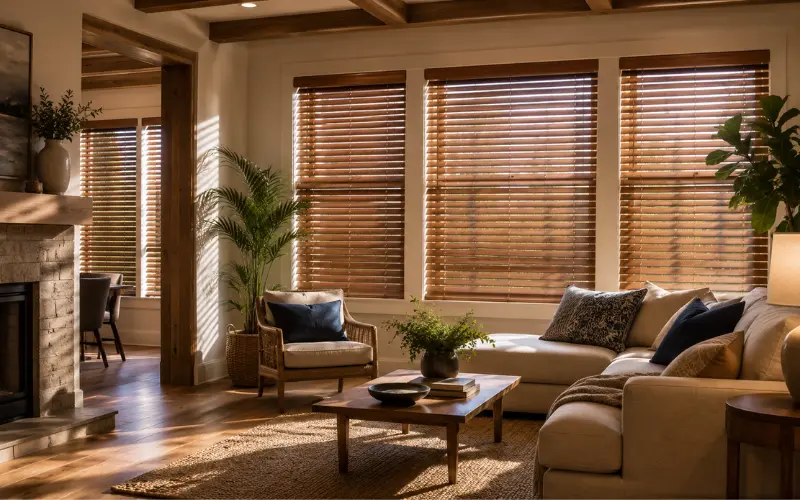
Timber venetians bring a warmth that fabric blinds can’t quite match, especially in living rooms with existing timber floors or exposed beams. The tiltable slats give you fine control over light, letting you angle them upward to bounce daylight off the ceiling rather than straight into your eyes.
Real timber looks fantastic but isn’t the best fit for coastal or tropical parts of Australia, where humidity can cause slats to warp or crack over a few summers. In those regions, PVC or aluminium faux-wood blinds copy the look almost exactly while shrugging off moisture. Both timber and faux-wood venetians cast those soft horizontal shadow lines that photograph beautifully in the late afternoon, which is why interior stylists reach for them so often.
Best for: formal or classic living rooms, humid coastal homes (faux-wood only), and anyone wanting adjustable light without full blockout.
Roman Blinds for a Softer, Dressed-Up Look
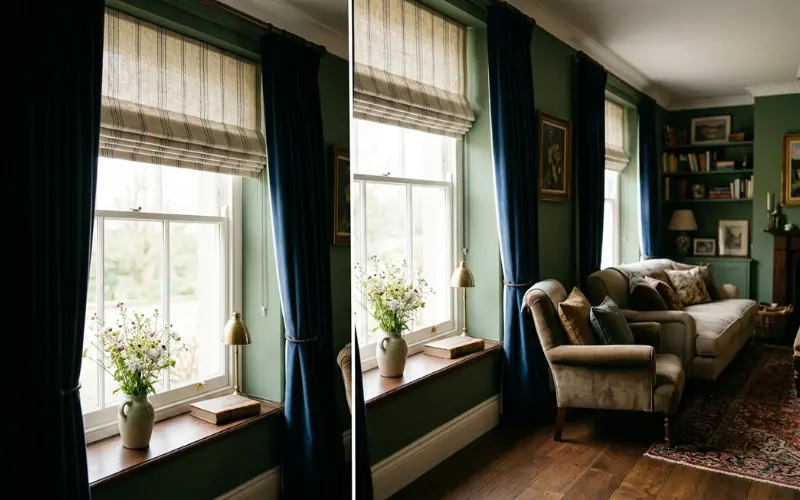
Roman blinds fold into neat horizontal pleats when raised, giving a softer and more tailored look than a flat roller. They work particularly well in living rooms with a more traditional or heritage feel, where a fully hard-edged blind can look out of place.
One thing most buying guides skip: Roman blinds are the weakest option for households with toddlers or pets. The cord mechanism sits behind the fabric folds, and repeated tugging from small hands or claws wears out the lift system faster than any other blind type. If you love the look but have young kids at home, ask for a cordless or motorised lift mechanism rather than the standard corded version.
Best for: period homes, layered window treatments under curtains, and living rooms where you want a decorative rather than purely functional blind.
Cellular (Honeycomb) Blinds for Insulation and Noise Control
Cellular blinds trap air inside a honeycomb-shaped pocket, which genuinely improves thermal performance at the window, keeping a living room warmer in winter and cooler in summer without touching your heating and cooling bills as hard. This matters more than people expect in older Australian homes with single-glazed windows, where the glass itself is doing almost no insulating work.
A benefit rarely mentioned: cellular blinds also dampen sound better than flat fabric or slatted options, which is useful if your living room faces a busy street or sits close to a neighbour’s side fence. The trade-off is that the pleated design collects dust in the folds, so they need a light vacuum every few weeks rather than a quick wipe.
Best for: energy-conscious households, noise-affected living rooms, and anyone in an older weatherboard or brick veneer home.
Vertical and Panel Blinds for Large or Sliding Windows
If your living room opens onto a deck or courtyard through sliding doors or a bank of arch or oversized windows, vertical or panel blinds handle that width far better than a single roller ever could. The panels stack neatly to one side rather than piling fabric awkwardly across a track, which keeps the door fully usable.
Standard vertical blinds have earned a slightly dated reputation, largely from the beige office-style versions common in rentals during the 1990s. Panel blinds solve this by using wider, flatter fabric panels that read as more of a soft sheer than a slatted blind, giving a similar function with a far more current look.
Best for: sliding glass doors, wall-to-wall glazing, and open-plan living and dining spaces that flow onto an outdoor area.
A Quick Comparison of Living Room Blind Types
| Blind Type | Light Control | Insulation | Best Window Type |
|---|---|---|---|
| Roller (double) | Excellent | Moderate | Any size, small to large |
| Timber/Faux-Wood Venetian | Very good, adjustable | Low to moderate | Small to average |
| Roman | Good | Moderate (with lining) | Small to average |
| Cellular/Honeycomb | Good to excellent | Excellent | Any size |
| Vertical/Panel | Good | Low | Wide or sliding doors |
A Safety Rule Most Guides Leave Out
Every corded blind sold in Australia must comply with the mandatory safety standard AS/NZS 4201.1, which covers cord and chain restraints to prevent strangulation risks for young children. If you’re buying blinds for a living room where kids play, ask your supplier to confirm the product is cordless, chain-restrained, or motorised. This isn’t just a nice-to-have; it’s a legal requirement for anything sold new in Australia, and it’s worth checking again if you’re installing second-hand blinds from a garage sale or online marketplace, since older stock may predate the standard.
Layering Blinds with Curtains or a Window Film
Blinds don’t have to work alone. Pairing a plain roller or venetian with sheer curtains adds softness and depth to a living room without sacrificing function, and it’s a cheap way to make a plain rental window feel finished. If UV fade is your main concern rather than privacy, a window tint film applied directly to the glass can work alongside your existing blinds to cut heat and glare even further, which is handy for west-facing rooms where a single treatment isn’t quite enough.
For living rooms with a glass feature wall or a frosted versus clear glass decision still on the table, it’s worth settling that glazing choice before you commit to a blind style, since obscured glass changes how much light control you actually need from the window treatment itself.
Matching Blinds to Your Living Room’s Purpose
A living room built around a big-screen TV needs different light control than one used mainly for reading or entertaining. If glare on the screen is a daily annoyance, prioritise a near-blockout fabric on the window facing the TV unit rather than a decorative sheer. Open-plan spaces that connect the living area to an open-plan kitchen benefit from a consistent blind style and colour running through both zones, so the sightline doesn’t feel chopped up by mismatched treatments. And if you’re chasing a relaxed, coastal-style living room, a woven timber or bamboo blind adds texture that a plain roller simply can’t.
Common Mistakes When Choosing Living Room Blinds
- Measuring for a face-fit when a recess-fit suits the window better, which leaves an awkward gap around the frame.
- Choosing a bold pattern before checking it against furniture and rugs already in the room, rather than the other way around.
- Ignoring stack space on vertical or panel blinds, which can end up covering part of the glass even when fully open.
- Skipping the child-safety check on second-hand or imported blinds that don’t meet AS/NZS 4201.1.
- Under-budgeting for motorisation, then regretting it later when the living room windows are too high to reach comfortably.
Final Thoughts
There’s no single Best Type of Blinds for Living Room, but there is a best type for yours once you factor in orientation, household habits and how the room gets used day to day. Start with light and privacy needs, check the safety standard if kids are in the house, and let the fabric or slat colour work with what’s already in the room rather than against it. Get those basics right and the blind you choose will do its job quietly for years, which is really all anyone wants from a window treatment in a cosy, well-lived-in living room.
Frequently Asked Questions on Best Type of Blinds for Living Room
What is the most popular Best Type of Blinds for Living Room in Australia?
Double roller blinds are the most common choice, combining a sheer layer for daytime privacy with a blockout layer for evenings and movie nights.
Are timber Best Type of Blinds for Living Room a good choice for a humid climate?
Real timber can warp or crack in high humidity, so PVC or aluminium faux-wood blinds are the safer choice for coastal Queensland, the Northern Territory or tropical WA.
Do blinds or curtains give better insulation for a Best Type of Blinds for Living Room?
Cellular (honeycomb) blinds generally outperform standard curtains for thermal insulation because of their trapped-air pocket design, though a lined curtain layered over a blind performs even better.
How do I choose blinds for a north-facing living room?
Go for a blockout or low-openness sunscreen fabric to manage the strongest sun exposure of the day and protect furniture from fading.
Are corded blinds legal for homes with young children in Australia?
Corded blinds must comply with AS/NZS 4201.1, which mandates cord restraints or tensioning devices. Cordless or motorised options remove the risk entirely and are the safer pick for family living rooms.
Can I mix blinds with curtains in the same living room?
Yes, this is a common and effective approach, giving you the function of a blind with the softness and framing of curtains.
What’s the best blind for a large sliding door in a living room?
Vertical or panel blinds handle wide sliding doors and large glazing far better than a single roller, since they stack to one side rather than bunching across the track.
Do roller blinds block heat as well as they block light?
Not always. A sunscreen fabric with a low openness percentage blocks UV and reduces glare while still allowing some view through, whereas a true blockout fabric blocks both heat and light almost completely.

