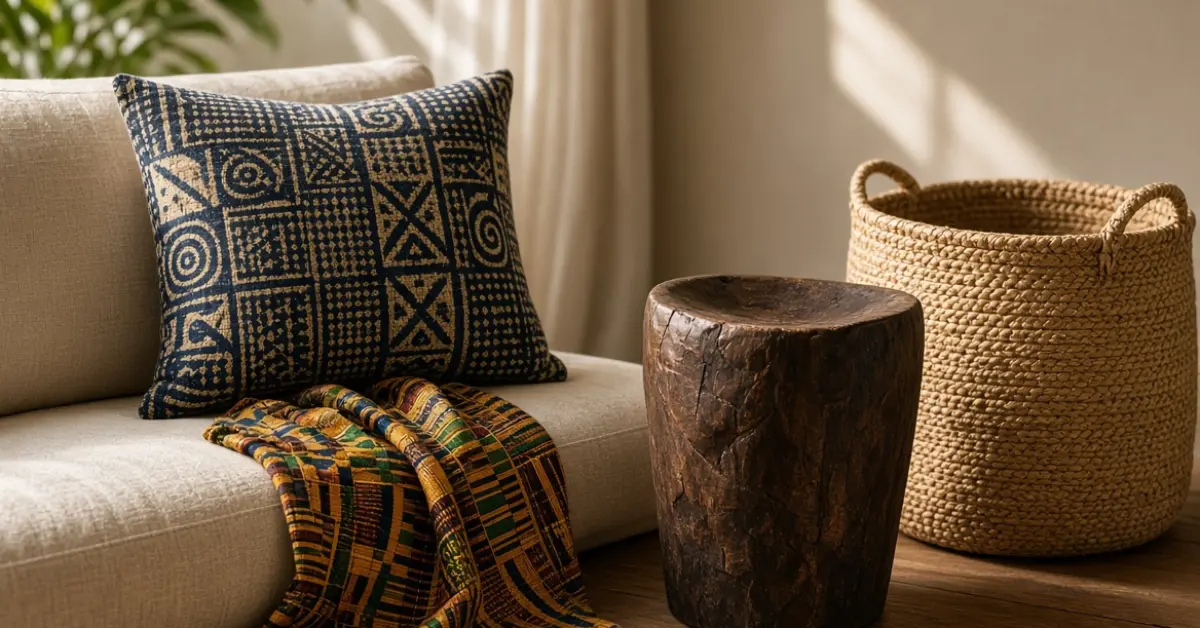
Authentic African American Home Decor is made or designed by African American or African diaspora artisans, uses materials and motifs with real cultural meaning rather than decorative mimicry, and comes with a traceable maker story. You can spot it by checking who made the piece, what the symbols actually mean, and whether the materials match traditional techniques rather than mass-produced substitutes.
If you’ve spent any time scrolling home decor sites, you’ve probably noticed the words “African-inspired” slapped on cushions that have no connection to the continent or its diaspora at all. That’s the problem this guide solves. Rather than another list of brands to browse, this is about giving you the actual knowledge to tell the difference yourself, whether you’re shopping in Melbourne, Sydney or anywhere else.
Why Authenticity Actually Matters Here
This isn’t just about ethics, though that’s part of it. Authentic pieces tend to hold their value and their story better than knockoffs, and they usually look better in a room too, because the craftsmanship is deliberate rather than copied.
A lot of mass-market “tribal print” cushions use printed patterns lifted from Adinkra symbols or Kente cloth without any of the meaning behind them. Adinkra symbols, for instance, originate from the Akan people of Ghana and each one represents a specific proverb or concept. When a symbol like Gye Nyame (meaning “except for God”) ends up printed on a $12 throw pillow with no context, it’s decoration stripped of its purpose. That’s the difference buyers should be looking for.
Expert note: In my experience reviewing decor listings, the fastest tell is the product description itself. Authentic sellers will usually name the specific pattern, region or technique. Generic listings that just say “tribal” or “ethnic print” without any further detail are a strong signal the maker doesn’t know, or care, where the design came from.
The Materials Tell You More Than the Marketing
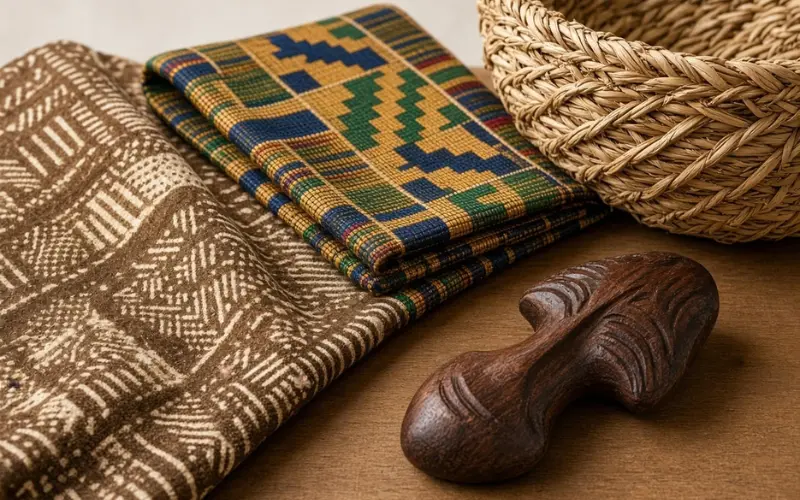
Genuine African American and African diaspora decor tends to lean on specific, traceable materials rather than synthetic stand-ins:
- Mudcloth (bògòlanfini) — hand-dyed cotton fabric from Mali using fermented mud and plant dyes, with a slightly uneven, matte finish. Printed polyester “mudcloth-style” fabric feels stiff and shiny by comparison.
- Kente cloth — woven, not printed, using interlocking strips on a traditional loom. Real kente has visible woven seams; printed versions are flat all the way across.
- Raffia and sisal — natural plant fibres used in baskets and wall hangings, with visible texture variation piece to piece.
- Reclaimed and carved timber — many African-inspired furniture pieces use dense hardwoods like mahogany or sapele, carved by hand, so no two pieces are perfectly identical.
If a “handwoven” basket looks completely uniform with a machine-perfect finish, that’s usually your answer. Handmade work has small irregularities. That’s not a flaw, it’s proof of process.
Reading the Maker’s Story, Not Just the Product Listing
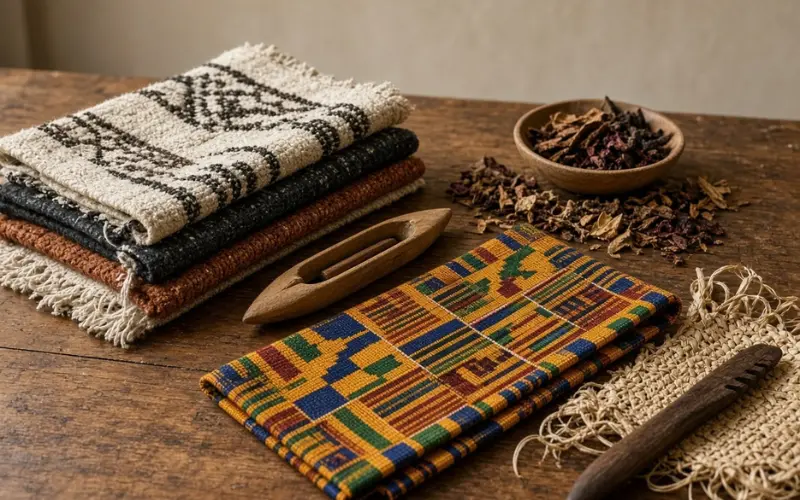
Every legitimate African American Home Decor brand has a story you can actually verify: where the founder is based, who makes the pieces, and often which region or tradition they’re drawing from. A few things worth checking before you buy:
- Does the seller name the artisan or workshop, or just say “handmade in Africa” with no further detail?
- Is there a consistent brand history across their website and social channels, or does the “about” page read like generic filler?
- Do they credit the specific cultural tradition (Yoruba, Akan, Ashanti, Ethiopian highland weaving, and so on) rather than a vague “African” label?
Brands like Bolé Road Textiles, built around Ethiopian handwoven fabric traditions, or Jungalow, which grew out of a design blog into a full lifestyle brand, are good examples of sellers who are specific about their sourcing rather than hiding behind a generic “African decor” tag.
Quick Comparison: Authentic vs Mass-Produced
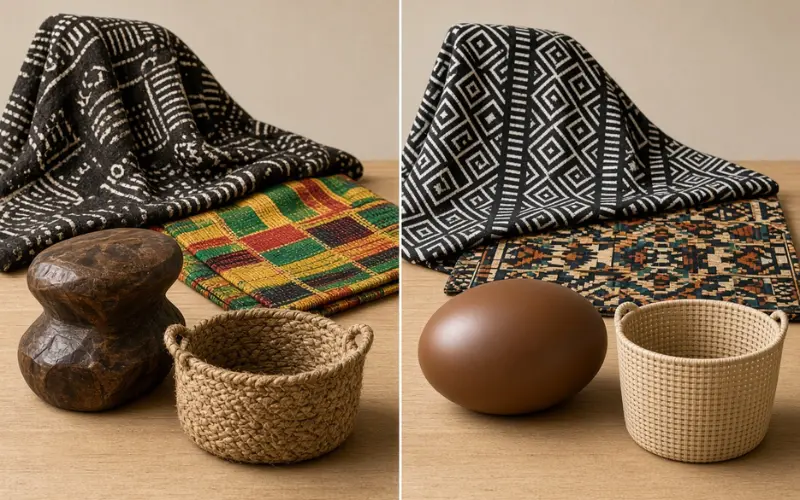
| Signal | Authentic piece | Mass-produced knockoff |
|---|---|---|
| Pattern origin | Named tradition (Kente, Adinkra, Ndebele) | Vague “tribal” or “ethnic” label |
| Construction | Woven, carved, hand-dyed, slight irregularities | Machine-printed, perfectly uniform |
| Maker info | Named artisan or workshop, verifiable story | Generic “handmade” claim, no detail |
| Materials | Natural fibres, solid timber, plant dyes | Polyester blends, MDF, synthetic dye |
| Price consistency | Reflects labour and material cost | Suspiciously cheap for claimed craftsmanship |
Where Australian Buyers Often Get Caught Out
Because most African American Home Decor-owned decor brands ship from the US, Australian buyers frequently end up buying from third-party marketplace resellers instead of the original maker. Two things worth doing before you check out:
- Search the brand name plus “official website” rather than buying the first marketplace listing you see, since resellers often mark up and sometimes misattribute pieces.
- Check shipping and import costs upfront. A piece that looks like a bargain on a marketplace can end up costing more once GST and freight are added, compared with buying direct.
If you’re building out a broader look, pairing authentic pieces with other African home decor elements, or leaning into a fuller Afrocentric home decor scheme, works well as long as you’re sourcing each piece the same careful way rather than filling gaps with printed filler.
Styling Authentic Pieces Without Overdoing It
One mistake I see often: buying three or four statement pieces and clustering them together so the room reads as a themed display rather than a lived-in home. Authentic decor works best mixed into an existing scheme, not staged as a separate “African corner.”
A hand-carved stool next to a linen sofa. A single mudcloth-covered cushion on an otherwise neutral bed. A woven basket used for actual storage rather than propped decoratively. These read as considered choices rather than costume. If you want texture without going all-in on print, natural-fibre home decor fabrics in raffia or sisal blend in more easily than bold patterned textiles.
Supporting the Right Sellers
Buying Black-owned home decor directly, rather than through a reseller, means more of what you spend actually reaches the artisan or founder. It’s also usually the fastest way to get accurate information about materials and origin, since you’re dealing with the source rather than a third party repackaging the listing.
For handmade home decor specifically, direct-from-maker platforms (brand websites, verified Etsy shops, artisan cooperatives) tend to give far more detail than large marketplaces, where listings are often thin on provenance.
FAQs on African American Home Decor
How can I tell if a mudcloth print is real fabric or just a printed pattern?
Feel the fabric. Genuine mudcloth has a slightly stiff, matte, cotton texture with visible dye variation. Printed versions feel smooth and uniform, often with a slight sheen from the synthetic base fabric.
Is it appropriation to buy African-inspired decor if I’m not African American Home Decor?
No, buying and displaying decor isn’t appropriation on its own. The concern is usually about who profits and whether the origin is credited. Buying directly from African American or African diaspora makers, and understanding what the piece represents, addresses that concern directly.
Why do prices vary so much between similar-looking pieces?
Hand-dyeing, hand-weaving and solid timber carving all take significantly longer than machine production, and the cost reflects that labour. A large price gap between two “identical-looking” pieces is often the clearest sign one is handmade and one isn’t.
Are Adinkra symbols specific to one country?
Yes, Adinkra symbols originate specifically with the Akan people of Ghana. They’re sometimes used loosely as a stand-in for “African” design generally, which flattens their actual meaning.
Can I mix authentic African American Home Decor with other styles, like coastal or Scandinavian?
Yes, and it often looks better that way. A carved timber stool or a mudcloth cushion works as a standalone statement piece within a broader neutral scheme, rather than needing a fully themed room.
Do I need to worry about import restrictions bringing pieces into Australia?
Most textiles and finished timber furniture clear standard customs without issue, but raw or unfinished wood items can occasionally trigger biosecurity checks. Check the Australian Government’s biosecurity import conditions tool before ordering large timber pieces.
What’s the difference between African decor and African American decor?
African decor generally refers to pieces made on the continent, tied to specific regional or ethnic traditions. African American decor often blends those traditions with diaspora experience, contemporary design, and American or Caribbean cultural influence, so the aesthetic and meaning can differ even when materials overlap.
Is it better to buy directly from a brand’s website or through a marketplace?
Directly from the brand’s website in most cases. You’ll get more accurate provenance information, the artisan receives a larger share of the sale, and you avoid reseller markups that are common on large marketplaces.