Your home’s facade is the very first thing people see — and first impressions count. A well-designed single storey house facade can lift your street appeal, boost property value, and make you proud every time you pull into the driveway.
The great news? You don’t need to knock down walls or spend a fortune to get there. Whether you’re building from scratch, renovating, or simply refreshing the front of your home, these single storey house facade ideas will give you plenty to work with.
What Makes a Great Single Storey House Facade?
Before diving into styles and materials, it’s worth understanding what actually makes a facade work. A strong single storey house facade balances three things:
- Proportion — The width of a single-level home is always greater than its height. Design choices need to respect this horizontal nature rather than fight it.
- Material cohesion — Mixing too many textures or finishes can look cluttered. Stick to two or three complementary materials.
- Functionality — Overhangs, covered entries, and smart window placement aren’t just stylish — they also provide shade, weather protection, and energy efficiency.
Most competitors focus only on aesthetics. But a facade that looks amazing and performs well is the real goal.
1. Modern Minimalist Facade
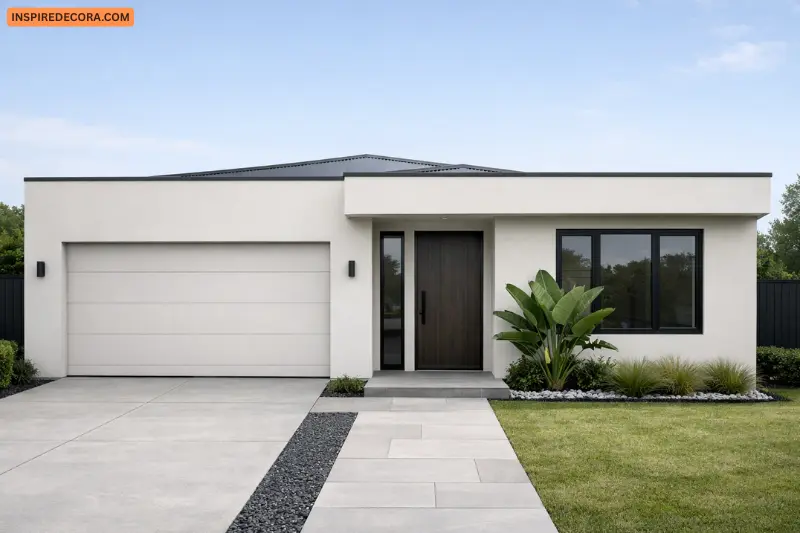
Clean lines, flat or low-pitched roofs, and a neutral colour palette define the modern minimalist look. Think crisp white render, black window frames, and a statement front door.
This style works especially well for single storey homes because it emphasises the horizontal form of the building rather than competing with it.
Design tips:
- Use a matte or off-white render rather than stark white — it’s easier to maintain and more refined.
- Choose black aluminium window frames for contrast without adding visual clutter.
- Keep the garage door flush and colour-matched to the facade for a seamless look.
- Add a single large plant or small garden bed at the entry to soften the hard lines.
2. Hamptons-Style Facade
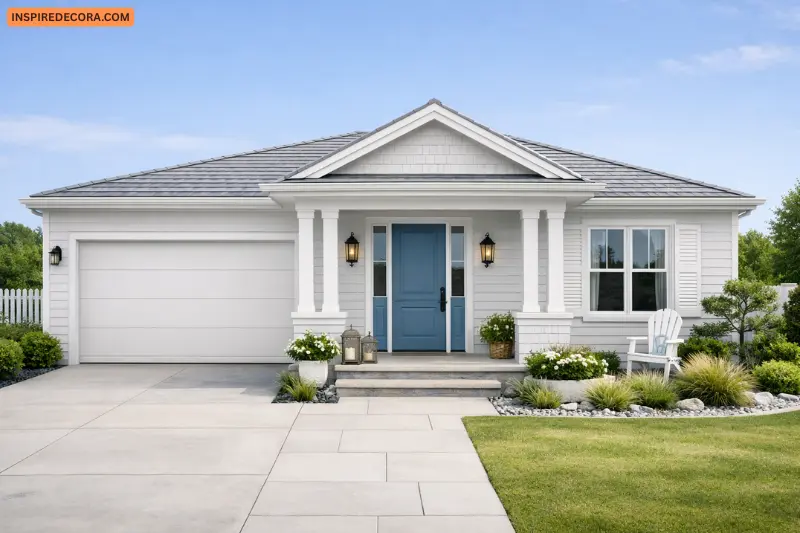
The Hamptons look remains one of the most popular single storey house facade ideas in Australia and beyond — and it’s easy to see why. It’s timeless, elegant, and effortlessly welcoming.
Key features include weatherboard or Linea cladding, white or soft grey tones, gabled rooflines, and dark-trimmed windows.
Design tips:
- Horizontal cladding lines naturally emphasise the single storey profile and give the home a grounded, solid feel.
- Add a covered front porch with simple posts to complete the look.
- Use a French navy or charcoal for the front door — it pops beautifully against white cladding.
- Shutters (even decorative ones) add depth and character without major expense.
3. Mixed Materials Facade
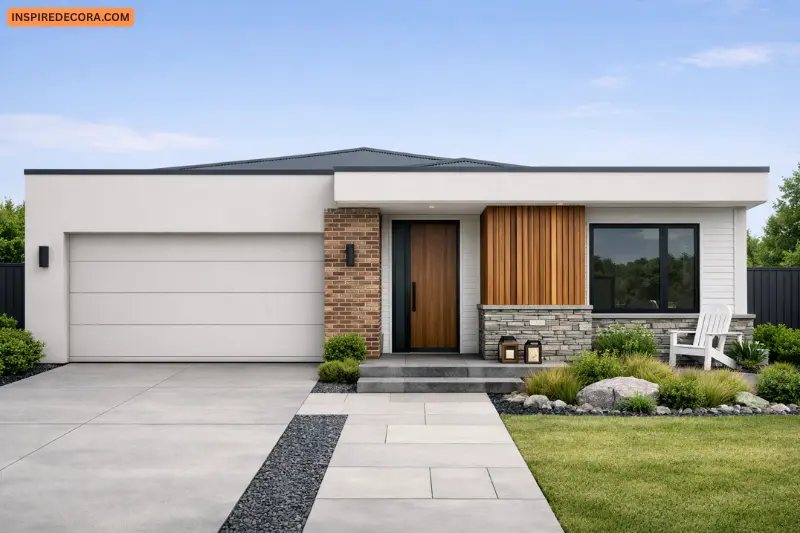
One of the strongest current trends in Single Storey House Facade Ideas design is mixing materials — pairing rendered walls with timber battens, stone accents, or brick cladding on a feature section.
This approach adds visual depth that a single material can’t achieve alone. It also gives your home a custom, architect-designed feel without a custom-designed price tag.
Popular material combinations:
- White render + raw or charred timber battens
- Brick feature wall + smooth render panels
- Stone veneer base + vertical cladding above
- Dark render + blonde or natural timber entry feature
A tip competitors miss: When mixing materials, use one as the dominant material (covering 60–70% of the facade) and the other as an accent. This keeps the result cohesive rather than chaotic.
4. Brick Facade — Classic Reimagined
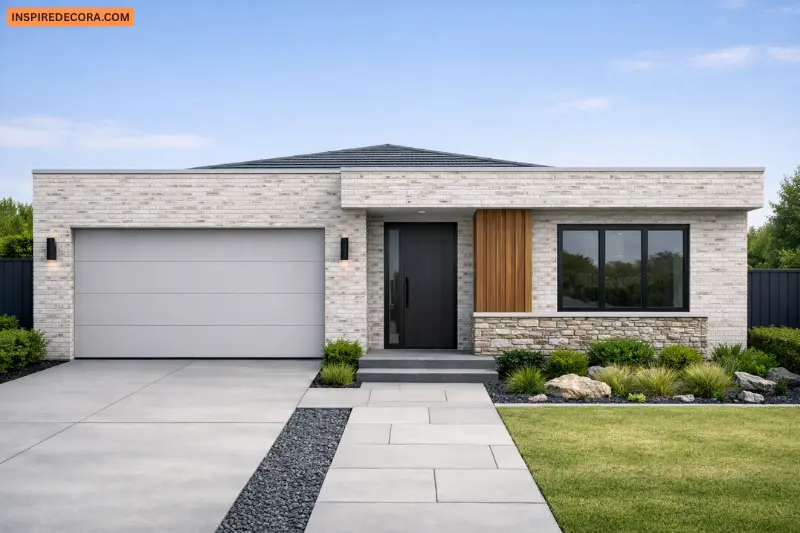
Single Storey House Facade Ideas Brick never went out of fashion — it just needed a refresh. Modern brick facades move away from the orange-brown tones of older homes toward pale, white-washed, charcoal, or textured bricks that feel completely contemporary.
Brick is also one of the most durable and low-maintenance facade materials available, making it a practical choice alongside its visual appeal.
Design tips:
- Limewash or paint over old brickwork for a transformation that costs a fraction of recladding.
- Mix brick with a rendered section — such as the garage wall or entryway — for a modern contrast.
- Use a running bond or stacked bond pattern for a more contemporary feel compared to standard brickwork.
5. Rendered Facade with Colour
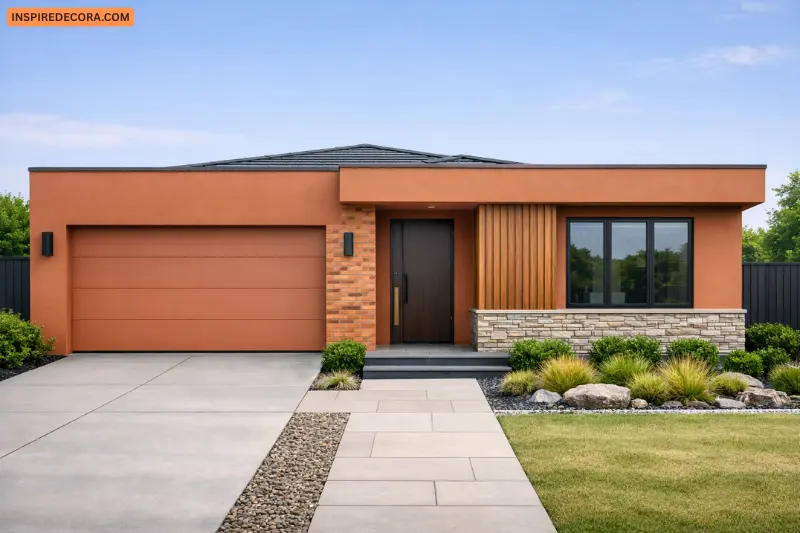
Rendered facades give you a smooth, clean canvas — and the colour you choose makes all the difference. While white and grey remain popular, more homeowners are moving toward warm tones like sand, terracotta, and dusty sage.
Colours that work well on single storey facades:
- Warm white or cream — versatile and timeless
- Soft grey — modern and sophisticated
- Terracotta or clay — warm, earthy, and trending upward
- Charcoal — bold, dramatic, and a strong statement
- Sage green — fresh and increasingly popular in 2024–2025
An important tip: Always test your render colour in natural light before committing. Colours look very different on a small swatch versus a full wall in full sun.
6. Skillion Roof Facade
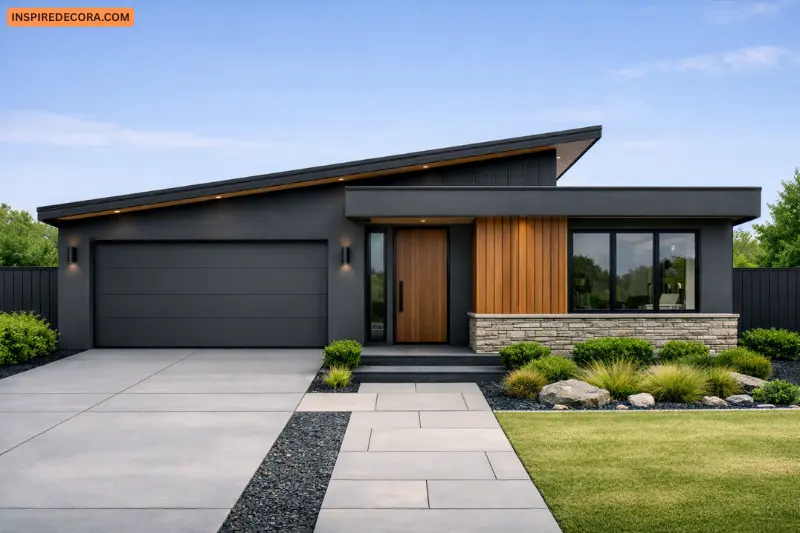
A skillion (single-pitched) roof dramatically changes the personality of a single storey home. It creates a strong angular profile and instantly modernises even the most dated facade.
Skillion roofs suit contemporary and industrial-style homes well and work beautifully with dark cladding, exposed beams, or large glazing panels.
Design tips:
- Pitch the skillion roof toward the rear to maximise the striking front elevation.
- Use Colorbond roofing in Ironstone or Monument for a cohesive, modern palette.
- Pair with wide eaves for both shade and visual drama.
7. Timber and Natural Materials Facade
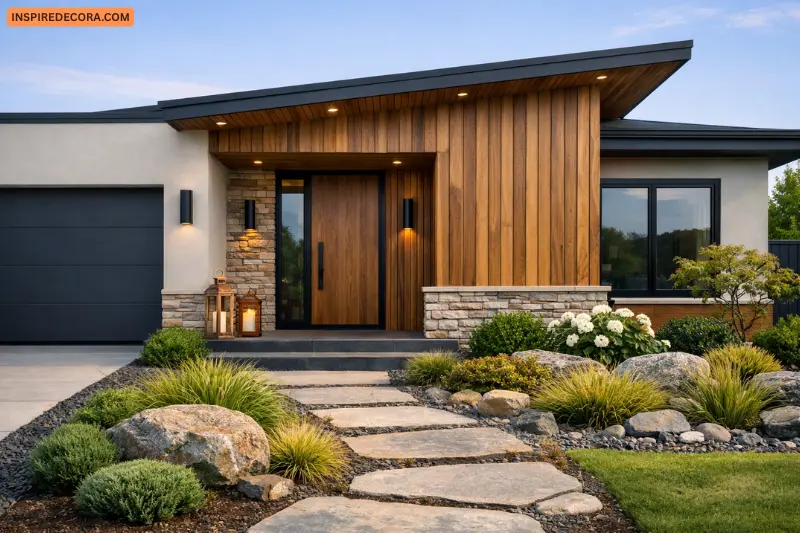
Timber adds warmth and texture that no manufactured material quite replicates. Whether used as vertical battens, horizontal cladding, or a feature soffit above the entry, timber gives a single storey house facade an organic, inviting quality.
Options to consider:
- Spotted gum or blackbutt for a classic Australian hardwood feel
- Western red cedar for a rich, warm tone that weathers beautifully
- Charred timber (Shou Sugi Ban) for a dramatic, low-maintenance option with Japanese roots
- Composite timber cladding for the look of real wood with greater durability and less maintenance
Note: Timber requires sealing and periodic maintenance. Factor this into your decision before committing.
8. Coastal and Relaxed Facade
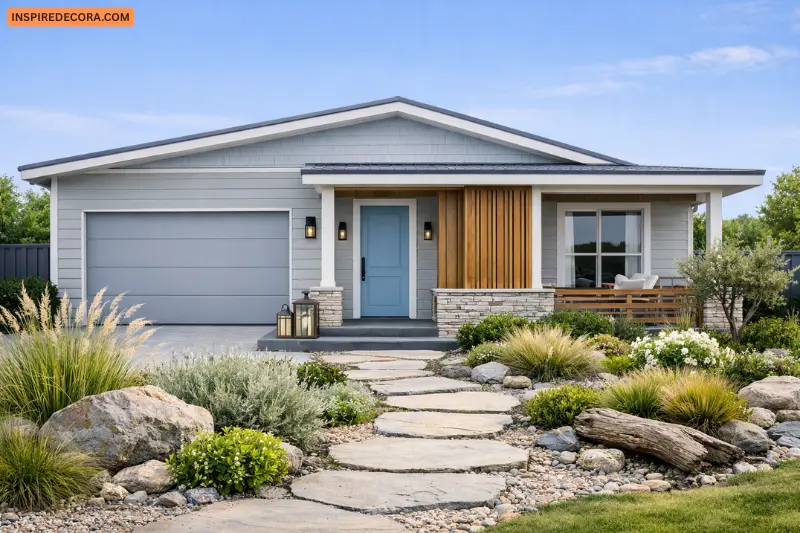
For homes near the water — or for those who simply love that relaxed coastal feel — a breezy, light palette works perfectly. Light grey, soft blues, bleached timber tones, and white trim define this style.
Design tips:
- Horizontal weatherboard or fibre cement cladding reinforces the relaxed, horizontal feel.
- Add screening around a covered porch using timber or powder-coated aluminium battens.
- Use coastal-friendly materials that can handle salt air if you’re building near the ocean.
- Native plantings at the front tie the facade naturally to the surrounding landscape.
9. Industrial and Raw Facade
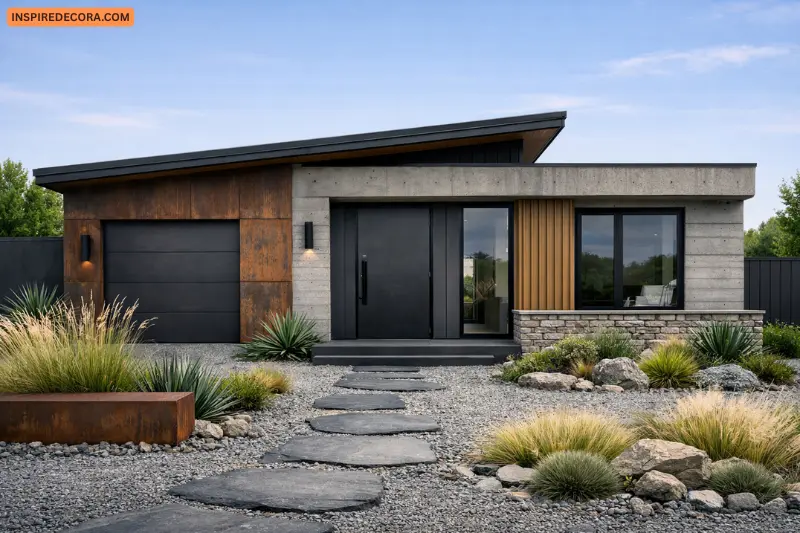
Industrial-inspired single storey house facade ideas are gaining traction, especially in urban and inner-suburban settings. Think exposed concrete, raw steel, dark palette, and large windows.
This style embraces imperfection and texture — a direct contrast to the polished minimalist look.
Key elements:
- Board-formed or off-form concrete render (textured to mimic raw concrete)
- Weathered steel or Corten-look cladding panels
- Oversized pivot or steel-framed front door
- Minimal landscaping — often gravel, ornamental grass, or structural plants
10. Facade Lighting — The Detail Competitors Ignore
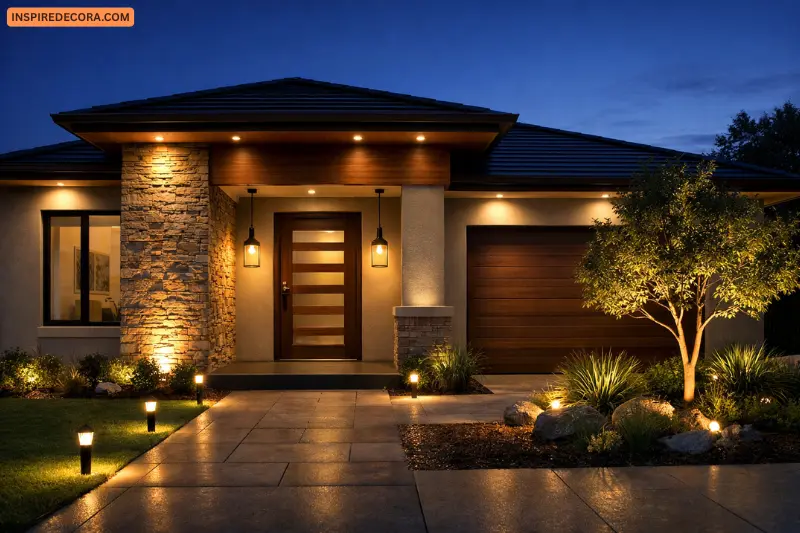
Here is something most facade articles simply don’t cover: lighting design is a facade element, not an afterthought.
The right lighting transforms a single storey house facade after dark and extends the impact of your design choices into the evening.
Lighting ideas that work:
- Up-lighting at the base of the facade washes the texture of cladding or render with warm light.
- Pathway lighting at low level guides visitors and adds a welcoming quality.
- Pendant or wall sconces at the entry make a design statement and provide practical light.
- Soffit lighting under covered entries or eaves gives a polished, finished look.
- Landscape spot lighting for a tree or feature planting adds depth and drama.
Use warm white LEDs (2700K–3000K) for a welcoming feel. Cool white light on a facade reads as harsh and clinical.
How to Choose the Right Facade Style for Your Home
With so many single storey house facade ideas available, it can be hard to know where to start. Here’s a practical framework:
Step 1: Look at your neighbourhood. Your facade will always be seen in context. A bold industrial design can look out of place on a street of Hamptons cottages — or it can look refreshingly different. Know which outcome you’re after.
Step 2: Consider your roofline. Single Storey House Facade Ideas Your existing roof pitch and shape limits your design options. A hip roof suits traditional and Hamptons styles. A flat or skillion roof suits modern and industrial styles.
Step 3: Set a realistic budget. Single Storey House Facade Ideas Cladding and render replacement is costly. Painting, new front door, updated landscaping, and lighting can transform a facade for a fraction of the price.
Step 4: Think long-term maintenance. Single Storey House Facade Ideas Real timber looks beautiful but needs maintenance. Rendered walls can crack. Brick is low maintenance but harder to change. Choose materials you’re happy to care for.
Step 5: Get a rendered concept. Before committing, ask a designer or use a 3D rendering tool to preview your choices. What works in your head doesn’t always translate to reality — and seeing it first saves expensive mistakes.
Common Mistakes to Avoid with Single Storey House Facades
Most articles tell you what to do Single Storey House Facade Ideas. Here’s what not to do:
- Overcrowding the palette — using four or five different materials or colours creates visual noise, not interest.
- Ignoring the driveway and letterbox — these frame your facade. An upgraded facade with a cracked concrete driveway and rusty letterbox loses its impact immediately.
- Choosing trendy over timeless — some styles date quickly. If resale value matters, lean toward classic proportions with contemporary details rather than purely trend-driven choices.
- Neglecting the sides of the house — if your property has side visibility, an amazing front facade that ends abruptly at the side wall looks unfinished.
- Skipping the landscaping — even the most beautiful facade looks stark without plants. Ground cover, a single feature tree, or a low garden bed makes a significant difference.
Frequently Asked Questions
1. What is the most popular single storey house facade style right now?
Modern minimalist and Hamptons-style facades are both extremely popular. Mixed materials — combining render with timber battens or stone accents — is also trending strongly in 2024–2025.
2. How much does it cost to update a single storey house facade?
Costs vary widely. A cosmetic update — repainting, new front door, updated lighting, and landscaping — can cost as little as $3,000–$8,000. A full re-clad or render job typically starts from $15,000–$30,000+ depending on the size of the home and materials chosen.
3. Can I change my facade without council approval?
In many cases, minor cosmetic changes (painting, replacing a door, updating lighting) don’t require approval. However, structural changes, significant cladding work, or anything that alters the building envelope usually requires a development application or building permit. Always check with your local council before starting work.
4. What materials are best for a low-maintenance facade?
Brick, fibre cement cladding, and rendered concrete are among the most durable and low-maintenance options. Composite timber cladding offers the look of real timber with less upkeep. Avoid real timber if you’re not willing to commit to regular sealing and maintenance.
5. How do I choose the right facade colour?
Test your colour choices in natural light at different times of day — morning, midday, and late afternoon. Colours change significantly in different light conditions. Stick to two or three coordinated colours maximum, and consider how your choice will look against your roof, driveway, and surrounding landscape.
6. What plants work best at the front of a single storey house?
Low-maintenance, structured plants tend to look best. Consider ornamental grasses, agapanthus, lomandra, lilly pilly hedges, or a single feature tree like a Japanese maple or magnolia. Avoid overgrown or high-maintenance plantings that will obscure the facade over time.
7. How can I make a small single storey house look bigger from the front?
Use light colours on the walls to maximise the sense of space. Add vertical elements — like tall battens, a pitched entry feature, or a tall hedge — to draw the eye upward. Use horizontal cladding lines sparingly, as they can emphasise how low and wide the home is. Strategic lighting at night can also make a home appear larger.
8. Is facade lighting worth the investment?
Absolutely. Single Storey House Facade Ideas lighting is one of the most cost-effective upgrades you can make. It adds security, extends the visual impact of your design into the evening, and significantly improves street presence. LED up-lights, pathway lights, and a well-lit entry area make a house look polished and intentional.
9. Should I hire a designer or do my facade myself?
For minor updates — paint, landscaping, lighting — a DIY approach is perfectly viable with good research. For significant Single Storey House Facade Ideas redesigns involving cladding, structural changes, or new render, working with an architect or facade designer is highly recommended. The cost of professional advice is easily recovered by avoiding expensive mistakes.
10. What is the best way to transform an outdated brick facade?
Limewashing or painting over old brick is one of the most dramatic and affordable transformations available. Pair it with updated window frames, a new front door, and refreshed landscaping for a result that looks completely unrecognisable from the original.
Final Thoughts
Transforming the exterior of your home starts with one good decision — choosing a single storey house facade idea that truly reflects your style and suits your home’s natural proportions. Whether you are drawn to the clean simplicity of a modern minimalist facade, the warmth of natural timber cladding, or the timeless charm of a Hamptons-style exterior, the right combination of materials, colour, and detail can take your home from ordinary to outstanding. Don’t overlook the smaller touches either — a well-lit entry, a bold front door, and thoughtful landscaping often make more impact than a full reclad. Take your time, test your choices in natural light, and when in doubt, bring in a professional to help you visualise the result before you commit. Your facade is the face your home shows the world every single day — make it one you are genuinely proud of.