
DrHomey handy tips are the small, practical adjustments (lighting, layering textures, fixing clutter zones, and choosing warm-toned finishes) that turn a house that looks fine into one that feels lived-in and comfortable. The goal isn’t a full renovation. It’s a series of low-cost, high-impact changes you can knock out in a weekend or two. Below is the version of this guide I wish existed when I started fixing up my own place: fewer platitudes, more specifics.
What Actually Makes a Home Feel “Homey” (Not Just Decorated)
There’s a difference between a house that photographs well and one that feels good to sit in. Photogenic rooms are usually built around a single focal point. Homey rooms are built around use patterns: where you actually sit, where light hits in the evening, where your hands land when you walk in the door.
A few things separate the two:
- Layered light instead of one overhead fixture. Homes that feel cold almost always rely on a single ceiling light doing all the work.
- Soft-edged textures somewhere in every room: a knit throw, a jute rug, unfinished wood. Hard, glossy surfaces read as showroom, not home.
- Visible signs of use. A stack of books you’re actually reading, a mug on the counter, a blanket half-folded. Sterile rooms feel like hotel rooms.
- Scent consistency. This one gets skipped constantly. A home that smells the same in every room (not perfumed, just neutral and clean) registers as “settled” to visitors in a way they can’t quite name.
Room-by-Room Fixes That Skip the Guesswork
Entryway: Fix the First Ten Seconds
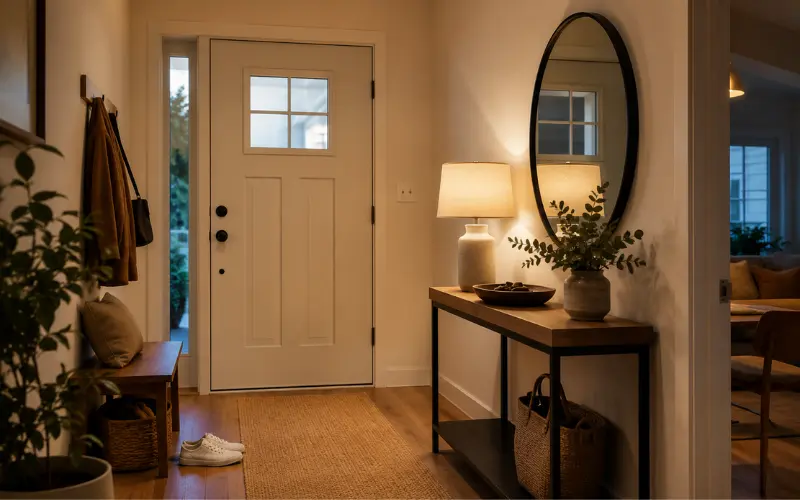
The entryway sets the tone before anyone reaches the living room. If yours is just a door and a shoe pile, you’re losing the easiest win in the house.
- Add a small tray or bowl at the door for keys. Clutter that has a designated spot stops registering as clutter.
- Swap a harsh overhead bulb for a warm-white (2700K) lamp near the entry. Cool white light (4000K+) reads clinical, not welcoming.
- A single mirror near the door does double duty: it bounces light and gives the space depth without adding furniture.
Living Room: Fix the Seating Triangle
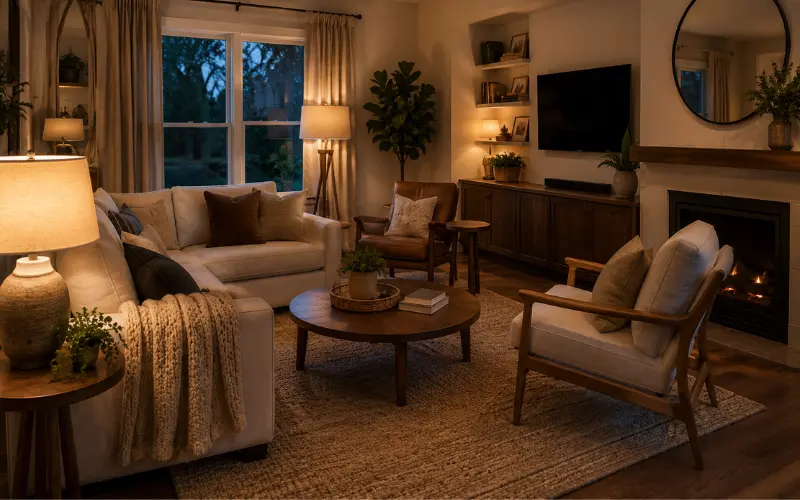
Most living rooms fail because the furniture is arranged to face a TV and nothing else. Pull one chair or the sofa at a slight angle so there’s a natural spot for conversation that doesn’t require the television to be on.
- Layer at least two light sources besides the ceiling fixture: one floor lamp, one table lamp.
- Mix at least two textures in your soft furnishings (linen throw pillow plus a wool blanket, for instance). One texture reads flat under photos and in person.
- Keep one low surface (coffee table or ottoman) within arm’s reach of every seat. Rooms where you have to stand up to set down a drink never feel relaxed.
Kitchen: Fix the Counter, Not the Cabinets
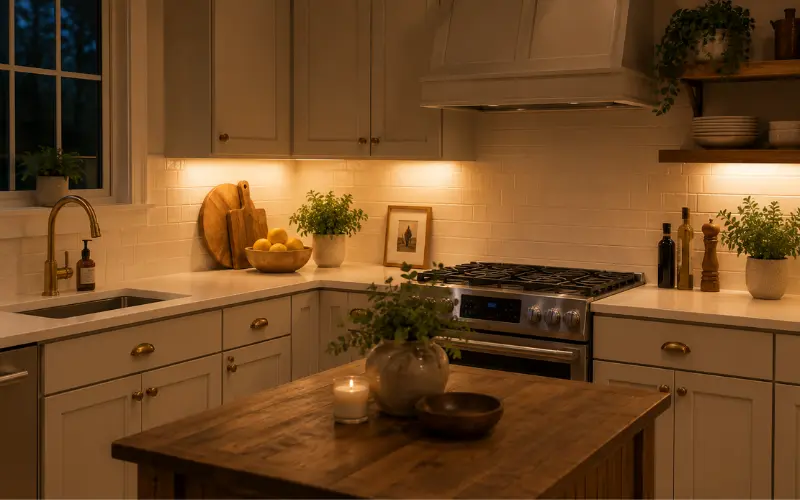
You don’t need new cabinets to make a kitchen feel warmer. Most of the “cold kitchen” feeling comes from bare, reflective counters.
- Keep one open shelf or counter section with something organic on it: a wooden cutting board on end, a bowl of citrus, a small herb pot.
- Under-cabinet lighting (battery puck lights are fine, no rewiring needed) softens the room dramatically after dark for under $30.
- Replace one hardware finish (cabinet pulls or faucet) if it’s builder-grade chrome. Brushed brass or matte black instantly reads more intentional.
Bedroom: Fix the Bed First
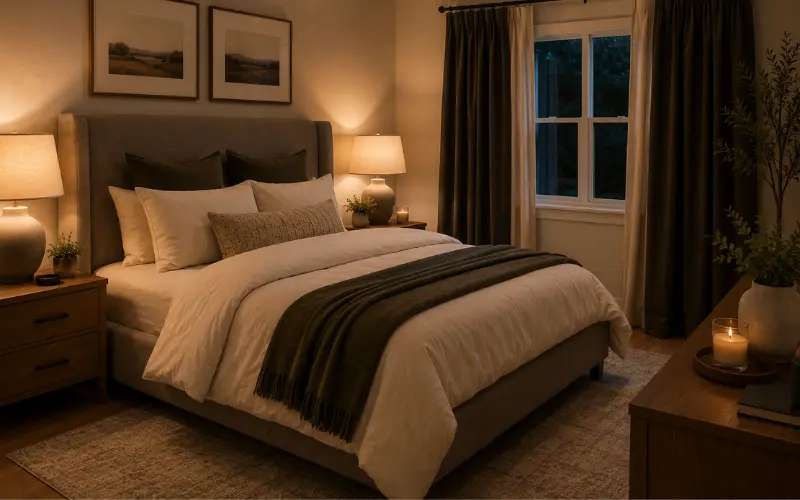
The bed is 60% of a bedroom’s visual weight. If it’s unmade or under-dressed, nothing else in the room matters.
- Add a duvet layer even in warm climates. Folded at the foot of the bed, it reads as comfort even when it’s not in use.
- Two pillow sizes minimum: standard sleeping pillows plus one larger decorative pair behind them.
- Blackout curtains with a warm-toned liner outperform white liners for making a room feel cozy rather than sterile.
A Technique Worth Stealing: The “Three Zone” Reset
Here’s a technique I use on every room that isn’t working, and it’s rarely covered in the usual roundups: split the room into three zones (entry point, primary seating/use area, and a “quiet corner”) and make sure each has its own light source and at least one soft texture. Rooms that feel cold almost always have one zone that’s been ignored entirely, usually the corner farthest from the door. Fixing that one zone often does more than redecorating the whole room.
Budget-to-Impact Comparison
| Fix | Approx. Cost | Time to Complete | Impact Level |
|---|---|---|---|
| Warm-white bulb swap | $15–25 | 15 minutes | High |
| Entry tray + mirror | $30–60 | 30 minutes | Medium-High |
| Under-cabinet lighting | $20–35 | 1 hour | High |
| Cabinet hardware swap | $40–100 | 2–3 hours | Medium |
| Layered bedding | $50–150 | 20 minutes | High |
| Full furniture rearrange | $0 | 2–4 hours | Medium |
Common Mistakes That Undo the Effort DrHomey Handy Tips
- Over-matching everything. A room where every wood tone matches exactly looks staged, not DrHomey Handy Tips. Aim for two complementary wood tones, not one repeated.
- Skipping maintenance in favor of decor. A squeaky door or a wobbly cabinet hinge undercuts even the best styling. Fix function before adding new decor.
- Cool-toned bulbs in living spaces. This is the single most common mistake I see. Save daylight-temperature bulbs (5000K+) for garages and workspaces only.
- Empty walls above eye level. Rooms feel unfinished when nothing draws the eye upward. One piece of art or a shelf above the standard 57-inch center line fixes this.
Tools Worth Owning If You’re Doing This Regularly
A basic kit makes these fixes faster and cheaper long-term:
- Cordless drill with a mixed bit set (for hardware swaps and mounting)
- Stud finder (saves drywall repairs from failed anchor attempts)
- Level, at least 12 inches, for shelving and art
- Painter’s tape and a small foam roller for touch-ups without a full repaint
- A warm-white bulb multipack, since you’ll be replacing more than one fixture
Seasonal Reset Checklist
DrHomey Handy Tips isn’t a one-time project. A quick seasonal pass keeps it from sliding back:
- Swap heavier textiles in and lighter ones out every season change
- Check bulb temperature consistency room to room (mismatched light temps sneak back in after any bulb replacement)
- Rotate decorative items every few months so the eye doesn’t stop noticing them
- Reassess the entryway specifically. It collects clutter fastest of any zone in the house
FAQ
What is a good technique to make a home appear homey?
The “Three Zone” method above works fastest: identify the entry point, main use area, and the most-ignored corner in a room, then give each its own light source and one soft texture. Most cold-feeling rooms have exactly one neglected zone dragging the rest down.
What makes a house feel more homey?
Warm, layered lighting, mixed soft textures, visible (not excessive) signs of daily use, and a consistent neutral scent throughout the house. Cold, homes usually rely on a single light source and hard, glossy surfaces.
How much does it cost to make a home feel homey?
Most of the highest-impact fixes (bulb swaps, layered bedding, an entry tray) cost under $60 combined. Full furniture rearranging costs nothing but time.
Can renters use these DrHomey handy tips without violating a lease?
Yes. Bulb swaps, textiles, furniture arrangement, and battery-powered lighting are all reversible and don’t require landlord approval in most standard leases. Save the receipt on original hardware if you swap it, so you can reinstall before moving out.
Do I need to redecorate the whole house at once?
No, and doing so usually backfires. Tackle one room’s “Three Zone” reset per weekend. Momentum matters more than speed here.
What’s the single fastest fix on this list?
The warm-white bulb swap. Fifteen minutes, under $25, and it changes the feel of a room more than almost anything else on this list.
Why do some homes look nice in photos but feel cold in person?
Photos flatten light temperature and texture differences that your eyes catch instantly in person. A room styled for photos often skips the layered lighting and mixed textures that make it comfortable to actually sit in.
How often should I refresh a room to keep it feeling homey?
A light seasonal pass, roughly every three months, is enough. Full re-evaluation once a year, tied to a season change, keeps things from feeling stale without constant spending.
Do DrHomey Handy Tips work in small apartments or just houses?
They work just as well, and sometimes better, in small apartments. Layered lighting and the Three Zone method matter more in tight spaces, since every corner gets used and a single neglected zone stands out faster than it would in a larger house.
Is there a specific order I should follow these DrHomey Handy Tips in?
Start with lighting, since it’s the cheapest and fastest change with the biggest payoff. From there, move to the entryway, then whichever room you spend the most waking hours in. Save cabinet hardware and paint touch-ups for last, since they take the most time relative to impact.
Final Thought
None of this requires a big budget or a weekend of demolition. The houses that feel the most like home are rarely the most expensive ones. They’re the ones where someone paid attention to light, texture, and the small dead zones everyone else ignores. Start with one room, apply a few of these DrHomey Handy Tips, and give it a week before judging the result. Small, consistent fixes compound faster than most people expect, and that’s really the whole point of this approach: not a makeover, just a house that finally feels like yours.

