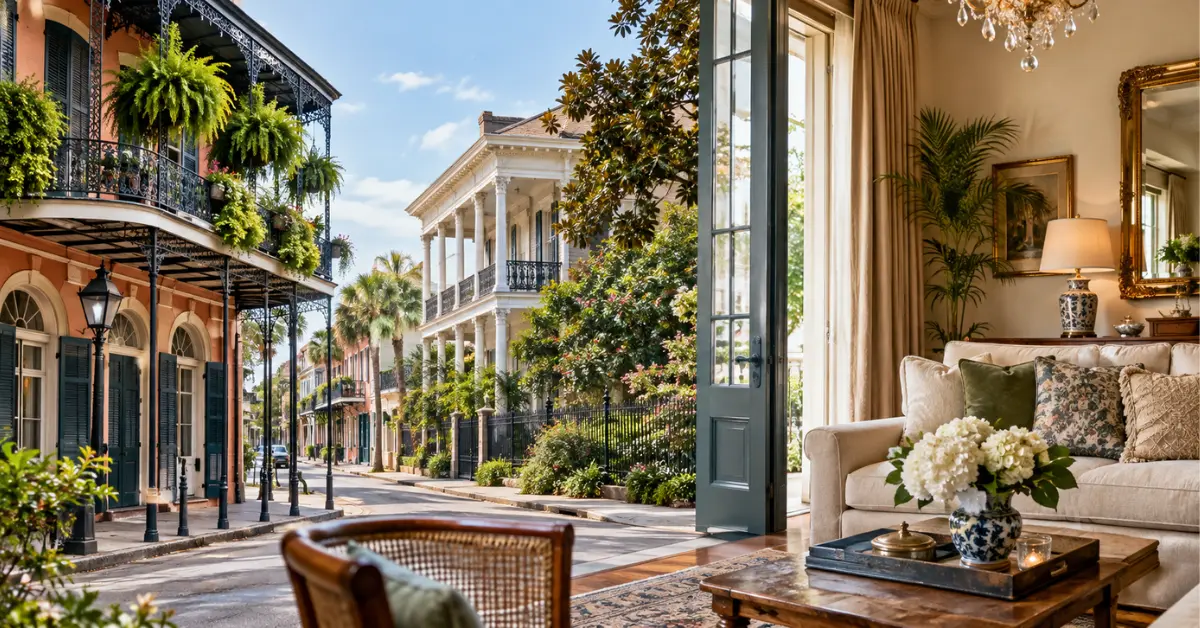
Yes, Home Decor New Orleans is still rooted in its Creole, French, and Victorian architectural past, but the finishes and layouts have shifted to cope with heat, humidity, and a booming short-term rental market. The bones (high ceilings, wrought iron, arched openings) stay classic. The surfaces on top of them (paint, textiles, lighting) are where the real change is happening.
What “Classic” Actually Means Here, Not Just a Vibe
People throw around “New Orleans style” as shorthand for anything with a fleur-de-lis cushion or a Mardi Gras colour palette. That’s not what’s driving the market. The classic look comes from three overlapping design periods that collided in one city: French colonial, Spanish colonial (after the 1788 and 1794 fires forced rebuilding in brick and stucco), and American Victorian once the Garden District was settled by wealthy transplants in the 1800s.
That layering is why a single street in the Quarter can show wrought iron balconies next to a Creole cottage with no front setback, while six kilometres away on St Charles Avenue you get raised Victorian mansions with deep verandas. Home decor New Orleans style isn’t one look. It’s three eras stacked on top of each other, and most buying guides flatten that into “shabby chic with beads on the wall,” which misses the point entirely.
The Three Pockets That Actually Drive the Market
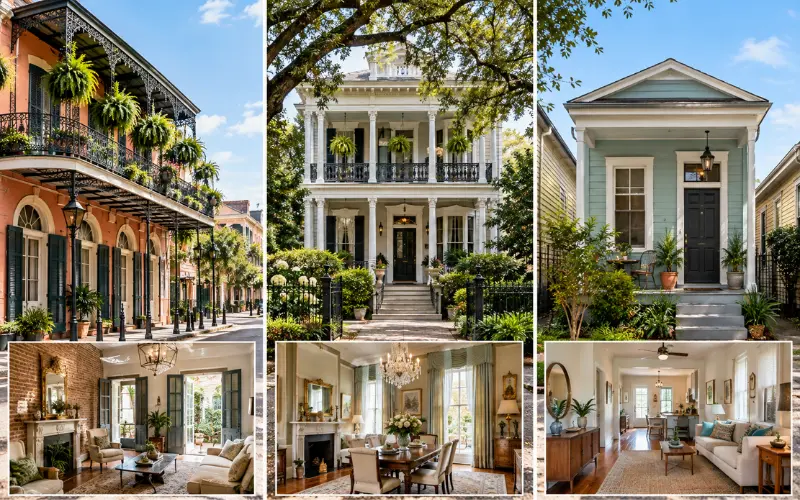
Most articles treat New Orleans as one aesthetic. In practice, what’s available at local stores and what interior designers pull from depends heavily on which part of town they’re referencing.
| Area | Architectural driver | Typical interior decor |
|---|---|---|
| French Quarter / Creole cottages | Spanish colonial rebuild, tight lots, courtyards | Wrought iron accents, plastered brick, French doors, courtyard greenery |
| Garden District | American Victorian, raised timber mansions | Crystal chandeliers, gilt mirrors, dupioni silk drapes, ornate ceiling medallions |
| Shotgun cottages (Bywater, Mid-City) | Working-class 19th century timber housing | Painted timber siding, simple gable-front rooms, increasingly reworked with a mix of vintage and modern pieces |
If you’re shopping or decorating with “home decor New Orleans” in mind, picking a pocket first will save you from buying pieces that clash. A gilt Rococo mirror looks out of place in a shotgun cottage. A stripped-back mid-century sideboard looks wrong in a Garden District parlour.
From where I sit: the biggest mistake I see in decor guides is treating shotgun cottages as a downgraded version of Garden District style. They’re a completely separate design lineage with their own logic, built for cross-ventilation and narrow lots, not grandeur.
Where Old and New Genuinely Clash
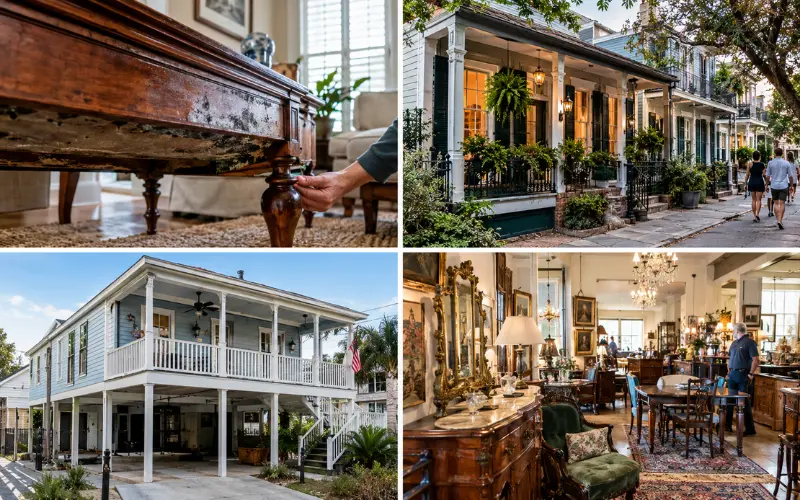
This is the part competitor content skips entirely, and it’s the part that actually matters if you’re renovating or furnishing a home here rather than just admiring photos of one.
- Humidity is doing damage that trend pieces never mention. Louisiana’s climate sits above 70% relative humidity for much of the year, which means timber furniture, especially antiques brought in from drier climates, can warp or develop mould on the underside within a single wet season if it’s pushed flush against an exterior wall.
- Short-term rentals are quietly homogenising the look. With so many Quarter and Marigny properties now run as holiday lets, a lot of “New Orleans style” online is actually rental-optimised: white walls, black accents, a few fleur-de-lis cushions for the photos. It photographs well but has nothing to do with how long-term residents actually decorate.
- Flood insurance requirements are changing floor plans. Post-Katrina rebuilding rules pushed a lot of ground-floor living space up a level in flood-prone pockets, which is why you’ll see more raised cottages with decor concentrated on the first floor rather than at street level.
- Real Creole antiques are getting harder to source locally. Magazine Street dealers report more of their stock now coming from estate sales outside Louisiana, because the local supply of genuine 19th-century pieces has thinned after decades of steady demand.
None of that shows up in a Pinterest board, but it’s exactly what changes whether a piece of decor will still look right, or still exist, in five years.
Bringing the Look Home Without Living There
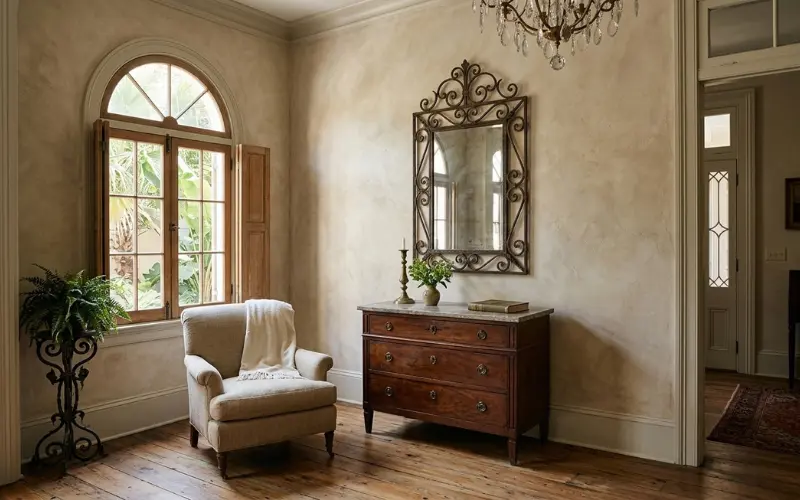
If you’re decorating a space elsewhere but want the Home Decor New Orleans influence to read as genuine rather than costume-party Mardi Gras, a few practical moves make the difference:
- Anchor with ironwork, not colour. A single wrought iron mirror frame or plant stand does more for authenticity than any purple-green-gold cushion combination.
- Use arched shapes deliberately. Arch windows, arched mirror tops, or an arched doorway detail reference the Spanish colonial rebuild without needing full architectural changes.
- Go heavier on texture than pattern. Think plaster-effect walls, aged brass, worn timber, rather than printed fleur-de-lis fabric everywhere.
- Layer one antique piece per room, not five. Garden District interiors work because a single ornate chest or chandelier is given room to stand out against otherwise simple furnishings.
- Pick fabrics that can handle humidity if you’re in a similarly muggy climate. Linen and treated cotton blends outperform silk in anything but a controlled, air-conditioned room.
Materials That Actually Hold Up in This Climate
This is worth separating out because it’s the practical detail that decides whether a decor choice survives a New Orleans summer or needs replacing within two years.
Sealed hardwoods and engineered timber floors cope far better than untreated softwood, which swells and contracts noticeably with seasonal humidity shifts. For walls, a mould-inhibiting or mildewcide-additive paint is standard in older homes here, not a luxury upgrade. Brass and cast iron fittings tend to outlast chrome, which pits faster in salt-heavy, humid air near the Gulf. If you’re sourcing decor pieces long-distance, ask specifically whether timber has been kiln-dried and acclimatised, because pieces shipped straight from a dry climate can develop cracks within the first year.
What’s Genuinely Changing Right Now, Not Just Trending
Local showrooms on Magazine Street have been leaning into what’s being called “quiet luxury” this year: matte finishes, sculptural lighting, tonal neutrals with the occasional black accent. That’s a real shift, but it’s a surface layer sitting on top of the same classic bones. The Rococo mirror, the ceiling medallion, the wrought iron silhouette, none of that has actually gone anywhere. What’s changed is that homeowners are pairing those classic elements with quieter, less ornate finishes than the fully gilded look that dominated a decade ago.
FAQ’s on Home Decor New Orleans
Is Home Decor New Orleans the same as French Quarter decor?
No. French Quarter style is one of at least three distinct local design lineages, alongside Garden District Victorian and shotgun cottage vernacular. Each has different materials and proportions.
What colour palette is considered classic Home Decor New Orleansstyle?
Deep jewel tones (emerald, sapphire, burgundy) paired with aged gold and cream reads as classic. Bright purple, green, and gold together reads as Mardi Gras costume, not interior design.
Do I need real antiques to get the look, or will reproductions work?
Reproductions work fine for most rooms. The proportions and silhouette matter more than provenance. Save genuine antiques for one or two statement pieces if budget allows.
Why do Home Decor New Orleans have so much wrought iron?
It dates back to the Spanish colonial rebuild after the fires of the late 1700s, when iron balconies and gates became both decorative and practical for the tight, shared-wall lots of the Quarter.
Is Home Decor New Orleans suitable for a humid climate outside Louisiana?
Yes, with adjustments. Treated timber, sealed finishes, and linen-based fabrics translate well anywhere with high humidity. Untreated antiques need extra care regardless of location.
What’s the biggest decorating mistake people make when copying this style?
Mixing all three architectural eras into one room. A shotgun cottage piece next to a full Garden District chandelier setup usually looks disjointed rather than eclectic.
Are shotgun cottages actually a style worth decorating around?
Absolutely. They have their own timber vernacular and simple gable-front logic that’s increasingly popular precisely because it’s less ornate than Garden District interiors.
Has the short-term rental boom changed what “New Orleans style” looks like online?
Yes, noticeably. A lot of what circulates online now is rental-optimised (white walls, minimal accents) rather than reflective of how long-term residents actually furnish their homes.