Have you ever walked into a room filled with lush green plants and instantly felt calmer? That feeling is real — and you can create it in your own home. A garden indoor is not just a trend. It is a lifestyle upgrade that brings nature, beauty, and even fresh food right inside your walls.
Whether you live in a tiny apartment or a spacious house, you can build an indoor garden that works for your space, your schedule, and your style. This guide covers everything your competitors miss — from soil science to seasonal care to décor styling — so you can grow with confidence.
What Is a Garden Indoor?
A garden indoor is any intentional arrangement of plants grown inside your home or office. It can be as simple as a single herb pot on your kitchen windowsill or as elaborate as a dedicated plant room with grow lights, shelving, and a drip irrigation system.
Indoor gardens serve multiple purposes:
- They clean the air by absorbing toxins and releasing oxygen.
- They reduce stress and improve your mood.
- They add texture, color, and life to your home décor.
- They let you grow fresh herbs, vegetables, and fruits year-round.
- They are a creative hobby that delivers visible, satisfying results.
Why Start an Indoor Garden Right Now?
Many people assume garden indoor projects are complicated. They are not. The barrier to entry is lower than ever. Seeds, starter kits, and self-watering planters are affordable and widely available. Even the busiest person can manage a small indoor garden with just a few minutes of care per week.
Here are the top reasons people start an indoor garden today:
- Year-round growing with no weather restrictions
- No outdoor space needed
- Fresher herbs and vegetables than anything from the grocery store
- A calming, therapeutic daily ritual
- A beautiful, living element in your home décor
Choosing the Right Space for Your Indoor Garden
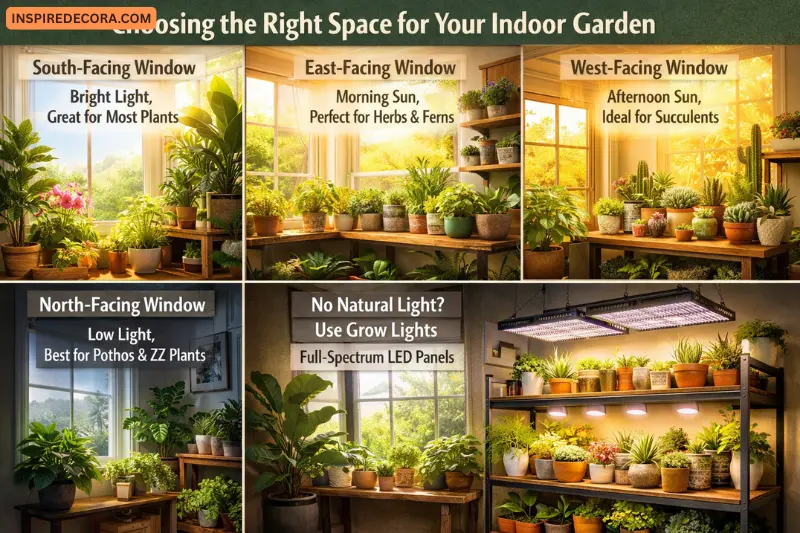
Before you buy a single plant, look at your space. Light is the most important factor in any garden indoor setup. Walk through your home at different times of the day and observe where sunlight falls.
South-facing windows get the most light and suit almost any plant. East-facing windows offer gentle morning sun — great for herbs and ferns. West-facing windows deliver warm afternoon light, ideal for succulents. North-facing windows receive the least light and work best for low-light plants like pothos or ZZ plants.
If your home lacks natural light, do not worry. Grow lights — especially full-spectrum LED panels — replicate sunlight beautifully and cost very little to run.
The Best Plants for Your Garden Indoor
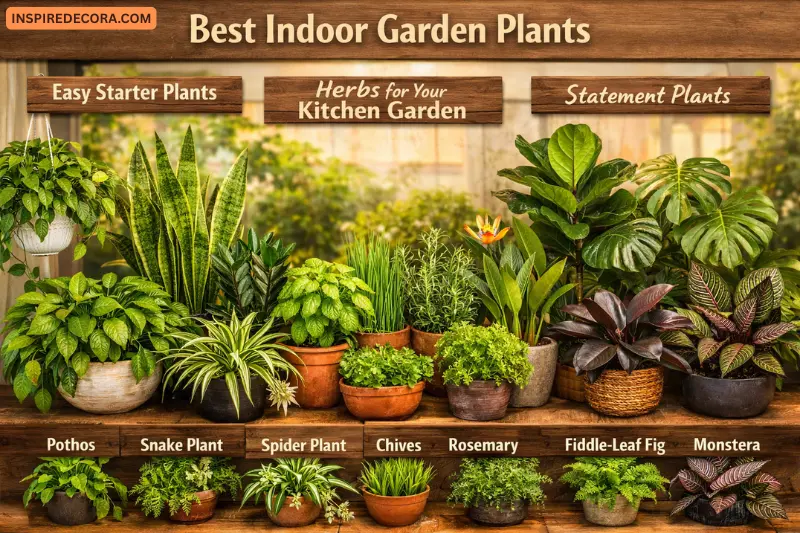
Easy Starter Plants (Perfect for Beginners)
These plants are forgiving, low-maintenance, and incredibly rewarding:
- Pothos — Trails beautifully from shelves, tolerates low light, and almost never dies.
- Snake Plant (Sansevieria) — Thrives on neglect and purifies the air overnight.
- Spider Plant — Produces charming baby offshoots and handles irregular watering.
- ZZ Plant — Stores water in its roots and survives weeks without attention.
- Peace Lily — Flowers indoors and signals when it needs water by drooping slightly.
Herbs for Your Indoor Kitchen Garden
Growing herbs is one of the most rewarding parts of a garden indoor setup. You cook with them daily and they smell amazing:
- Basil — Loves warmth and a sunny windowsill. Snip often to keep it bushy.
- Mint — Grows aggressively; keep it in its own pot to prevent it from taking over.
- Chives — One of the easiest herbs to grow. Snip and add to eggs, salads, and soups.
- Rosemary — Needs good light and excellent drainage. Highly aromatic.
- Parsley — Grows steadily and tolerates moderate light.
Statement Plants for Décor Impact
If you want your indoor garden to turn heads, add these bold varieties:
- Fiddle-Leaf Fig — Tall, dramatic, and deeply loved by interior designers.
- Monstera Deliciosa — Its split leaves photograph beautifully and grow fast.
- Bird of Paradise — Architectural leaves that create a tropical atmosphere.
- Rubber Plant — Deep burgundy or green leaves with a sophisticated, glossy finish.
- Calathea (Pinstripe) — Striking patterned leaves that move with the light cycle.
Soil, Pots, and Drainage: What Your Competitors Don’t Tell You
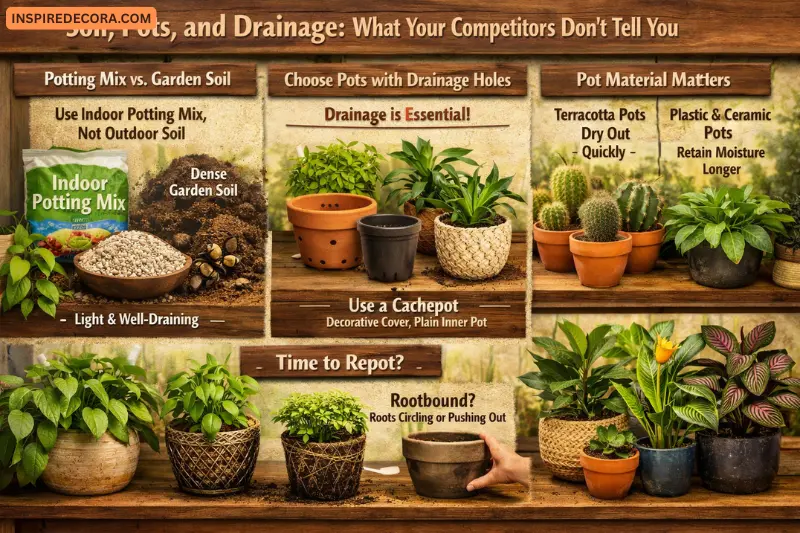
Most indoor garden guides skip this section entirely. Do not make the mistake of using outdoor garden soil for your indoor plants. Here is what actually matters:
Potting mix vs. garden soil: Garden soil compacts in pots, suffocates roots, and invites pests. Use a high-quality indoor potting mix with perlite for drainage.
The right pot matters: Always choose pots with drainage holes. Sitting in water is the number one cause of indoor plant death. If you love a decorative pot without holes, use it as a cachepot — a decorative sleeve that holds a plain plastic nursery pot.
Pot material affects watering frequency:
- Terracotta pots dry out faster — good for succulents and cacti.
- Plastic and glazed ceramic pots retain moisture longer — good for ferns and tropical plants.
When to repot: If roots are circling the bottom of the pot or pushing out of drainage holes, move your plant to a pot that is 1–2 inches wider. Spring is the best time to repot.
Watering Your Indoor Garden the Right Way
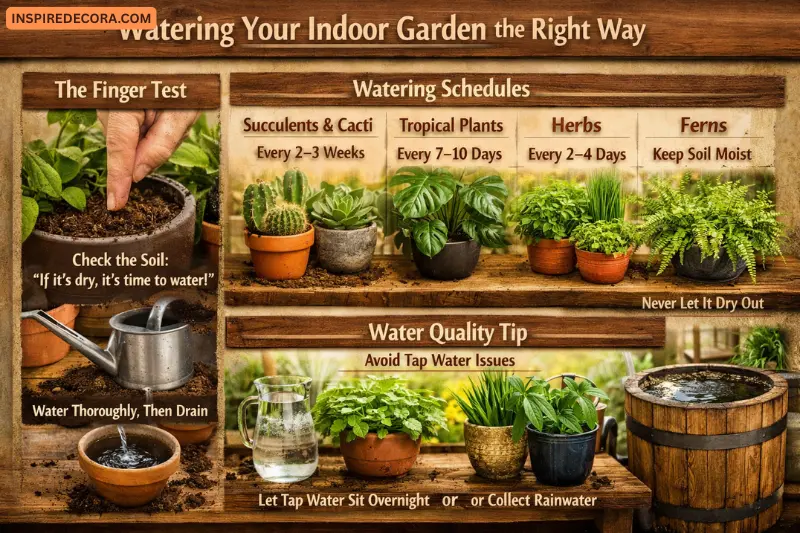
Overwatering kills more indoor plants than any other cause. The fix is simple: water deeply but infrequently, and always check the soil first.
The finger test: Push your finger about an inch into the soil. If it feels dry, water thoroughly until it drains from the bottom. If it still feels moist, wait another day or two.
General watering rules by plant type:
- Succulents and cacti: Every 2–3 weeks
- Tropical plants (pothos, monsteras): Every 7–10 days
- Herbs: Every 2–4 days depending on pot size and light
- Ferns: Keep soil consistently moist but never waterlogged
Water quality tip: Many indoor plants are sensitive to fluoride and chlorine in tap water. Let tap water sit uncovered overnight before using it, or collect rainwater when possible.
Lighting: The Secret to a Thriving Indoor Garden
Light is everything. You can water perfectly and use the best soil, but without adequate light, your garden indoor will struggle.
Natural light zones in your home:
- Bright direct light (within 1–2 feet of a south window): Cacti, succulents, herbs, citrus trees
- Bright indirect light (2–5 feet from a window): Monsteras, fiddle-leaf figs, pothos, peace lilies
- Low light (5+ feet from windows or north-facing): Snake plants, ZZ plants, cast iron plants
Using grow lights effectively:
Full-spectrum LED grow lights are the best investment for a serious garden indoor. Position them 6–12 inches above seedlings and 12–24 inches above mature plants. Run them 12–16 hours a day using a timer. This mimics natural daylight cycles and encourages healthy, steady growth.
Fertilizing Your Indoor Garden Plants
Plants in pots use up nutrients faster than plants in the ground because water constantly flushes nutrients out through drainage holes. Feed your indoor garden plants regularly during the growing season (spring through early fall).
- Use a balanced liquid fertilizer (10-10-10 NPK ratio) every 2–4 weeks in spring and summer.
- Reduce to once a month or stop entirely in fall and winter when plants grow slowly.
- Yellowing leaves with green veins often signal a lack of iron — use a chelated iron supplement.
- Avoid over-fertilizing. Too much fertilizer causes salt buildup in soil and burns roots. Flush the soil with plain water every 2–3 months.
Seasonal Care for Your Indoor Garden
One major gap in competitor content is seasonal guidance. Your garden indoor needs change throughout the year, even if you are growing inside.
- Spring: Repot plants that have outgrown their containers. Begin fertilizing again. Move plants closer to windows as light increases.
- Summer: Watch for pests, which multiply in warm weather. Increase watering as heat dries soil faster. Avoid placing plants directly in air conditioning drafts.
- Fall: Gradually reduce fertilizing. Move plants away from cold windows as temperatures drop. Watch for pests that move indoors from outdoor plants.
- Winter: This is the hardest season for indoor plants. Supplement natural light with grow lights. Reduce watering — growth slows and overwatering is a major risk. Group plants together to raise humidity naturally.
Pest Prevention and Treatment for Indoor Gardens
Even a well-kept garden indoor can encounter pests. Knowing what to look for — and how to act quickly — saves your plants.
Common indoor garden pests:
- Fungus gnats: Tiny flies hovering around soil. Let the top inch of soil dry out between waterings to break their life cycle. Use yellow sticky traps.
- Spider mites: Fine webbing on leaves, usually in hot, dry conditions. Spray with neem oil solution or insecticidal soap.
- Mealybugs: White, cottony clusters at leaf joints. Wipe with a cotton swab dipped in rubbing alcohol.
- Scale insects: Brown, shell-like bumps on stems. Scrape off by hand and treat with neem oil.
- Aphids: Small green or black insects on new growth. Spray off with a strong stream of water.
Prevention tip: Inspect every new plant carefully before bringing it indoors. Quarantine new plants for one to two weeks away from your existing collection.
Styling Your Garden Indoor for Maximum Décor Impact
Your indoor garden should look intentional, not cluttered. Here are designer-level tips for styling plants in your home:
- Use height variation. Mix tall floor plants (like a bird of paradise or fiddle-leaf fig), mid-height tabletop plants, and trailing plants (like pothos or string of pearls on a high shelf). This creates visual depth.
- Group in odd numbers. Three or five plants grouped together always look more natural and balanced than even-numbered groupings.
- Match your pot style to your décor. Terracotta suits boho and rustic styles. White ceramic suits Scandinavian and minimalist spaces. Dark matte planters suit modern and industrial aesthetics.
- Use plant stands. Elevating plants on stands creates breathing room and prevents visual clutter. It also draws the eye upward, making rooms feel taller.
- Layer textures. Combine plants with very different leaf shapes and textures — broad and smooth next to fine and feathery — for a rich, layered look.
Building a Garden Indoor on a Budget
You do not need to spend a lot to build a beautiful indoor garden. Here are smart ways to grow your collection affordably:
- Propagate plants from cuttings. Many popular houseplants — pothos, spider plants, succulents — root easily in water or soil.
- Shop plant swaps and community groups. Many gardeners give away offshoots and cuttings for free.
- Start herbs from seed. A packet of basil or chives seeds costs less than a dollar and yields dozens of plants.
- Reuse containers creatively. Mugs, tin cans, mason jars, and colanders all make charming planters with a little drainage work.
- Buy slow-growing plants small. A young monstera or fiddle-leaf fig costs a fraction of a mature specimen and will grow into the space beautifully over time.
Frequently Asked Questions About Garden Indoor
1. What is the easiest plant to grow in an indoor garden?
Pothos is widely considered the easiest indoor plant. It tolerates low light, irregular watering, and a wide range of temperatures. It is nearly impossible to kill and grows quickly, making it deeply satisfying for beginners.
2. How much light does an indoor garden need?
It depends on the plants you choose. Most popular indoor plants thrive in bright indirect light — about 2 to 5 feet from a window. If your home lacks natural light, a full-spectrum LED grow light for 12 to 16 hours a day will support almost any indoor plant.
3. Can I grow vegetables in an indoor garden?
Yes. Leafy greens like lettuce, spinach, and kale grow well indoors with adequate light. Cherry tomatoes, peppers, and cucumbers can also succeed with a strong grow light. Herbs like basil, parsley, and chives are among the most rewarding indoor food crops.
4. How often should I water my indoor garden plants?
There is no universal answer, but a simple rule works well: check the soil before you water. If the top inch feels dry, water thoroughly. If it still feels moist, wait. Most indoor plants prefer to dry out slightly between waterings rather than sit in consistently wet soil.
5. What soil should I use for an indoor garden?
Use a high-quality indoor potting mix, not outdoor garden soil. A good potting mix includes perlite or vermiculite for drainage, which prevents root rot. Match your mix to your plant type — succulents need a fast-draining cactus mix, while tropical plants prefer a moisture-retentive blend.
6. How do I keep my indoor garden plants from getting pests?
Prevention is the best strategy. Inspect new plants before bringing them home. Quarantine them for one to two weeks. Keep leaves clean by wiping them with a damp cloth. Avoid overwatering, which attracts fungus gnats. Check plants regularly and act immediately if you spot any pests.
7. Can I start an indoor garden in winter?
Absolutely. Winter is actually a great time to start an indoor garden because it brings greenery and life into your home during the darkest months. Use grow lights to compensate for short days, reduce watering since growth slows, and stick to hardy plants like snake plants, ZZ plants, or herb pots near a sunny window.
8. How do I make my indoor garden look good for home décor?
Use a mix of plant heights, group plants in odd numbers, choose pots that match your interior style, and use plant stands to add elevation. Trailing plants on high shelves and bold statement plants in corners are two of the most effective ways to make an indoor garden look intentional and beautiful.
9. Do indoor garden plants really clean the air?
Research supports the idea that indoor plants absorb certain airborne toxins and release oxygen. However, you would need a large number of plants to significantly clean the air in a room. The real benefit is psychological — being around plants reduces stress and increases feelings of wellbeing, which is reason enough to grow them.
10. What is the best container size for an indoor garden?
Start with a pot that matches your plant’s current root ball with about 1 to 2 inches of extra space around the sides. Too-large pots hold excess moisture and increase the risk of root rot. As your plant grows, move up one pot size at a time — ideally in spring.
Final Thoughts
A garden indoor is one of the most rewarding things you can bring into your home. It connects you to nature on a daily basis, transforms your living space into something vibrant and alive, and gives you the quiet pleasure of watching something grow under your care. Start small. Pick one or two plants that excite you. Learn what they need. And then let your indoor garden grow — at its own pace, in its own beautiful way.
Your home is about to get a whole lot greener.