
Walk into any flea market or estate sale, and you will spot them: rusty spades, wooden-handled forks, and hand shears with a patina that only decades of use can create. These are vintage gardening tools, and they are having a real moment right now. Gardeners are turning away from flimsy plastic-handled tools and going back to the sturdy, well-made pieces their grandparents once used.
This guide covers everything you need to know about vintage gardening tools: what makes them special, how to spot quality pieces, where to find them, and how to bring old tools back to life. Whether you are a collector, a practical gardener, or just curious about garden history, you will find real, useful information here that goes beyond the usual shopping roundups.
What Makes Vintage Gardening Tools Different
Vintage gardening tools were built in an era before mass production cut corners to save costs. Most pieces made before the 1970s used solid forged steel heads and hardwood handles, usually ash or hickory, which flex slightly under pressure instead of snapping.
Here is what gardening sets these older tools apart from what you find in big box stores today:
- Solid forged steel: Older tool heads were forged from a single piece of steel, not stamped from thin sheet metal. This makes them stronger and less likely to bend.
- Hardwood handles: Ash and hickory handles absorb shock and last for generations if cared for properly.
- Simple, functional design: Vintage tools were made to solve a specific job, so shapes like the daisy grubber or the thistle spade exist because someone needed exactly that tool.
- Repairable construction: Old tools were built with replaceable parts in mind. You can usually swap a broken handle without buying a whole new tool.
- Character and history: Every scratch, worn grip, and rust spot tells a story. Many gardeners simply enjoy owning something with a past.
A Brief History of Garden Tool Design
Garden tools have barely changed in basic shape for centuries, but the craftsmanship behind them has shifted dramatically. In the 1800s and early 1900s, English and French toolmakers produced hand-forged spades, hoes, and pruners built to last a working lifetime. Blacksmiths shaped each head individually, which is why so many vintage pieces have slightly different proportions even within the same maker’s catalog.
By the mid-1900s, tool names reflected exact garden tasks. A rabbiting spade was narrow enough to dig out burrows. A bramble slasher had a curved blade for clearing thorny growth. A gooseberry hook let gardeners pick fruit from between spiky branches without getting scratched. These specialized designs largely disappeared once manufacturers shifted toward one-size-fits-all tools in the later 20th century, which is exactly why vintage collectors prize them today.
Popular Types of Vintage Gardening Tools
If you are starting a collection or just want functional pieces for your garden, here are the categories worth knowing:
Digging Tools
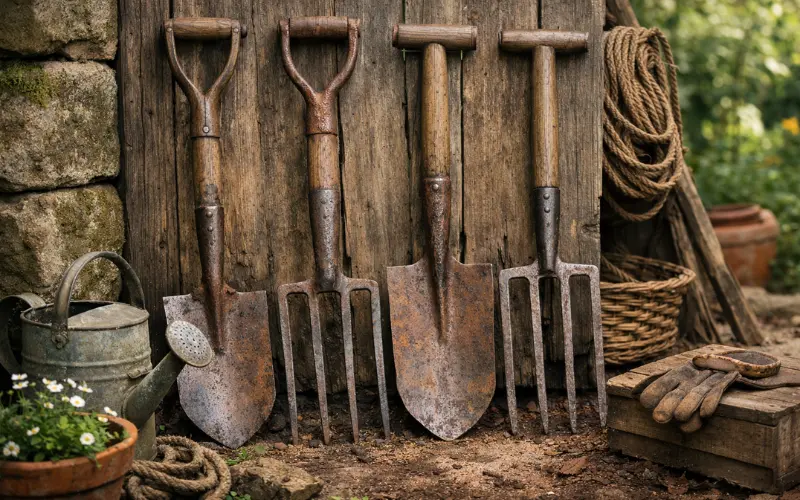
Vintage spades and forks are the backbone of most collections. Look for tapered blades, riveted collars, and handles with a comfortable, worn-in grip.
Cutting Tools
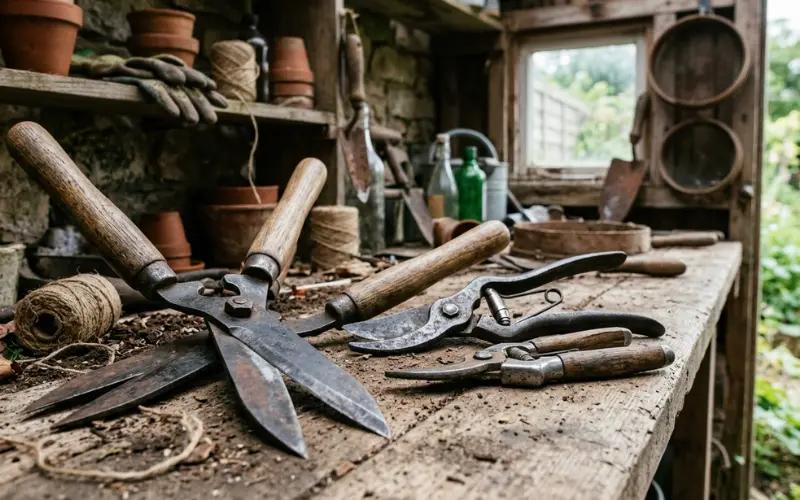
Pruning shears, secateurs, and hedge shears from before 1960 often have better balance and sharper steel than modern equivalents costing three times as much.
Hand Tools
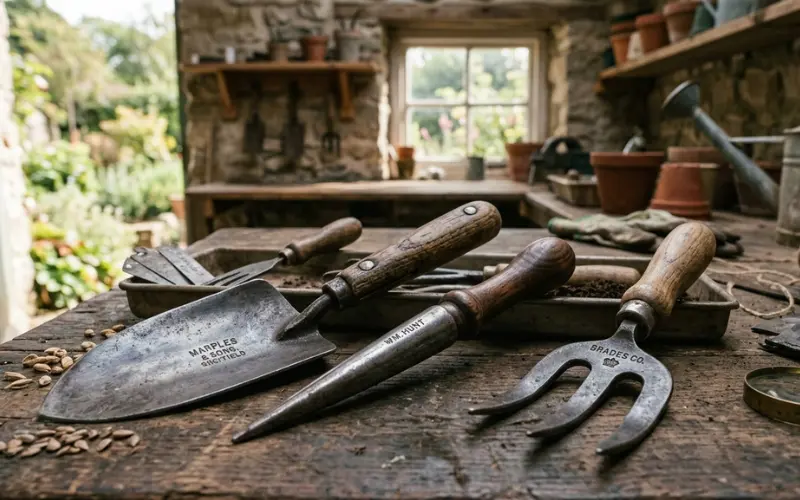
Trowels, dibbers, and hand forks were often stamped with a maker’s name, which helps with dating and valuing a piece.
Specialty Tools
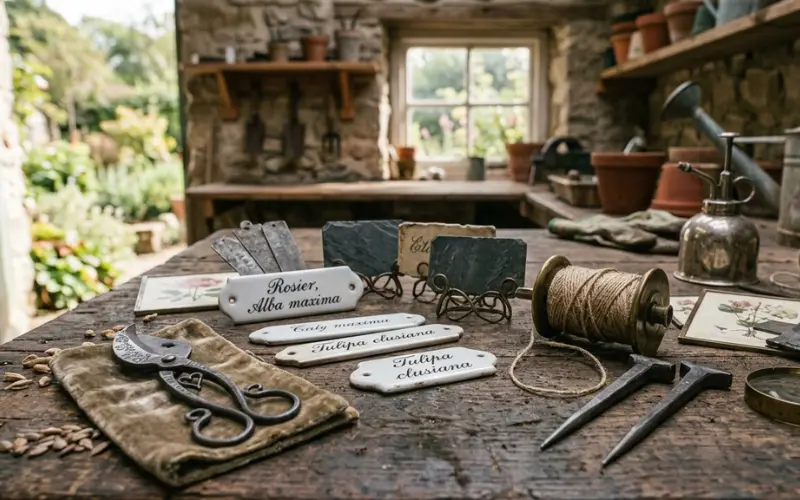
Items like mistletoe cutters, plant labels, and garden lines were designed for very specific jobs and are now considered decorative as much as functional.
Watering Equipment
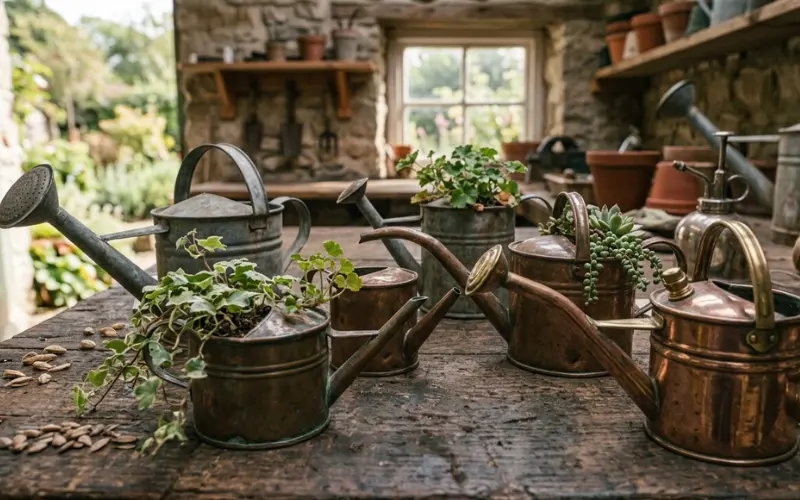
Copper and galvanized steel watering cans from the early 1900s are prized for their durability and classic shape, even though many now serve as decorative planters rather than working cans.
How to Identify Quality Vintage Garden Tools
Not everything old is worth buying. Use this checklist before purchasing vintage gardening tools:
- Check the metal for pitting. Light surface rust is fine, but deep pitting weakens the steel and cannot be fully restored.
- Inspect the handle for cracks. A hairline crack near the collar means the handle will likely fail under pressure.
- Test the joint. Wiggle the head against the handle. Excessive movement signals a loose fit that needs repair.
- Look for a maker’s mark. Stamped names or logos help confirm authenticity and often indicate better manufacturing standards.
- Consider the weight. Genuine forged steel feels heavier and more solid than modern stamped alternatives.
- Ask about provenance. Sellers who know a tool’s history, such as an estate or a working farm, often price more fairly and honestly.
Where to Find Vintage Gardening Tools
You do not need to travel to Europe to build a solid collection. Try these sources:
- Estate sales and auctions: Often the best source for original, unrestored tools at fair prices.
- Flea markets and antique fairs: Great for browsing in person and negotiating prices directly with sellers.
- Specialty online shops: Several dealers now focus exclusively on restored vintage garden tools, offering pieces that are cleaned, sharpened, and ready to use.
- Online marketplaces: Broader marketplaces list everything from single trowels to full sets, though quality varies widely, so check photos and descriptions carefully.
- Salvage yards: Architectural salvage dealers sometimes carry garden tools alongside other reclaimed household items.
- Local classifieds and community groups: Rural areas in particular often have farm tool sales that rarely make it online.
Restoring Vintage Garden Tools: A Simple Process
Restoration does not require special skills. Here is a straightforward method for bringing a rusty tool back to life:
- Clean off loose debris with a stiff brush and warm soapy water.
- Soak the metal head in a vinegar and water solution for a few hours to loosen rust.
- Scrub with steel wool to remove remaining rust without damaging the base metal.
- Sand the handle lightly to smooth any splinters or rough patches.
- Oil the wood with linseed oil to restore moisture and prevent future cracking.
- Sharpen cutting edges with a metal file, following the original angle of the blade.
- Coat the metal with a light layer of oil to prevent new rust from forming.
A weekend afternoon is usually enough to turn a forgotten tool into something you will reach for every season.
Caring for Vintage Gardening Tools Long-Term
Once restored, a little routine care keeps vintage tools working for decades:
- Wipe metal parts dry after each use to prevent moisture buildup.
- Store tools indoors or under cover, away from direct rain and snow.
- Apply a thin coat of oil to metal surfaces every few months.
- Sand and oil wooden handles once a year to keep them from drying out and splitting.
- Sharpen blades before each growing season for cleaner cuts and less strain on plants.
Why Gardeners Are Choosing Vintage Over New
Modern tools are often designed to be replaced, not repaired. Plastic handles crack, thin metal bends, and joints loosen within a season or two. Vintage gardening tools were built with the opposite mindset: durability first, replacement parts available, and materials that could take a beating.
There is also a growing appreciation for sustainability. Buying and restoring an old tool keeps it out of a landfill and avoids the resource cost of manufacturing something new. For many gardeners, that combination of practicality and environmental sense is just as appealing as the tool’s good looks.
Frequently Asked Questions
Are vintage gardening tools better than new ones?
In most cases, yes. Older tools were typically forged from solid steel and fitted with hardwood handles, making them stronger and more repairable than many modern equivalents.
How do I know if a vintage tool is safe to use?
Check for deep pitting or cracks in the metal, inspect the handle for splits, and make sure the head is securely attached. Minor surface rust is usually fine once cleaned.
What is the best way to remove rust from old garden tools?
Soak the metal in a vinegar and water solution, then scrub gently with steel wool. Finish with a light coat of oil to prevent new rust.
Where can I find affordable vintage gardening tools?
Estate sales, flea markets, and online marketplaces are the most affordable sources. Specialty vintage tool shops tend to cost more but sell pieces that are already cleaned and restored.
Can broken handles on vintage tools be replaced?
Yes. Most vintage tools were designed with replaceable wooden handles, so a cracked or broken handle can usually be swapped without discarding the whole tool.
Are vintage garden tools a good investment?
Certain rare or maker-marked pieces do increase in value over time, but most collectors buy vintage gardening tools for everyday use and enjoyment rather than resale profit.
How do I clean wooden handles without damaging them?
Sand lightly to remove roughness, wipe away dust, then apply linseed oil to restore moisture and protect the wood from cracking.
What should I avoid when buying vintage gardening tools?
Avoid tools with deep rust pitting, cracked handles near the collar, or loose heads, since these issues are harder to fix and can affect safety during use.
Final Thoughts
Vintage gardening tools bring together durability, craftsmanship, and a bit of history that modern tools simply cannot match. Whether you are hunting for a specific piece like a daisy grubber or just want a spade that will outlast your grandchildren, these tools reward the patient collector. Start small, learn to spot quality, and do not be afraid to restore a rough find. Once you use a properly forged, well-balanced vintage tool, it is hard to go back to anything else.

