
Choosing the right gardening rocks comes down to matching rock size and type to what the space needs to do. Small, angular rocks like decomposed granite compact well for pathways, while larger river rock or lava rock works better as a permanent ground cover that resists shifting and weed growth. Get the size, drainage, and color wrong, and you’ll be redoing the bed in two years instead of enjoying it for twenty.
Why Rock Choice Matters More Than People Think
Most homeowners walk into a garden center, grab whatever bag looks decent, and regret it by the second summer. I did the same thing on my first rock bed. I bought pea gravel for a slope, and every heavy rain sent half of it into the driveway.
The Gardening Rocks you pick determines three things: how often you’ll be topping it off, how well it handles your local weather, and whether it actually does the job you bought it for. A patio surround has completely different needs than a drainage swale, even though both might look like “just rocks” from the curb.
Match the Rock to the Job, Not the Look
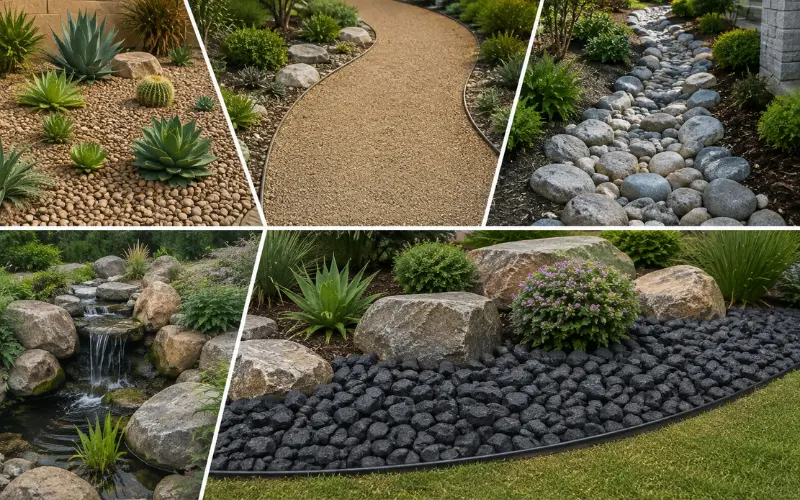
Retailers group gardening rocks by size and color, but that’s not how you should shop. Start with function.
- Ground cover around plants: Choose angular gravel or crushed stone in the 0.5 to 1.5 inch range. Angular edges lock together and stay put on flat ground.
- Pathways and walkways: Decomposed granite or 3/8-inch pea gravel compacts into a firm, walkable surface. Round pebbles look nice but roll underfoot, which becomes a tripping hazard on a slope.
- Drainage areas and French drains: Use washed river rock, 1 to 3 inches, with no fines mixed in. Fines clog drainage over time; washed rock lets water move through freely.
- Water features and pond edging: Mixed river rock in varying sizes, 2 to 8 inches, creates a natural transition and hides pond liner edges.
- Weed suppression beds: Larger rock, 1.5 inches and up, laid over landscape fabric. Smaller Gardening Rocks lets weed seeds nest between the pieces and germinate anyway.
If you’re deciding whether rock or a planted approach fits your space better in the first place, it helps to understand the practical differences covered in this breakdown of landscaping vs gardening before you commit to either.
Rock Size Chart: What Each Range Actually Does
| Size Range | Common Name | Best Use | Watch Out For |
|---|---|---|---|
| Under 0.75 in. | Fines, decomposed granite | Compact pathways, patio base | Tracks into the house on shoes |
| 0.75 to 1.5 in. | Pea gravel, small pebbles | Ground cover, planters | Rolls and scatters on slopes |
| 1.5 to 2.5 in. | Medium river rock | Weed barriers, borders | Needs fabric underneath or weeds push through |
| 2.5 to 6 in. | Large landscape rock | Drainage, focal accents | Heavy to move, plan for wheelbarrow trips |
| 6 in. and up | Boulders | Centerpieces, retaining edges | Often needs equipment or a delivery crew |
This range mirrors what big retailers stock, but none of them tell you which range solves which problem. That gap is exactly where most DIY Gardening Rocks projects go wrong.
Color Isn’t Just Aesthetic, It Affects Plant Health
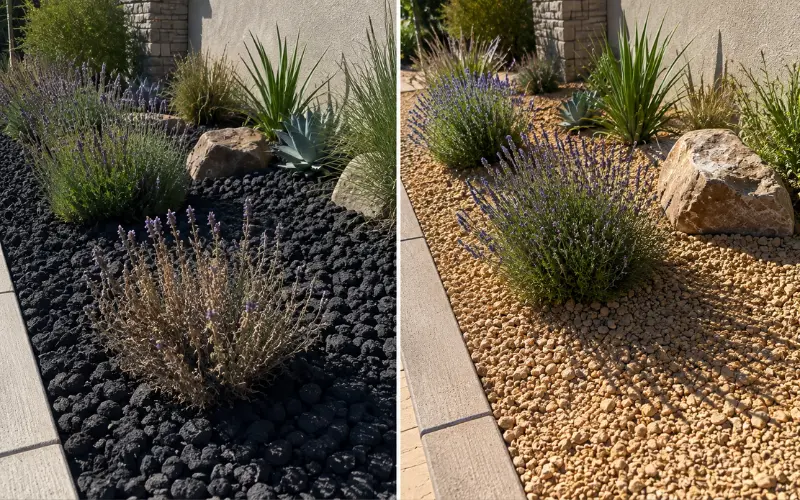
Here’s something the buying guides skip entirely: rock color changes soil temperature. Dark rocks like lava rock or black basalt absorb heat and can raise soil temperature by several degrees in direct sun. That’s a benefit in cooler climates where you want to extend a growing season, but it can stress shallow-rooted plants and even scorch stems in hot southern states during peak summer.
Lighter rocks, tan, white marble chips, or light gray gravel, reflect heat instead of holding it. If your beds sit in full afternoon sun in a warm climate, lean lighter. If you’re gardening somewhere with short summers and cool nights, a darker rock can genuinely help certain plants establish faster.
Field note: I switched a south-facing bed from black lava rock to tan crushed granite after losing two lavender plants to root heat stress in a single July. The lavender came back the next season without issue.
How Much Rock You Actually Need
Skip the guesswork. Use this formula for any rectangular or roughly square bed:
Length (ft) × Width (ft) × Depth (in.) ÷ 12 = cubic feet needed
For most ground cover applications, a 2 to 3 inch depth is the sweet spot. Go thinner and weeds punch through fast. Go thicker and you’re wasting material without added benefit.
Example: a 10 ft by 8 ft bed at 3 inches deep needs 20 cubic feet, roughly one cubic yard once you round up for settling and uneven ground. Bulk suppliers sell by the cubic yard or by the ton, and a cubic yard of most gravel weighs between 2,400 and 2,900 pounds depending on the material.
Bagged vs. Bulk: When Each Makes Sense
Bagged rock costs more per pound but works fine for small planters, borders, or accent areas under about 50 square feet. Anything larger, and bulk buying saves real money.
- Bagged: No minimum order, easy to transport in a car, ideal for touch-ups
- Bulk by the yard: Delivered by dump truck or in a super sack, cost-effective past a few hundred square feet
- Bulk by the pallet: Best for contractors or multi-area projects needing consistent material across the whole yard
If you’re planning a project big enough to need bulk delivery, it’s worth checking wholesale gardening supplies options before ordering retail bulk, since per-ton pricing often drops significantly at volume.
Installing Gardening Rocks Without Redoing It Next Year
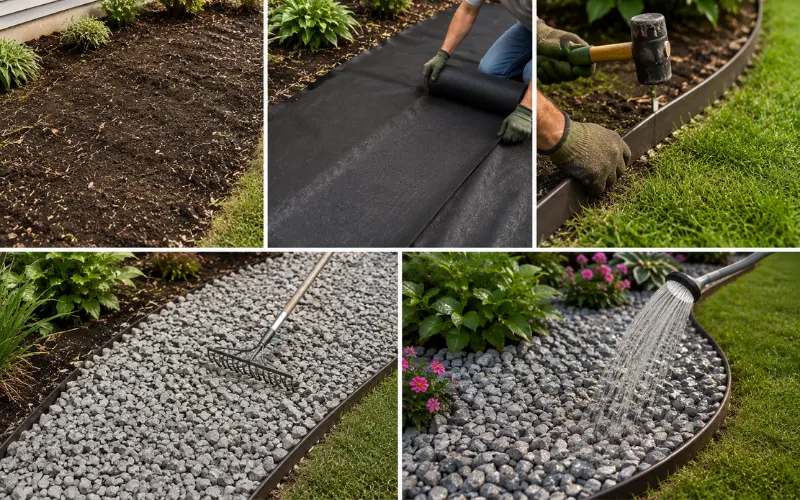
The install matters as much as the rock itself. Skip landscape fabric and even the best rock will sink into the soil within a season, especially in clay-heavy ground.
- Clear the area down to bare soil and remove roots and weeds.
- Lay landscape fabric, overlapping seams by at least 6 inches.
- Add an edging border, metal, plastic, or stone, to keep rock from migrating into the lawn.
- Spread rock to the target depth and rake it level.
- Water lightly to help settle angular material into place.
Kneeling through steps two and four is where most people give up early. A padded set of gardening mats with knee pads makes the fabric-laying and raking stretch far more tolerable, especially on a bed larger than a few hundred square feet.
Gardening Rocks for Pathways: A Different Set of Rules
Pathway rock needs to compact, not just sit there. Loose round rock never firms up, which is why so many rock paths feel unstable years after installation. Decomposed granite or crusher fines compact into something close to a paved surface when tamped and slightly moistened during install.
For curved or informal paths, a mix of stepping stones with pea gravel infill gives a softer look while still staying walkable. If you’re weighing a full pathway redesign, this collection of DIY garden path ideas covers layout options that pair well with different rock types depending on the style you’re after.
The Weed Prevention Myth
Rock alone does not stop weeds. Fabric underneath does most of the work; the rock just blocks light and makes it harder for airborne seeds to root. Skip the fabric and you’ll be pulling weeds through rock within a year, which is genuinely worse than pulling them from bare soil because the roots tangle around the stones.
If fabric already failed you once, a thin layer of pre-emergent applied before topping off the rock bed each spring closes the gap fabric alone leaves open.
Common Mistakes That Shorten the Life of a Rock Bed
- Using one size everywhere. Uniform gravel looks flat and doesn’t handle water the way a mixed installation does.
- Skipping edging. Without a physical border, rock migrates into grass within a season or two, especially on any kind of slope.
- Ignoring drainage grade. Rock beds installed flat pool water after storms. A slight grade away from the house prevents standing water and mosquito breeding.
- Choosing rock color before checking sun exposure. As covered above, this affects more than looks.
- Underestimating depth needed. A 1-inch layer looks fine on delivery day and looks patchy within a month as it settles and compacts.
Frequently Asked Questions
What is the cheapest landscaping Gardening Rocks?
Crushed stone and pea gravel are typically the least expensive options per cubic yard, especially when bought in bulk rather than bagged. Locally sourced rock also tends to cost less than rock shipped in from another region.
What are the best Gardening Rocks?
For ornamental beds, river rock or pebbles in the 1 to 2 inch range balance appearance with weed suppression. For vegetable or edible gardens, keep rock to pathways and borders rather than the growing beds themselves, since rock retains heat that can stress root vegetables.
Where is the best place to get free rocks?
New construction sites, excavation projects, and neighbors clearing their own yards are common sources. Local classifieds and community marketplace groups often have free rock listings, though you’ll usually need to arrange your own hauling.
What is the best rock to prevent weeds in landscaping?
Medium to large rock, 1.5 inches and up, installed over landscape fabric offers the best weed resistance. Smaller gravel alone allows windblown seeds to settle between pieces and germinate.
How deep should gardening rocks be for good coverage?
Two to three inches is the standard depth for most ground cover applications. Pathways can go slightly deeper, around 3 to 4 inches, to support foot traffic without shifting.
Can I put rocks directly on top of mulch?
It’s not recommended. Mulch breaks down and shifts, which causes Gardening Rocks to sink unevenly. Remove existing mulch and start with a clean, fabric-lined base instead.
Do dark rocks really make soil hotter?
Yes. Dark, low-reflectivity rock absorbs and radiates more heat than light-colored rock, which can raise nearby soil temperature several degrees during peak sun exposure.
How often do gardening rocks need to be replaced or refreshed?
With proper fabric and edging, a rock bed rarely needs full replacement. Expect to top off settled areas every 2 to 4 years and occasionally rinse off dust or organic debris buildup.

