
A bare wall can make even a beautifully furnished room feel unfinished. Star wall decor solves that problem in a way few other design elements can. Stars are simple, universally loved shapes that work in nurseries, living rooms, bedrooms, and even outdoor patios. They carry meaning too, symbolizing hope, wonder, and guidance, which is part of why this trend has stayed popular for years rather than fading like other decorating fads.
This guide goes beyond a simple list of products. It covers the materials used to make star wall decor, how to choose the right size and placement, room-by-room styling ideas, cost expectations, and care tips so your pieces stay looking good for years. By the end, you will know exactly how to pick pieces that fit your space and your budget.
Why Stars Work in Almost Any Room
Stars are one of the few decorative shapes that suit both minimalist and maximalist interiors. A single oversized metal star reads as modern and sculptural, while a cluster of small wooden stars feels cozy and rustic. This flexibility is exactly why star wall decor shows up in so many different design styles, from farmhouse to bohemian to coastal.
Another reason it works so well is scale. Unlike framed art, which usually needs a specific wall size and eye-level placement, star pieces can be grouped, scattered, or hung as a single statement. This makes them useful for awkward wall spaces, staircases, and high ceilings that other decor struggles to fill.
Types of Star Decor and What Makes Each One Different
Choosing the right star wall decor starts with understanding the materials available, since each one changes the look, cost, and durability of the final result.
Metal Stars
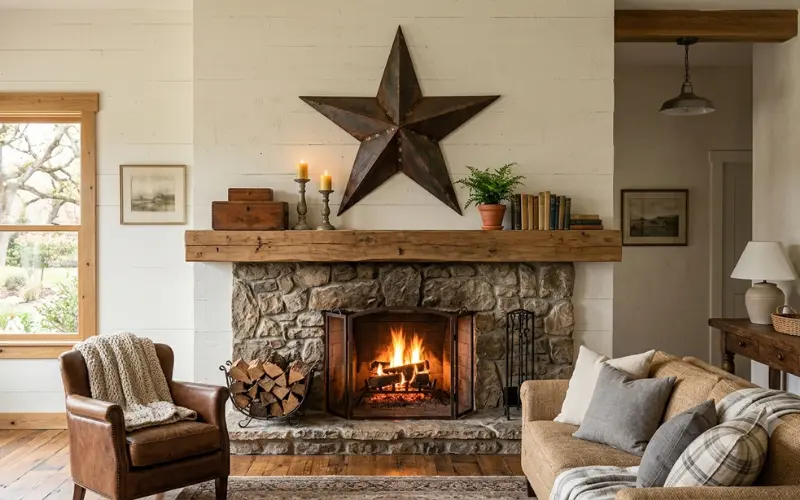
Metal stars, often made from iron or galvanized steel, are the most common choice for farmhouse and industrial interiors. They hold up well indoors and outdoors, resist fading, and often come in matte black, bronze, or rustic finishes. A large metal star above a fireplace or entryway table creates an anchor point for the whole wall.
Wooden Stars
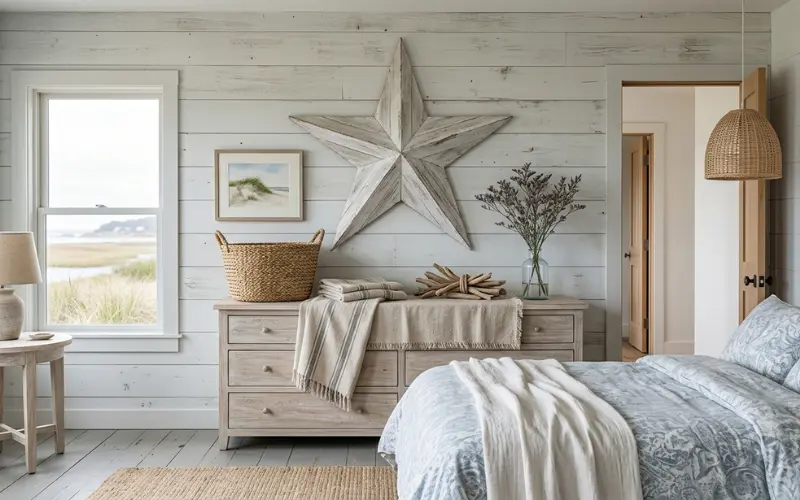
Wood brings warmth that metal cannot match. Wooden pieces are popular in coastal and cottage-style homes, especially when left unpainted or whitewashed. They pair naturally with woven baskets, linen textiles, and other natural materials.
Paper and Origami Stars
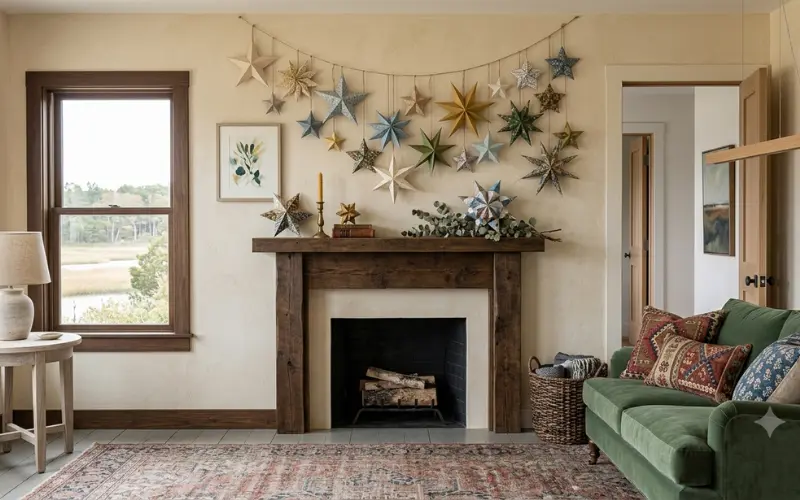
For renters, seasonal decorators, or anyone on a tight budget, paper stars are an affordable option that can be swapped out easily. Folded paper or 3D origami stars work particularly well for temporary displays like holiday mantels or party backdrops, since they are lightweight and inexpensive to replace.
String Light Stars
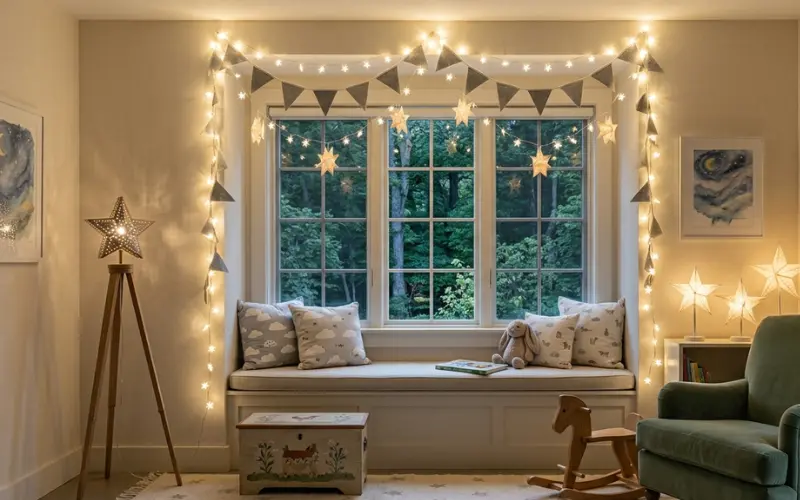
Star-shaped fairy lights and lantern strings add a soft glow that photographs beautifully and works well in bedrooms and nurseries. This style is especially popular for children’s rooms because it doubles as a gentle night light.
Vinyl Decal Stars
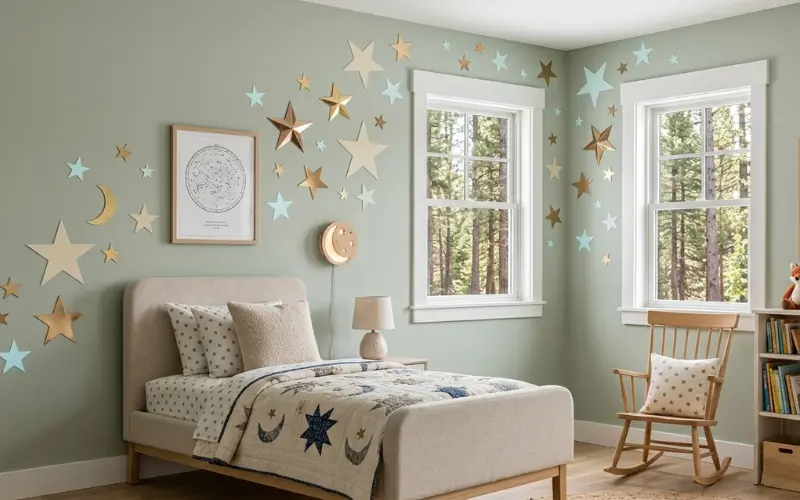
Decals are the easiest form of star wall decor to install and remove without damaging paint. They come in metallic, glow-in-the-dark, and matte finishes, and they are a favorite for nurseries and kids’ rooms because they can be repositioned as a child grows.
Macrame and Woven Stars
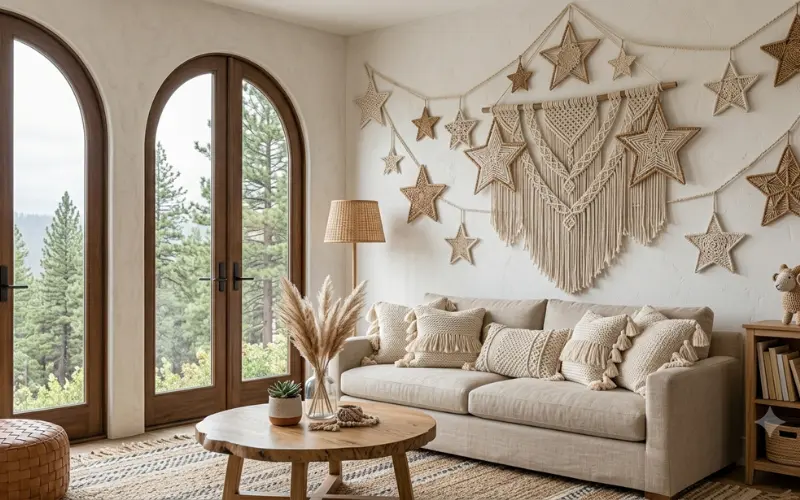
A newer trend combines the star shape with macrame knotting techniques, creating a textured, boho-inspired piece. This style suits homes that already lean into natural fibers, fringe, and neutral tones.
How to Choose the Right Size and Placement
Getting the size right is the most overlooked part of buying star wall decor, and it is the reason many pieces end up looking out of proportion once they are hung.
- Measure the wall first. A general rule is that wall art should cover 60 to 75 percent of the width of the furniture beneath it, such as a sofa, bed, or console table.
- Hang at eye level. The center of the piece should sit around 57 to 60 inches from the floor, which is the standard museum height most people find comfortable to view.
- Use groupings for small stars. A single small star can look lost on a large wall. Clustering several stars of varying sizes creates visual weight without needing one oversized piece.
- Leave breathing room. Avoid pushing pieces edge to edge with furniture or other frames. A gap of at least three inches keeps the arrangement from feeling cluttered.
Room-by-Room Ideas
Nursery and Kids’ Rooms
Soft fabric stars, decals, and string lights are the safest and most popular choices here. Glow-in-the-dark stars are a favorite because they turn the ceiling or wall into a night sky at bedtime without needing an electrical outlet.
Living Room
A large metal or wooden star above a sofa, media console, or fireplace acts as a focal point. Pairing it with smaller stars in a diagonal or scattered arrangement adds movement to an otherwise plain wall.
Bedroom
Above the headboard is one of the most requested spots for star wall decor. A single oversized star or a symmetrical pair on either side of the bed creates balance without competing with nightstands or lamps.
Entryway and Staircase
Staircase walls are often tall and narrow, making them a natural fit for a cascading arrangement of stars in ascending or descending sizes. This draws the eye upward and makes the space feel intentional rather than empty.
Outdoor and Patio Spaces
Weatherproof metal stars work well on porches, pergolas, and outdoor dining walls. Look for powder-coated finishes that resist rust if the piece will be exposed to rain.
Color and Style Pairings That Work
Star wall decor rarely stands alone, so thinking about the surrounding palette matters as much as the shape itself.
- Black metal stars pair naturally with farmhouse, industrial, and modern rustic interiors.
- Gold or brass stars suit glam, art deco, and warm neutral color schemes.
- Whitewashed wood stars fit coastal, Scandinavian, and cottage-core spaces.
- Pastel or fabric stars work best in nurseries and playful, whimsical rooms.
- Woven or jute stars complement boho, natural, and textured interiors.
DIY vs Buying Ready-Made
Making your own star wall decor can be a rewarding weekend project, especially with paper, cardboard, or simple wood cutouts. It also allows for custom sizing and color matching that store-bought pieces cannot always offer. That said, ready-made metal and wood pieces tend to hold their shape and finish longer, which matters if the piece will stay up for years rather than one season.
A practical approach many decorators use is mixing both: a store-bought anchor piece paired with a few handmade accents for a personal touch.
Cost Expectations
Prices for star wall decor vary widely depending on material and size:
- Small paper or fabric stars: often under 15 dollars for a set
- Vinyl decal sets: typically 10 to 30 dollars
- Single wooden star, medium size: around 20 to 45 dollars
- Metal star, large statement piece: usually 40 to 120 dollars depending on finish and size
- Custom or handmade macrame stars: often 30 to 80 dollars depending on the maker
Caring for and Maintaining Your Pieces
These pieces last longer with a little routine care.
- Dust regularly with a soft, dry cloth to prevent buildup, especially on textured wood or woven pieces.
- Keep metal pieces dry if displayed near a kitchen or bathroom to avoid rust spots over time.
- Avoid direct sunlight on painted or dyed fabric stars, since prolonged exposure can fade color.
- Check wall anchors every few months if the piece is heavy, particularly for large metal pieces mounted with adhesive hooks.
Common Mistakes to Avoid
- Hanging pieces too high, which disconnects them visually from furniture below
- Choosing a size that is too small for the wall, making the piece look like an afterthought
- Mixing too many finishes at once, such as gold, black, and whitewashed wood in the same cluster
- Skipping a paper template before drilling into drywall for heavier pieces
Frequently Asked Questions
1. What is the best material for star wall decor in a living room?
Metal and wood are the most popular choices for living rooms because they hold their shape and finish well over time and suit a wide range of interior styles.
2. How high should I hang star wall decor?
The center of the piece should generally sit around 57 to 60 inches from the floor, which matches standard eye-level height used in gallery and museum displays.
3. Is star wall decor suitable for a nursery?
Yes, soft fabric stars, decals, and string lights are especially popular in nurseries because they are lightweight, safe, and easy to remove or reposition as a child grows.
4. Can these stars be used outdoors?
Yes, as long as the material is weatherproof. Powder-coated metal stars are the most reliable option for porches, patios, and other outdoor walls exposed to moisture.
5. How do I arrange multiple stars on one wall?
Group stars of varying sizes in a loose cluster or diagonal line rather than a strict grid. This creates a natural, scattered look similar to a night sky.
6. Is DIY star decor cheaper than buying it ready-made?
Often yes, especially with paper or cardboard projects, though ready-made metal and wood pieces typically last longer and hold their finish better over time.
7. What size should I buy for a large wall?
For large walls, choose a piece that covers roughly 60 to 75 percent of the width of the furniture beneath it, or use a cluster of multiple stars to fill the space.
8. Does this style work with modern minimalist interiors?
Yes, a single matte black or brushed metal star can work as a clean, sculptural accent in minimalist spaces without adding visual clutter.
9. How do I keep metal stars from rusting?
Choose powder-coated or galvanized finishes for humid areas, and keep the piece dry if it is displayed near a kitchen sink or bathroom.
10. Can these pieces be moved or repositioned easily?
Decals, string lights, and lightweight fabric stars are the easiest to reposition, while heavier metal or wood pieces need wall anchors and are best planned out before installation.
Final Thoughts
Star wall decor is one of the most versatile ways to bring warmth, personality, and a touch of wonder into a home. Whether you choose a single oversized metal star for a living room focal point or a soft cluster of fabric stars for a nursery, the key is matching the material, size, and placement to the room’s existing style. With the material comparisons, sizing rules, and room-by-room ideas in this guide, you now have everything needed to choose pieces that look intentional rather than accidental.

