
Engineered Timber Flooring in Melbourne homes because it handles the city’s swinging humidity better than solid hardwood, costs 20 to 40 percent less to buy, and adds genuine resale value in established suburbs. It is not worth it if you want a floor you can sand back five or six times over fifty years, since the real timber wear layer only allows one or two refinishes before you’re back to replacing boards.
What Actually Determines Whether It’s Worth It
Most guides stop at “it looks like real wood and it’s more stable.” That’s true, but it skips the part that actually decides whether you’ll be happy with the purchase in five years: the wear layer thickness Engineered Timber Flooring in Melbourne.
A 2mm or 3mm veneer looks identical to a 6mm veneer in a showroom. The difference only shows up when your dog scratches the surface, or when you eventually want to sand out a decade of scuffs. Boards with a wear layer under 3mm often can’t be sanded at all without exposing the plywood core underneath. If a supplier can’t tell you the exact wear layer thickness in millimetres, that’s a red flag worth pushing on before you sign anything.
Real Cost Breakdown for Melbourne (Supply and Install)
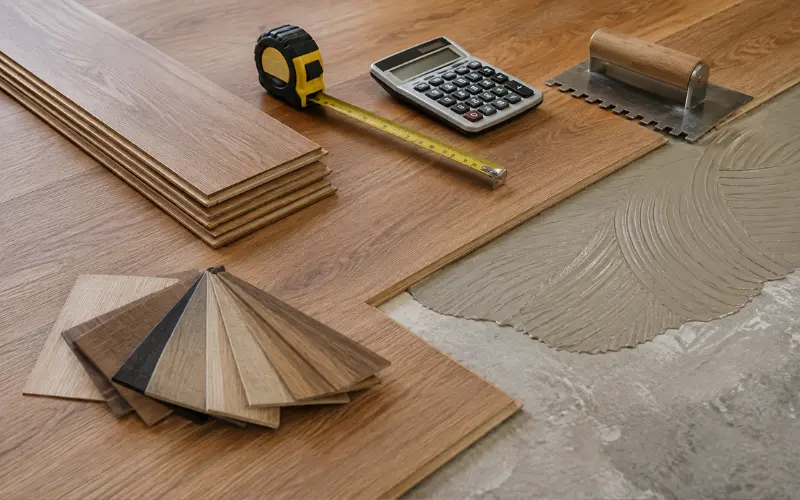
Most competitor pages quote a single “from” price, which tells you almost nothing about what you’ll actually pay. Here’s a more honest range based on current Melbourne supplier and installer quotes:
| Grade | Supply Only (per m²) | Supply + Install (per m²) | Typical Wear Layer |
|---|---|---|---|
| Entry-level laminate-core engineered | $45–$65 | $85–$110 | 1–2mm |
| Mid-range European Oak (floating) | $70–$110 | $130–$165 | 3–4mm |
| Premium wide-board (glue-down) | $120–$180 | $190–$250 | 4–6mm |
Glue-down installation typically adds $15 to $25 per square metre over floating, mostly because of subfloor levelling. Old Melbourne weatherboard and California bungalow homes almost always need levelling compound before a glue-down job can start, and most quotes leave that cost out until the tradie is standing in your hallway.
Melbourne’s Climate Is the Actual Reason This Product Exists
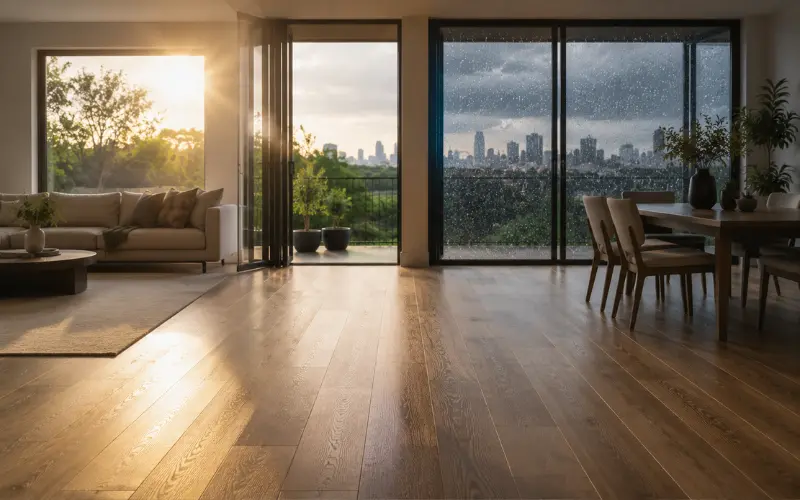
Every guide mentions “handles humidity changes,” but few explain why that matters specifically here. Melbourne can swing from 15 percent relative humidity on a hot northerly day to over 70 percent during a cool change, sometimes within the same 24 hours. Solid timber expands and contracts with every swing. Over a few years, that movement shows up as gaps between boards in winter and cupping in summer.
Engineered boards resist this because the cross-layered core cancels out the wood’s natural tendency to move in one direction. In practice, that means fewer squeaky boards near north-facing windows and less risk of boards lifting near sliding doors that get direct afternoon sun, which is a common complaint I’ve heard from installers working in Melbourne’s inner east.
Does It Actually Add Resale Value?
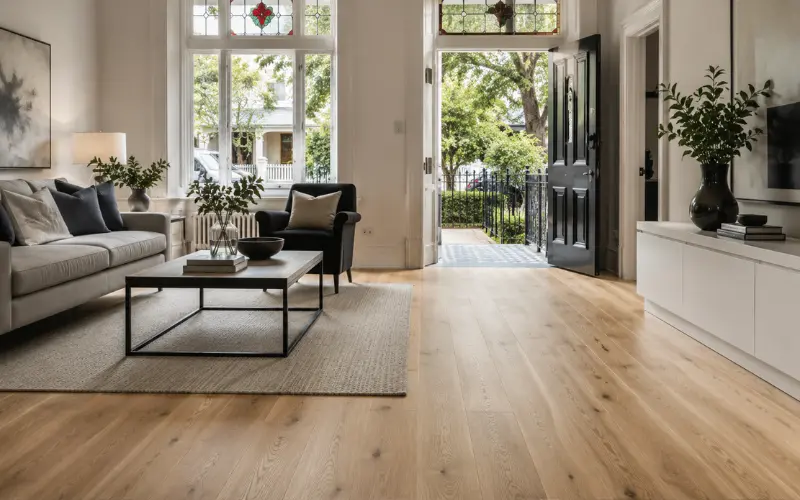
This is the question competitor content skips entirely. Local agents I’ve spoken with in the inner north and bayside suburbs consistently say engineered oak in a mid-tone (not too dark, not too pale) performs well in photos and inspections, and buyers rarely ask whether it’s solid or engineered once it’s down. Where it matters more is in period homes: heritage buyers in suburbs like Fitzroy or Camberwell sometimes specifically ask about solid timber, so engineered boards in those listings occasionally draw a question at inspection, even if it doesn’t affect the sale price.
If resale is your priority and you’re renovating a heritage-style property, it’s worth checking what similar homes on your street have installed before you commit to either option.
The Downsides Nobody Puts on Their Homepage
- Refinishing is limited. Most boards allow one, occasionally two, light sands before the veneer is gone. Solid timber can handle four or more over its lifetime.
- Cheap boards delaminate. Poor-quality adhesive in the plywood core can cause layers to separate near water sources, particularly under dishwashers or near sliding doors that let rain in.
- Not all “engineered” boards are equal. Some budget ranges use a printed veneer layer topped with a thin real-wood skin under 1mm, which some suppliers still market as “engineered timber.” Ask to see the cross-section of the board, not just a sample swatch.
- Underfloor heating compatibility varies by product, not by category, so don’t assume every engineered board on the market works with your heating system without checking the specific product datasheet.
Where It Makes the Most Sense
Engineered timber tends to be the right call for open-plan living and kitchen areas where you want a continuous timber look flowing from the kitchen through to the living space, apartments and units where floating installation avoids major structural work, rental properties and investment homes where the lower upfront cost and easier maintenance matter more than a 50-year lifespan, and homes on concrete slabs, where solid timber options are limited anyway.
A quick expert note: if you’re comparing quotes, always ask whether the price includes acclimatisation time. Boards need to sit in the room for 48 to 72 hours before installation so they adjust to your home’s humidity. Installers who skip this step to save time are the ones whose customers call back six months later about gaps.
How to Avoid the Most Common Buying Mistake
The single biggest regret installers report isn’t about the timber itself, it’s board width. Wide boards (190mm or more) look striking in photos but show every subfloor imperfection more obviously than narrower boards, and they’re more prone to visible gapping in older homes with less stable subfloors. If your home is pre-1980s, ask your supplier specifically how their wider board options perform on your subfloor type before you fall for the look in a showroom display.
FAQs on Engineered Timber Flooring in Melbourne
What are the downsides of Engineered Timber Flooring in Melbourne?
Limited refinishing (usually one to two sands), the risk of layer delamination in cheap products, and reduced resale appeal in strictly heritage-focused property markets compared with solid timber.
Where can I find Engineered Timber Flooring in Melbourne?
Most flooring showrooms across Melbourne’s outer east, west, and north stock European Oak ranges, along with several dedicated flooring retailers in the CBD fringe suburbs. Visiting in person to check the actual wear layer thickness is worth the trip.
What is the best Engineered Timber Flooring in Melbourne in Australia?
There’s no single “best” product. European Oak with a 4mm or thicker wear layer and a 25-year structural warranty is generally the safest mid-to-premium choice for Australian conditions.
Which brand of Engineered Timber Flooring in Melbourne is considered the best?
Brand matters less than wear layer thickness, core quality (multi-ply versus HDF), and warranty terms. A lesser-known brand with a thick veneer often outperforms a recognisable brand with a thin one.
How much does Engineered Timber Flooring in Melbourne cost per square metre in Melbourne?
Supply-only typically ranges from $45 to $180 per square metre depending on grade, with supply and install landing between $85 and $250 per square metre once subfloor prep is included.
Is Engineered Timber Flooring in Melbourne cheaper than laminate?
No, laminate is usually cheaper since it has no real timber layer. Engineered timber costs more but includes an actual hardwood surface, which laminate cannot replicate under close inspection or when scratched.
Can Engineered Timber Flooring in Melbourne be installed over old timber floorboards?
In many cases yes, provided the existing boards are flat, structurally sound, and don’t have significant movement. A trade assessment beforehand avoids problems after installation.
Is Engineered Timber Flooring in Melbourne a good option for a small renovation budget?
Yes, particularly for those working through a smaller-scale renovation, since floating installation keeps both material and labour costs down compared with solid timber and glue-down methods.

