
A decorating screen is a freestanding or fixed panel—made from timber, metal, rattan, fabric, or glass—that blocks an unwanted view while still letting light and air move through the space. It works best when you pick the material and openness for the actual problem in the room, not just for how the pattern looks in a showroom photo. Get the placement and density right and a screen can do a job that would otherwise need a full wall, at a fraction of the cost and none of the permanence.
Work Out the Problem Before You Shop for a Pattern
Most people start by browsing patterns. That is backwards.
Stand in the spot where the unwanted view starts, whether that is a neighbour’s upstairs window, a desk you don’t want on video calls, or a laundry pile visible from the lounge. Get a family member to hold a bedsheet or a large piece of cardboard in a few positions. You will usually find that a narrow, well-placed panel solves the problem better than a wide one plonked in the middle of the room.
This matters for three reasons that most guides skip over:
- Height is not privacy: A tall screen blocks a standing adult but does nothing for someone looking down from a second-storey balcony next door.
- Openings compound: A pattern with 30% open area looks private from six metres away and far less private from two.
- Airflow has a cost: Block a breeze path on a north-facing Queensland verandah and you may trade privacy for a hotter room in January.
My take: I always mark the actual sightline with painter’s tape on the floor before ordering anything. It has saved more than one client from buying a screen a metre wider than they needed.
Australian Conditions Most Articles Skip
This is where a lot of screen advice falls short. Australia’s climate, building rules and pest pressure change what “durable” actually means, and a few details rarely get covered properly:
- Bushfire Attack Level (BAL) zones: If your property sits in a designated bushfire-prone area, combustible screening materials near the house may need to meet specific construction requirements under AS 3959. Untreated timber battens close to a dwelling in a high BAL zone can be a compliance issue, not just a style choice. Check your BAL rating with council before committing to timber near the building line.
- Termite exposure: Timber screens touching soil, or sitting close to garden beds, are at higher risk in termite-prone regions across most of the country. Treated pine needs an H3 rating for above-ground outdoor use, and H4 if it contacts the ground. Hardwoods like spotted gum carry natural durability but still benefit from a termite inspection schedule if placed near garden beds.
- Wind loading on fixed panels: A solid screen behaves like a sail. On an exposed balcony or a coastal block, an engineer-rated fixing system matters more than the finish. Councils in wind-exposed areas may ask for structural certification on screens over a certain height or area, particularly on multi-storey balconies.
- Boundary and height rules: Many councils treat freestanding screens under 2.5 metres, set back at least 900mm from a boundary, as exempt development, provided visual permeability sits within an allowed range (often 20 to 30 percent openings). Rules vary between states and even between councils, so a five-minute call before ordering panels can save a costly removal order later.
Picking a Material That Suits the Job and the Climate
| Material | Typical Cost (Supply Only, AUD) | Best Suited To | Watch Out For |
|---|---|---|---|
| Treated pine slats | $80–$180 per sqm | Budget outdoor screens, temporary zoning | Needs H3/H4 rating, more frequent recoating |
| Spotted gum or blackbutt | $250–$450 per sqm | Feature outdoor screens, alfresco backdrops | Annual oiling, tannin staining on nearby concrete |
| Powder-coated aluminium | $200–$400 per sqm | Coastal balconies, low-maintenance fences | Higher upfront cost, limited on-site cutting |
| Laser-cut steel or Corten | $300–$600 per sqm | Feature panels, garden screens | Corten stains run-off surfaces during weathering |
| Rattan, cane, bamboo | $60–$200 per panel | Indoor dividers, covered patios | Poor performance in direct rain or high humidity |
| Fluted or frosted glass | $350–$700 per sqm installed | Bathrooms, hallways, compact apartments | Needs safety glazing and professional fitting |
Prices vary by region and supplier, so treat these as a starting point for budgeting rather than a quote.
Where a Decorating Screen Actually Earns Its Keep
1. Open-Plan Living and Dining
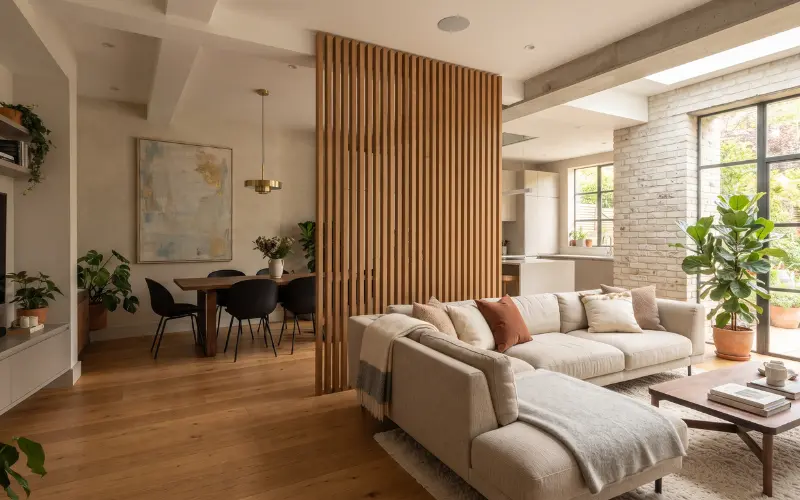
A vertical batten decorating screen between the sofa and dining table creates two zones while keeping sightlines open enough that the room still feels connected. Align it with an existing feature, like a pendant light or a kitchen island edge, so it reads as designed rather than added on afterward.
2. Balconies and Terraces
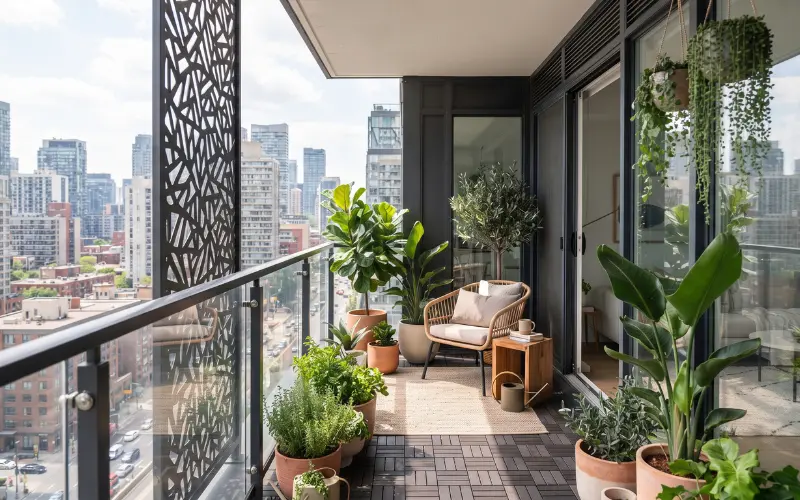
Narrow panels at the side of a balcony usually solve more of the actual privacy problem than a full-width decorating screen, and they put less strain on railings. If you’re weighing up options for a specific building type, pairing panels with a considered modern balcony railing design keeps the whole structure looking intentional rather than bolted on.
3. Alfresco and Covered Patios
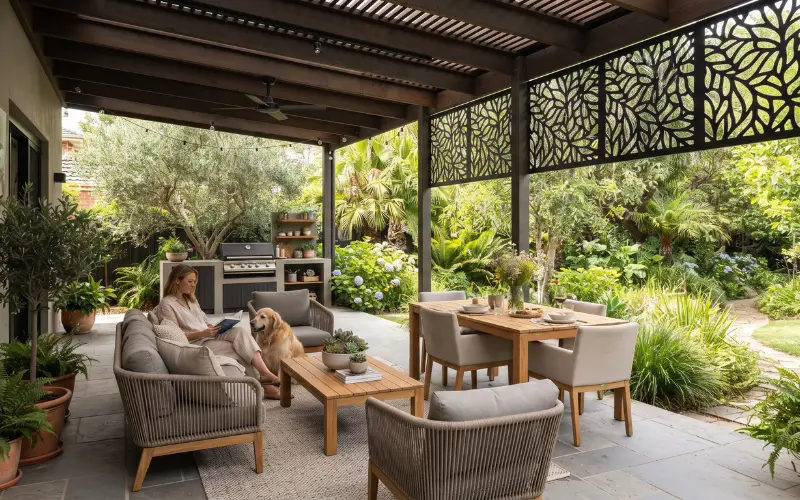
Screen only the side that needs it. Full enclosure on all sides usually kills the breeze and the point of having an outdoor room in the first place.
4. Home Offices in Shared Rooms
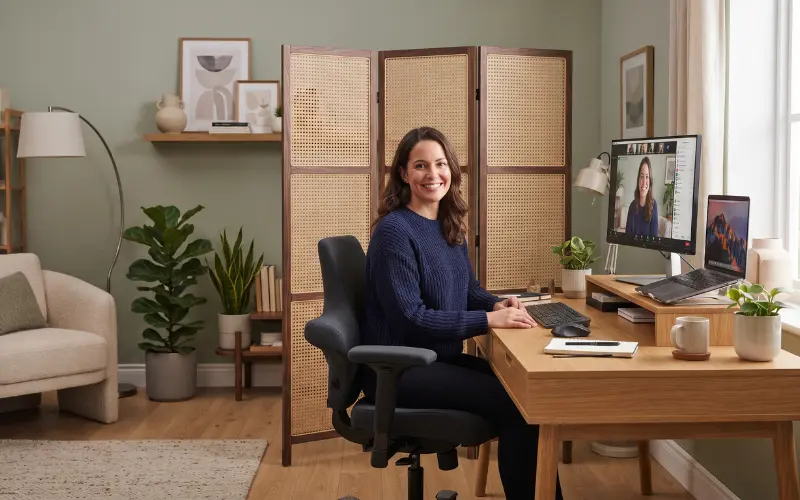
Position the screen behind the desk chair, not directly in front of the desk, so it doubles as a video-call backdrop. If the room already has a contemporary home office setup, a slim divider can finish the zone without swallowing floor space.
5. Hiding Clutter and Utility Zones
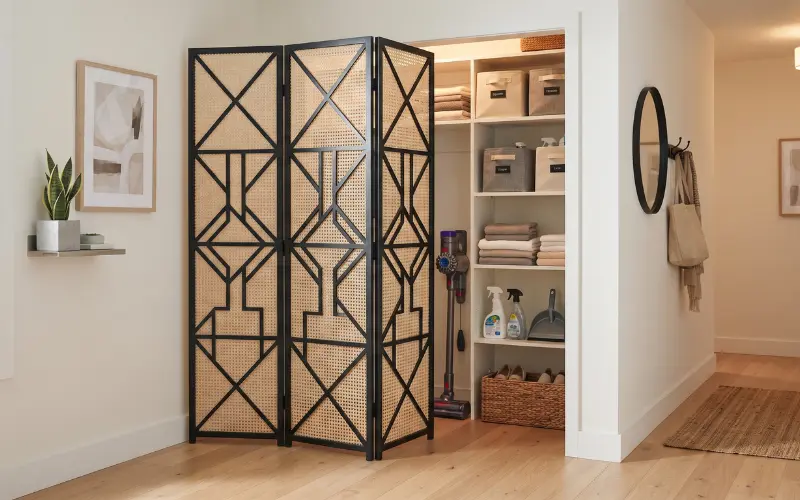
A screen in front of an open laundry, a shoe pile or loose cables is a quick fix, but it works better long-term when paired with actual storage behind it. Combining a divider with proper wall storage stops the mess simply moving out of sight instead of getting sorted.
6. Bathrooms and Wet Areas
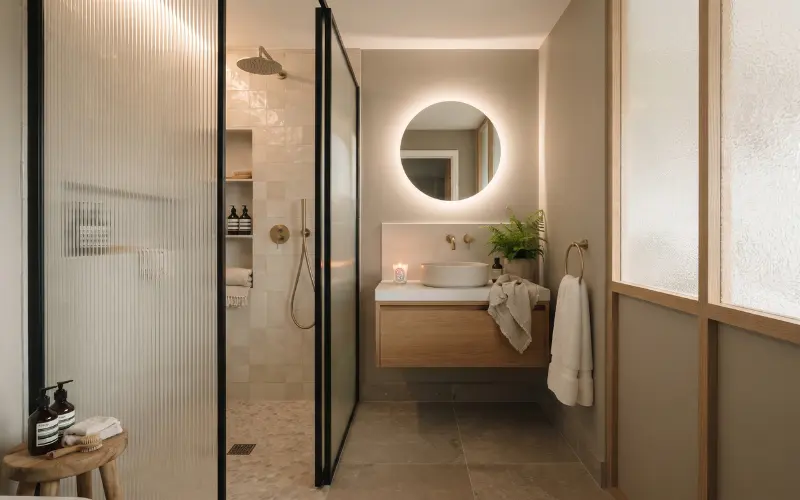
Fluted or frosted panels let light through a small bathroom without exposing everything. If you’re deciding between finishes, it’s worth reading up on translucent glass vs. frosted glass before you order, since the two diffuse differently depending on viewing distance and lighting.
7. Front Yards and Street-Facing Rooms
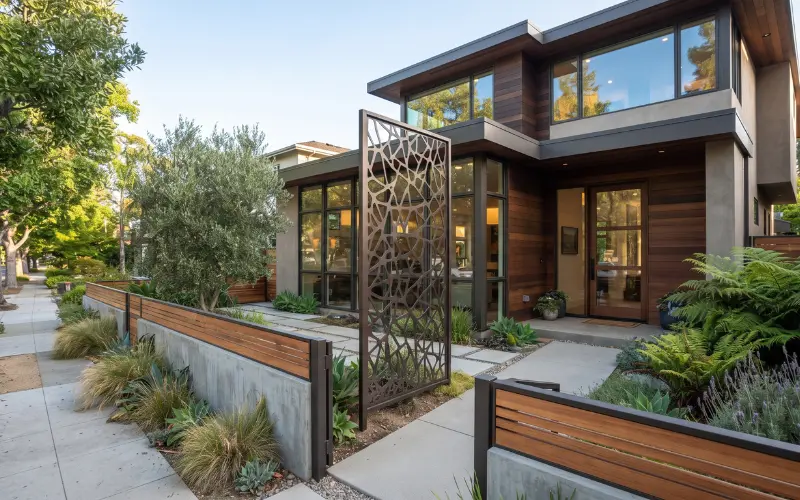
Large street-facing windows are common in newer builds, and a slim screen near the entry can soften that exposure without the bulk of a solid fence. If you’re also reworking the boundary, lighter screens pair well with modern front fence designs closer to the house.
8. Feature Walls with Natural Texture
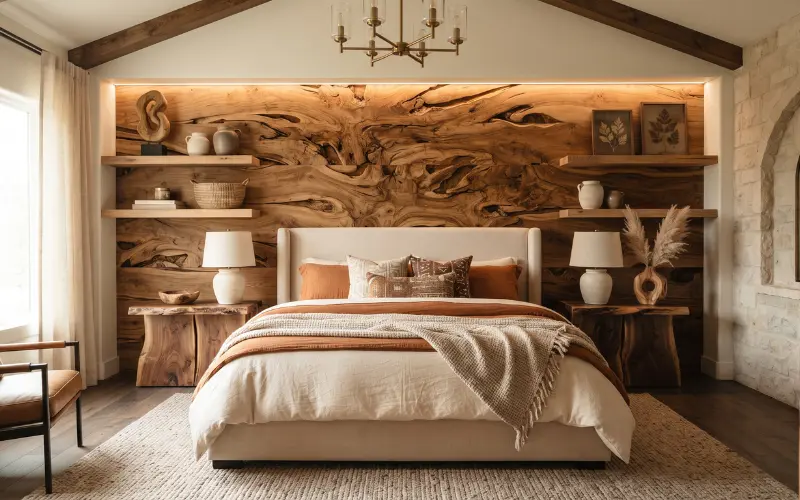
A single large panel behind a bed or console can act as the room’s artwork. If you want to repeat the material elsewhere without over-matching, pieces of handmade wood home decor can pick up the same warmth in smaller doses.
Installation Notes Nobody Mentions Until Something Goes Wrong
- Freestanding screens need a genuinely flat base. On a sloped paver or a slightly uneven deck, even a light panel can rock in wind gusts within a season.
- For fixed installations, check what’s behind the wall before drilling. Plasterboard alone will not hold a tall timber or metal panel long-term, especially outdoors where wind adds constant sideways load. Masonry anchors or a post set in a concrete footing are usually the safer call for anything over about 1.8 metres.
- Around pools, screening has to meet barrier requirements under the relevant state pool safety regulations, typically limiting gaps to no more than 100mm and requiring a minimum height. A decorative screen is not automatically a compliant pool fence, and treating it as one is a genuine safety risk, not just a compliance technicality.
Common Mistakes Worth Avoiding
- Buying based on the pattern photo instead of the actual sightline you need blocked.
- Installing indoor-rated timber or MDF outdoors, where humidity and rain cause swelling within a single wet season.
- Solid panels on exposed balconies without checking the fixing method can handle wind load.
- Forgetting the reverse side is visible too, in open-plan layouts where both faces of the screen are on show.
- Assuming a decorative screen provides the acoustic separation of a real wall. It filters sightlines, not sound.
FAQ’s on Decorating Screen
How much does a Decorating Screen cost to install in Australia?
Supply-only costs range from around $60 for a small indoor rattan panel to $600 per square metre for feature laser-cut steel. Installation adds $50 to $200 per hour for a tradesperson, more for structural fixings on balconies or near pools.
Do I need a permit for a Decorating Screen on my balcony?
Often not, if it stays under typical height and area limits set by your council or body corporate, but balconies attached to strata buildings usually need body corporate sign-off regardless of council exemptions. Check both before ordering.
Can a decorating screen be used near a pool as a fence?
Only if the entire structure, including gap sizes and height, is assessed against your state’s pool barrier standard. A decorative screen bought off the shelf is very unlikely to meet these requirements on its own.
What decorating screen material handles Australian humidity best without warping?
Powder-coated aluminium and treated hardwoods like spotted gum hold up best in humid coastal climates. Treated pine and untreated cane are more prone to swelling or mould in consistently damp conditions.
Will a privacy screen block too much airflow on my patio?
It depends on the open percentage of the pattern. Screens with 30 to 50 percent openings usually maintain reasonable airflow while still cutting the direct sightline, which is a better balance than a fully solid panel for most Queensland and northern NSW climates.
How do I stop a timber screen from cracking in full sun?
Choose a species rated for outdoor exposure, seal all sides before installation including the edges, and recoat with exterior oil annually. Screens facing west take the harshest afternoon sun and dry out faster than those on shaded sides.
Is a folding screen sturdy enough for a home with kids or pets?
A folding screen can tip if knocked, so keep it away from high-traffic paths and consider a wall bracket for extra stability in busy households, or choose a fixed panel instead if the room sees a lot of movement.
Can I paint a laser-cut metal screen to match my house colour scheme?
Powder-coated finishes are factory-applied and not designed for repainting. Raw steel or aluminium can be painted with the correct metal primer, but check the manufacturer’s warranty terms first, since some void the warranty if the factory finish is altered.

