
A Wall Garden Plants is worth growing if you’re prepared to treat it like a small appliance rather than a decoration: it needs regular water, the right plant choices for your light, and a bit of trimming every few weeks. Done properly, a well-planted living wall can lift a bare courtyard fence or blank balcony wall into the best-looking part of the garden. Done half-heartedly, it turns into a patchy, dying eyesore within six months, which is exactly why so many Australian homeowners give up on theirs before the first year is out.
What “worth it” really means for a wall garden
Most articles on this topic jump straight to a plant list. That skips the actual question people are asking, which is whether the time, water and money add up to something that lasts.
A Wall Garden Plants earns its keep when three things line up: the wall gets consistent light for the plants you’ve chosen, you’ve got an irrigation plan that doesn’t rely on you remembering to water by hand every day, and you’ve picked species suited to your climate zone rather than whatever looked good in a photo from a UK or US gardening site. Miss any one of those and you’ll be replacing plants every few months, which quietly burns through any money you saved by skipping a professional installer.
The real running costs in Australian dollars
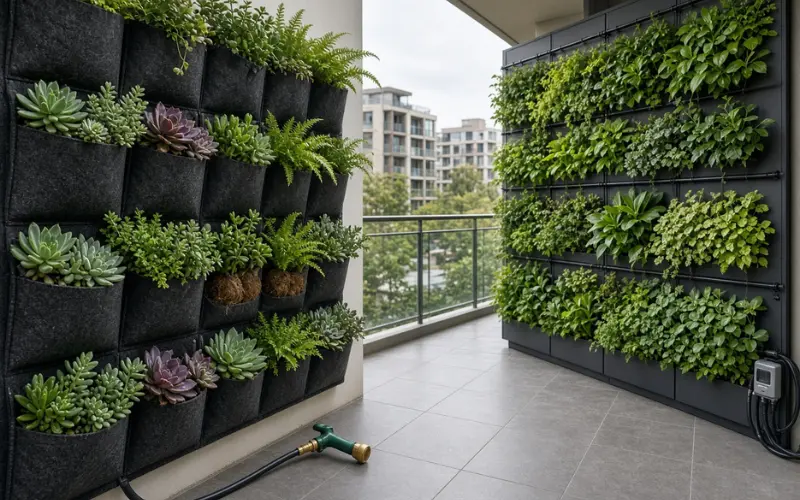
Nobody selling you a Wall Garden Plants kit wants to talk about ongoing spend, but this is where “worth it” actually gets decided.
| Cost factor | DIY felt-pocket or modular kit | Professional living wall system |
|---|---|---|
| Setup cost | $150 to $600 for a 2m² wall | $800 to $2,500+ for a 2m² wall |
| Plant replacement (yearly) | $80 to $200, higher in the first year | $30 to $100 once established |
| Water use | Higher, hand-watering wastes runoff | Lower, drip irrigation is metered |
| Time per week | 30 to 60 minutes | 5 to 10 minutes for checks |
| Typical lifespan before rebuild | 2 to 4 years | 7 to 10 years with maintenance |
If you’re in an apartment or renting, the DIY route makes far more sense financially, even with higher plant turnover. Our apartment gardening guide covers the container and space constraints that come with rental properties, which apply just as much to a vertical setup as a balcony pot collection.
Which plants actually earn their spot on the wall
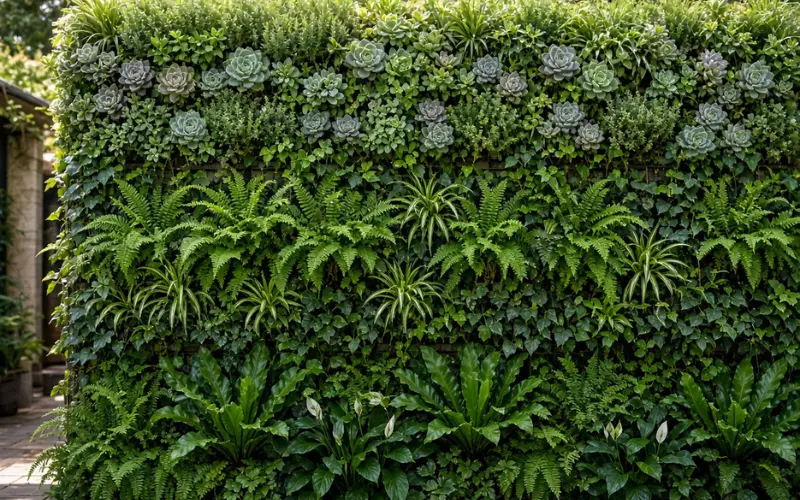
Every competitor list I checked treats plant selection as a single flat list. In practice, a Wall Garden Plants behaves like three separate microclimates stacked on top of each other, and treating it that way is what separates a wall that lasts from one that dies in patches.
Top rows (driest, most sun):
- Succulents such as echeveria and sedum
- Mediterranean herbs: thyme, rosemary, oregano
- Ornamental grasses like liriope
Middle rows (balanced light and moisture):
- Boston fern
- Spider plant
- English ivy
- Philodendron scandens
Bottom rows (shadiest, most humid):
- Bird’s nest fern
- Peace lily
- Maidenhair fern
If your wall gets full sun for most of the day, skip the fern-heavy plant lists altogether. They’re written with UK and coastal US conditions in mind, and they’ll scorch fast in an Australian summer without a shade cloth or a north-facing wall out of direct afternoon light.
From experience: the single biggest mistake I see in wall gardens is planting the whole wall with one moisture requirement in mind. A wall doesn’t dry evenly top to bottom, so a plant palette that ignores that will always have a struggling section, no matter how good the initial design looks.
Where a wall garden genuinely isn’t worth it
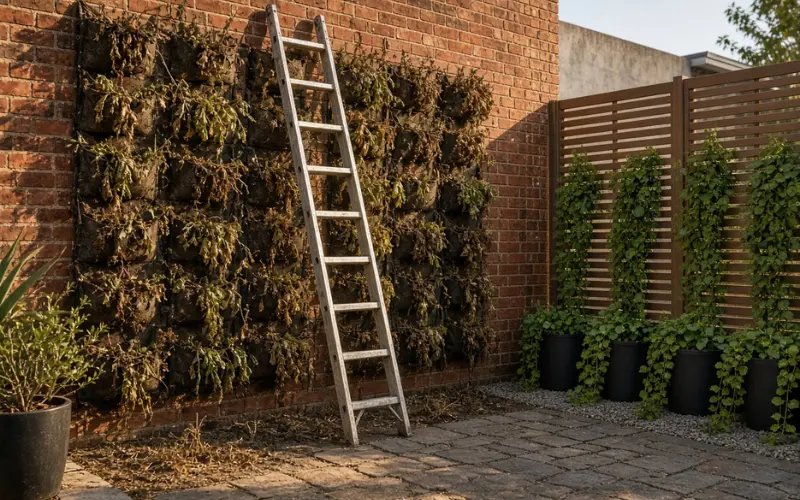
This is the part most content skips entirely, and it’s the part that actually helps someone decide before they spend the money.
- West-facing brick walls in summer hold heat long after sunset, which cooks root systems even in drought-tolerant species.
- Walls you can’t reach for watering or trimming without a ladder every time become a maintenance chore nobody keeps up with.
- Rental properties without landlord approval risk wasted setup cost if you’re asked to remove fixtures at lease end.
- Households that travel often without an automated drip system will lose plants within two to three weeks of no attention.
If any of those match your situation, a few well-placed privacy screen panels with trailing pots might get you the same visual effect with a fraction of the upkeep.
DIY installation versus hiring a professional
A felt-pocket or modular panel system is well within reach for most confident DIYers on a weekend. You’ll need a waterproof membrane behind the wall, a simple irrigation timer, and plants sized as plugs rather than mature specimens, since smaller root systems establish faster in the tight space these systems provide.
For anything larger than about 3m², or for a wall that needs to survive full outdoor exposure through an Australian summer, it’s worth getting a gardening consultation before you commit. A quick site assessment will tell you whether your wall’s orientation and drainage actually support the plant palette you’ve got in mind, which saves you from redoing the whole thing a year in.
If you’d rather hand the entire project off, searching for gardening services near you is usually cheaper than it sounds once you factor in the plant replacement costs of a failed first attempt.
Setting up watering so it actually survives your first year
Hand-watering a wall garden is the number one reason DIY installs fail. Water runs down and out before it soaks in, so the bottom rows get flooded while the top rows stay bone dry.
A basic drip irrigation kit on a timer solves this for under $100 and takes an afternoon to fit. Run it early morning, before the day heats up, so water has time to soak into the growing medium rather than evaporating off the surface. If you’re growing edibles in the mix, stick to organic gardening solutions for pest control, since anything sprayed on a vertical wall drifts further than it would on a flat garden bed.
Choosing your growing medium and supplies
Standard potting mix compacts and dries out fast in a vertical system, which is why most wall garden failures trace back to the wrong growing medium rather than the wrong plants. A lightweight, well-draining mix with added coir and perlite holds moisture without becoming waterlogged in the lower pockets. If you’re setting up more than one wall or planning to expand later, buying growing media and felt through wholesale gardening supplies works out considerably cheaper than retail garden centre pricing per bag.
The honest verdict
A wall garden is worth growing if you treat the ongoing water and maintenance as part of the deal rather than a one-off project. Pick plants by zone, not by what looks good in a photo. Automate the watering from day one. Get a proper site read before you commit real money to a professional system. Skip it, or scale it right down, if your wall bakes in full west sun or you’re away from home more often than not.
Frequently Asked Questions
How long do Wall Garden Plants typically last?
Individual plants in a DIY system usually need partial replacement within 12 to 18 months, while a professionally installed and maintained wall can keep most of its original plants thriving for 5 years or more.
Do Wall Garden Plants damage brick or render walls?
Direct-planted climbers can trap moisture against unsealed masonry over time. A properly waterproofed backing panel or a gap between the wall and the growing system avoids this entirely.
Can I grow vegetables in a vertical Wall Garden Plants?
Yes, though leafy greens and herbs do far better than root vegetables, which need more soil depth than most wall systems provide.
How much sunlight does a Wall Garden Plants actually need?
Most living wall plants do best with 4 to 6 hours of filtered or morning light. Full, unbroken afternoon sun on an Australian summer wall is often too harsh for anything but succulents and hardy Mediterranean herbs.
Is a wall garden cheaper than a regular garden bed?
No. Per square metre, a wall garden almost always costs more to set up and maintain than an equivalent ground-level bed, because of the irrigation, structural mounting and higher plant turnover involved.
What’s the biggest reason wall gardens fail in their first year?
Uneven watering. Hand-watering a vertical wall floods the bottom and starves the top, which is why a basic drip system pays for itself within months.
Can I install a wall garden indoors?
Yes, provided you’ve got either strong natural light or supplementary grow lighting, since most indoor walls don’t get anywhere near the light levels an outdoor position does.
Do I need council approval to install a wall garden in Australia?
Generally no for a standalone panel system on your own property, but structural attachments to a shared or boundary wall in a strata property usually require body corporate sign-off first.

