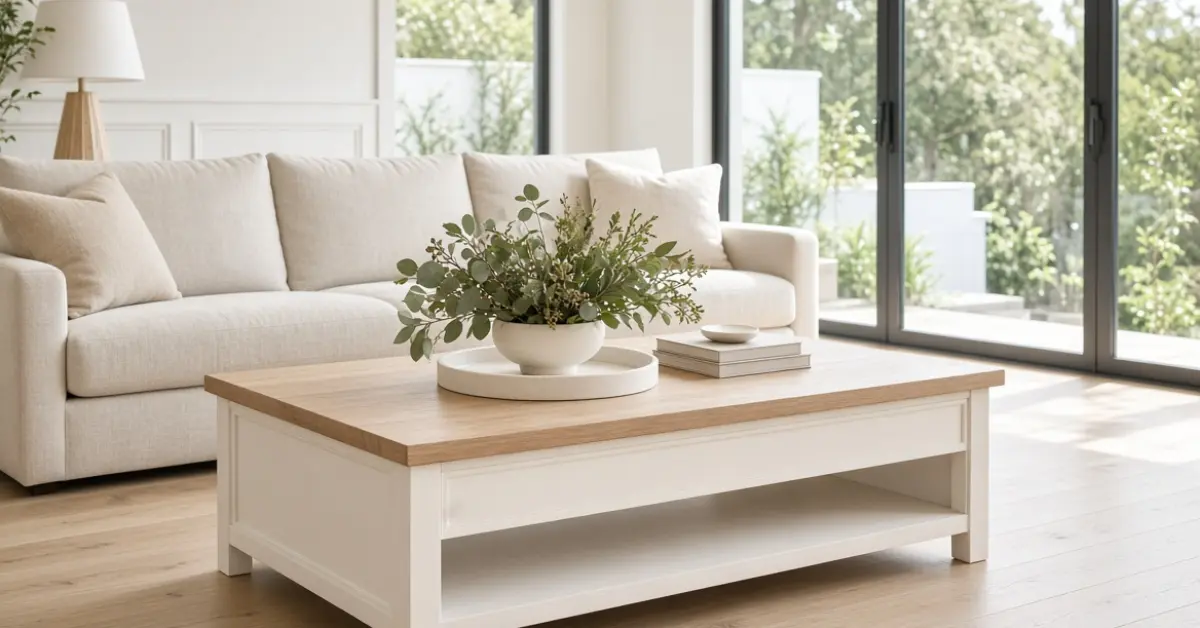
A Hamptons Style Coffee Tables fits a modern interior because it softens sharp architectural lines with light timber, painted finishes and generous but sensible proportions, without dragging the whole room into a themed coastal look. Get the scale, material and colour balance right and it reads as considered furniture rather than a beach house prop, which is exactly what most contemporary Australian living rooms need.
Why This Style Keeps Turning Up in Modern Australian Homes
Walk into most new-build or renovated living rooms around Sydney, Melbourne or Brisbane and you will notice they are rarely pure minimalist boxes. There is usually a mix: a low modular sofa, big glass doors to the alfresco, polished concrete or engineered timber underfoot, and a need for something at coffee table height that does not feel cold.
A Hamptons Style Coffee Tables earns its place here because it works as a visual pause. The painted frame or timber top absorbs light instead of bouncing it back the way glass and steel do, which takes the edge off an otherwise hard-surfaced room. That is the practical reason designers keep specifying it, not just nostalgia for Long Island beach houses.
It also survives changes in taste better than trend furniture. A well-made table in white painted timber or natural oak will still suit the room in five years, even if the cushions, rug or artwork move on.
Get the Proportions Right Before You Look at Style
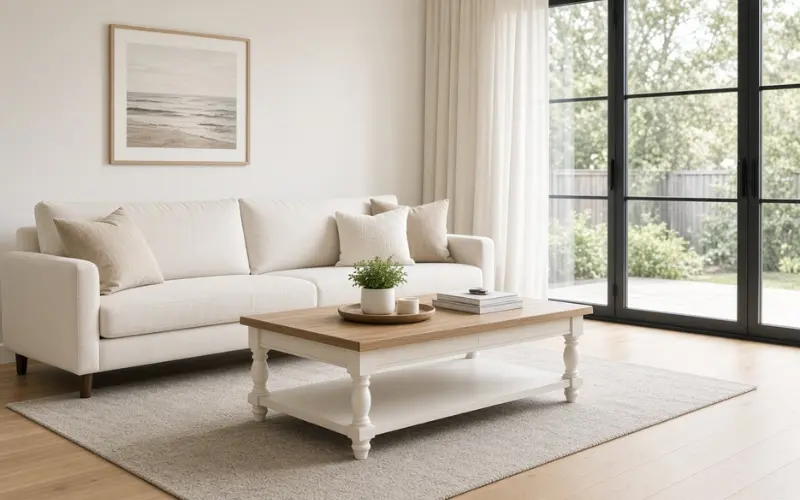
The single biggest mistake I see in client homes is a coffee table chosen for how it looked in a product photo, not how it sits in the actual room. Fix this before you even think about finish or shape.
- Length: aim for roughly two-thirds the length of your sofa. A 2.4 m sofa suits a table around 1.5 to 1.6 m long.
- Clearance: leave 40 to 45 cm between the table edge and the front of the sofa so people can sit, stand and reach a mug without bumping their shins.
- Height: the tabletop should sit level with or slightly below your sofa’s seat height, usually landing between 40 and 48 cm.
Before ordering online, mark the footprint on the floor with masking tape and leave it there overnight. Walk through with a laundry basket or a tray of drinks the way you actually would. It sounds basic, but it catches problems that a showroom photo never will, particularly in an open-plan space where the table also has to share room with a rug, side tables and a walking path to the kitchen.
Choosing a Shape That Actually Suits Your Layout
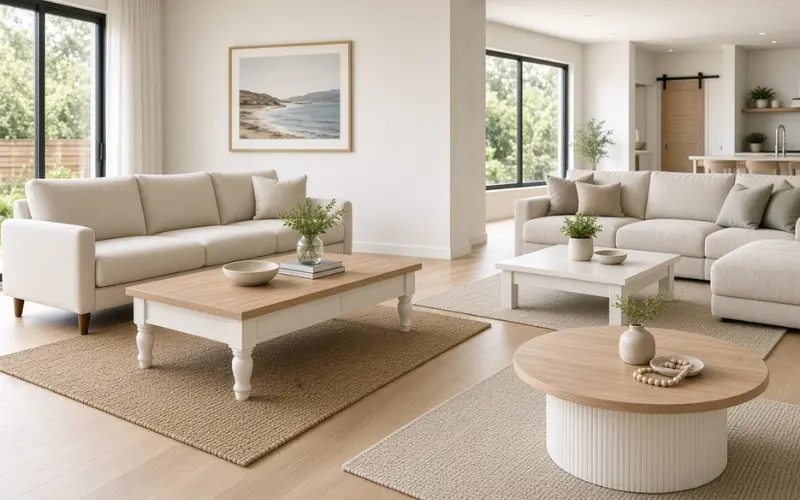
Shape is a traffic decision as much as a style one.
- Rectangular tables suit a long three-seater sofa and give the most usable surface. They work best in living rooms with a clear, linear layout.
- Square tables anchor sectional or modular seating in larger open-plan rooms, especially where two sofas face each other.
- Round or oval tables reduce sharp corners, which matters in homes with young kids or tight walkways, and they soften a room built from mostly straight lines.
If you are working with an L-shaped lounge, measure the internal walking space before choosing, not just the length of the longest sofa arm. A gorgeous square table can turn into a daily obstacle if nobody accounted for the corner people cut past to reach the kitchen.
Materials That Hold Up in Australian Conditions
This is where a lot of generic advice falls short, because Australia’s climate range genuinely changes what makes sense.
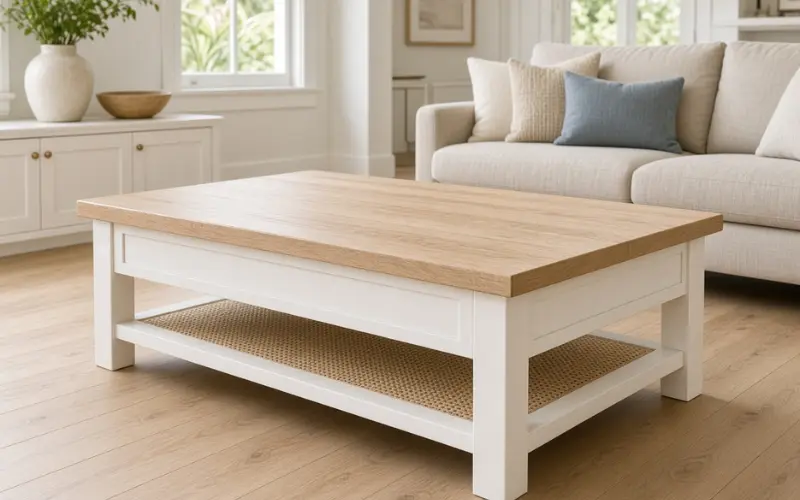
Painted timber in soft white or warm grey remains the classic choice, and a satin or low-sheen finish wears far better day to day than high gloss, which shows fingerprints and scuffs within weeks. Natural or lightly whitewashed oak adds warmth to an all-white scheme and is more forgiving of the odd knock from a coffee mug or toy truck.
For coastal or humid postcodes, ask specifically about the sealing on painted surfaces. Timber that has not been properly sealed can show swelling at the joints within a year in a home near the water, even if it looks fine in a display room in a dry climate-controlled showroom. Rattan or woven lower shelves add texture but need a light touch with cleaning, since dust sits in the weave more than on a flat surface.
Glass tops brighten a small room and are easy to wipe down, though they are not the most practical option with young children or pets, since fingerprints and condensation rings show constantly.
Styling It Without Turning It Into a Showroom Piece
The surface needs to earn its keep. Overstyled coffee tables in real homes just get pushed aside the first time someone puts their feet up.
A simple, workable formula:
- One tray, placed slightly off-centre, to corral small items like coasters or a remote.
- One organic element, such as a low vase with native greenery or a ceramic bowl.
- A stack of two or three books, kept below eye level when seated.
- At least one-third of the surface left genuinely clear for actual use.
If the table has open lower shelving, use it for a woven basket holding throws or magazines rather than more decorative objects. Practical storage is one of the underrated strengths of this style, and it is worth choosing a table with a shelf or drawer if your household actually uses the living room daily.
Pairing the Table With the Rest of the Room
You do not need matching Hamptons furniture throughout the room for this to work. In fact, pairing a classic Hamptons Style Coffee Tables with a plain contemporary sofa often looks more current than a fully coordinated set.
If your floor has visible grain, an engineered timber flooring in Melbourne style install for example, choose a coffee table finish that either matches the undertone or sits in clear contrast to it. A yellow-toned floor beside a cool grey-white table can look disjointed even when both pieces are attractive on their own.
For homes with a white kitchen grey stone benchtop opening onto the living zone, a white painted coffee table usually keeps the sightline consistent across the open-plan space. If the room leans darker, a natural oak top gives it something to balance against instead of disappearing into the palette.
For homes connecting to an outdoor entertaining zone, it is worth thinking about the coffee table as part of a broader indoor-outdoor plan. Reviewing some covered outdoor living space ideas before finalising your living room layout can help keep materials and tones consistent from the lounge through to the alfresco.
If you are drawn to the wider coastal look, a broader coastal home decor approach can guide accessories and colour choices without turning the room into a themed display. And if the home already includes a Hamptons-style staircase or a hampton style balustrade, matching the coffee table’s timber tone to that detail is an easy way to tie two rooms together without extra effort.
Common Buying Mistakes Worth Avoiding
A table that looks compact in a large product photo can dominate a smaller Australian lounge room once it is actually delivered. Always check the listed dimensions against your own measurements rather than trusting the image.
Ignoring the base is another common issue. A tabletop can be perfect while a bulky base blocks the visual line between the sofa and the rest of the room. Look at the piece from the sofa’s seated position, not just standing at the doorway.
Buying a fully white, fully matched Hamptons set can also backfire. Rooms with more personality usually mix one painted piece with one natural timber texture, rather than repeating the same white finish across every surface.
Quick Comparison for Different Living Rooms
| Living Room Type | Best Shape | Priority |
| Long open-plan lounge | Rectangular | Scale and surface area |
| Compact apartment | Round or oval | Walkway clearance |
| Family living room | Square or rectangular with storage | Durability and easy cleaning |
| Coastal or beachside home | Rectangular or square, sealed timber | Moisture resistance |
| Formal sitting room | Square or round, refined finish | Visual polish |
A Practitioner’s Take
I have watched clients spend weeks agonising over sofa fabric and then grab the first coffee table they see online because it looked “close enough.” In practice, the coffee table is often the piece that sets the tone for the whole seating area, since it sits at eye level when you’re seated and gets touched daily. Getting the height and finish right usually does more for how a modern living room feels than another cushion swap ever will.
FAQ’s on Hamptons Style Coffee Tables
What height should a Hamptons Style Coffee Tables be for a modern sofa?
Aim for 40 to 48 cm, roughly level with or slightly below your sofa’s seat height, so drinks and books stay within comfortable reach.
Is white the only acceptable colour for a Hamptons Style Coffee Tables?
No. Natural oak, soft grey, beige and lightly whitewashed timber all work, and often suit a modern room better than stark white, especially against pale flooring.
How far apart should the table and sofa sit?
Around 40 to 45 cm of clearance is a reliable starting point for most Australian living rooms, adjusted for how the space is actually used.
Are round Hamptons Style Coffee Tables better for small apartments?
Often yes. They remove sharp corners and improve walking flow in tighter footprints, particularly where people pass close to the table daily.
Can a Hamptons Style Coffee Tables handle a humid or coastal climate?
It can, provided the timber is properly sealed. Ask retailers directly about the coating before buying if you live near the coast or in a humid region.
What should sit on the surface day to day?
A tray, one natural element such as a plant or bowl, and two or three books is usually enough. Leave at least a third of the surface clear for actual use.
Do these Hamptons Style Coffee Tables suit a leather or bouclé sofa, not just linen?
Yes. The timber tone softens leather’s sleekness and adds warmth against bouclé’s texture, which is part of why the style bridges traditional and modern seating so well.
Should the coffee table match my flooring exactly?
Not necessarily. A close match can look flat, while a deliberate contrast, warm timber against cool flooring or vice versa, often gives the room more depth.