
Vinyl record wall decor works when you treat records like art, not clutter: pick a mount that never touches the vinyl itself, commit to one layout logic (grid, timeline, or cluster), and keep your most valuable pressings out of direct sunlight. Get those three things right and a handful of records reads as curated. Get them wrong and it reads as a dorm room that never grew up.
I learned most of this the hard way. My first record wall used cheap adhesive strips straight on the sleeves. Six months later, half the covers had ghost marks where the glue had yellowed the cardboard. That mistake is more common than people admit, and it’s exactly the kind of thing most guides gloss over.
Why Records Work As Wall Art in the First Place
A 12-inch sleeve is basically a square canvas with built-in graphic design, and most album art was created for exactly that purpose: to be looked at from across a room. That’s a different job than storage. A crate keeps records safe. A wall makes them do something.
The records that read best on a wall usually have bold, high-contrast covers or a strong central image. Busy, text-heavy sleeves tend to disappear from a normal viewing distance. If you’re picking which albums earn wall space, stand ten feet back before you commit to the drill.
Mounting Methods, Ranked by What They Actually Do to Your Vinyl

This is the part competitors tend to rush through, and it’s the part that matters most if your records have any resale or sentimental value.
| Mount Type | Touches the Vinyl? | Best For | Trade-off |
|---|---|---|---|
| Sleeve-grip wall mounts (e.g., Flying V style) | No, grips outer sleeve edge | Records you still want to play | Needs stud or rated anchor |
| Record ledges/shelves | No | Rotating display, easy swaps | Records can slide if bumped |
| Album rails | No | Rows of albums, garage or den walls | Bulkier hardware profile |
| Push pins (above/below sleeve) | No, if placed correctly | Renters, budget setups | Sleeve can sag over time |
| Adhesive Velcro on sleeve | No, if applied to sleeve only | Lightweight, semi-permanent grids | Never apply to the vinyl itself |
| Frames sized for 12″ LPs | No | Long-term display, sun-prone walls | Costs more, harder to swap |
| Museum-style display cases | No | Rare or valuable pressings | Priciest option |
The one method I’d actively steer people away from: any clip, clamp, or adhesive rated for “picture frames” that isn’t specifically sized for record sleeves. They flex under the sleeve’s weight in a way purpose-built mounts don’t, and that flex is what warps cardboard over a year or two.
Protecting the Actual Vinyl (Not Just the Cover)
Most articles on this topic stop at “how to hang it.” Almost none talk about what the display environment does to the record over time, and this is where a lot of collections get quietly ruined.
- Sunlight is the real enemy. Direct UV doesn’t just fade the sleeve, it can soften and warp the vinyl disc inside if the record is left in the jacket on a sun-hit wall for months. Indirect light is fine.
- Temperature swings matter more than people expect. A wall near a radiator, a south-facing window, or an uninsulated exterior wall puts the record through daily expansion and contraction. That’s a slow warp risk even without direct sun.
- Keep the disc in its inner sleeve while the jacket hangs. You get the display value of the cover art without exposing the vinyl to dust or handling.
- If a record is genuinely rare or high-value, display the sleeve and store the vinyl separately. Nobody who collects seriously will fault you for this. It’s what serious collectors already do.
One thing I’d flag for anyone reading this who’s building a record wall in a rental: check your lease before you drill anything. Sleeve-grip mounts with two small anchor points are usually fine to patch on move-out, but a full album rail system is a bigger commitment.
Layouts That Actually Read as Intentional

The grid. Even spacing, same frame or mount style throughout, 3×3 or 4×4. This is the safest option if you’re not confident about design instincts, because consistency does the work for you.
The timeline. Arrange albums left to right by release year. This only works if you genuinely have albums spanning different eras; forcing a timeline out of five records from the same decade falls flat.
The genre cluster. Group by how you actually listen: jazz in one zone, hip-hop in another. This one benefits from slightly uneven spacing, since it’s meant to feel more like a collection than a showroom.
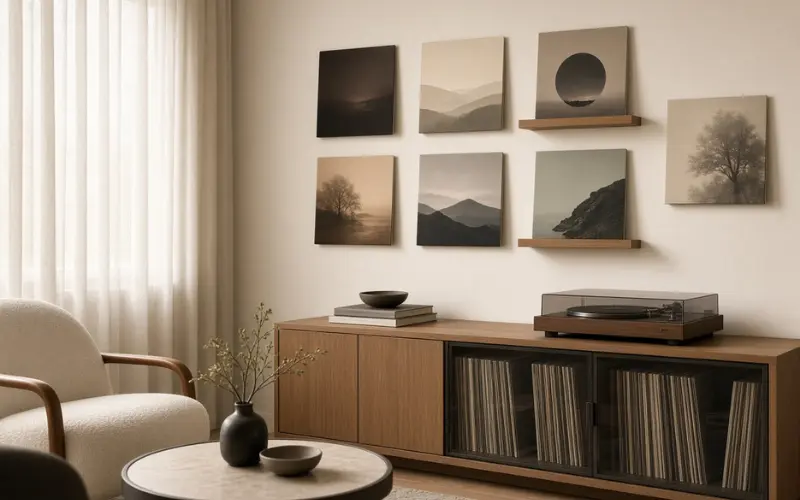
The “now spinning” station. A turntable console with a small rotating row of albums above it, swapped as you change what’s playing. This works especially well near a home bar or listening nook, where the record wall becomes part of the room’s actual function rather than pure decoration.
Records are also, notably, circles hung on a rectangular wall, which is part of why they photograph so well next to other rounded shapes. If you’re already leaning into that geometry, it pairs naturally with circle wall decor elsewhere in the room to keep the shape language consistent instead of fighting it.
Where a Record Wall Fits Beyond the Living Room
A garage or workshop is an underused spot for a record wall, partly because the stakes are lower (less sun exposure worry from a design perspective, more tolerance for exposed hardware) and it pairs well with other garage wall decor that leans industrial. A home office benefits too: album art breaks up a wall of shelves without competing with a monitor setup the way busier art can.
If your space already leans boho or textured, records mix surprisingly well with macrame wall decor or fabric wall decor, since the flat, glossy sleeve gives your eye a resting point against the texture around it. For a more restrained, gallery feel, pairing a record grid with other organic modern wall decor keeps the whole wall from feeling like a themed shrine.
Faking It: When You Don’t Have (or Want to Risk) Real Records
Reproduction and decorative “faux” vinyl records exist specifically for this purpose, and they’re a legitimate option, not a compromise. They show up on marketplaces sized to standard sleeve dimensions, which means they work with the same mounts as real records. This is worth knowing if you want the aesthetic for an event, a rental, or a kid’s room where breakage or resale value isn’t a concern.
Party and event stylists lean on this heavily. Faux records and blown-up album art get used as instant, disposable-friendly backdrops for retro-themed parties precisely because nobody’s worried about warping a $40 rental prop the way they’d worry about an original pressing.
A Quick Gut-Check Before You Drill Anything
- Stand back ten feet: does the cover art actually read from across the room?
- Is this wall hit by direct sun for more than an hour a day?
- Are you displaying originals you’d be upset to damage, or is this a “who cares” collection?
- Does the mount touch the vinyl, or only the sleeve?
If you can answer those four honestly, the layout decision is the easy part.
Frequently Asked Questions on Vinyl Record Wall Decor
What are some good things to hang Vinyl Record Wall Decor on the wall with?
Sleeve-grip wall mounts, record ledges, album rails, or push pins placed above and below the sleeve all work without touching the vinyl directly. Avoid adhesives applied straight to the disc or sleeve backing.
Where can I find fake Vinyl Record Wall Decor?
Marketplaces like Etsy and Amazon carry decorative reproduction records sized to standard sleeve dimensions, often sold specifically as wall art or party decor rather than playable media.
How do I decorate a wall with Vinyl Record Wall Decor without damaging them?
Use mounts that grip the outer sleeve rather than the vinyl, keep the disc in its inner sleeve while displayed, and avoid walls that get more than an hour of direct sun daily.
What are some creative wall decor ideas for Vinyl Record Wall Decor?
A chronological timeline by release year, genre-based clusters, a rotating “now spinning” station above a turntable, or split-cover diptychs where one album image spans two adjacent frames.
Is it safe to hang real Vinyl Record Wall Decor long-term?
Yes, if you use a proper mount, avoid direct sunlight and heat sources, and keep the disc sleeved. Rare or high-value records are safer displayed as sleeve-only, with the vinyl stored separately.
Do I need to drill holes to hang a Vinyl Record Wall Decor?
No. Push pins, adhesive Velcro on the sleeve, and record ledges are all no-drill options. Drilling is only necessary for heavier hardware like album rails or multi-record wall units.
How many records do I need to start a record wall?
A grid layout looks intentional starting around six to nine records. A single accent cluster can work with as few as three if paired with other wall decor.
Will hanging records on the wall lower their resale value?
Not if you display the sleeve only and store the actual vinyl separately, or use mounts that never contact the disc. Damage from sun, heat, or direct adhesive is what actually affects resale value, not display itself.

